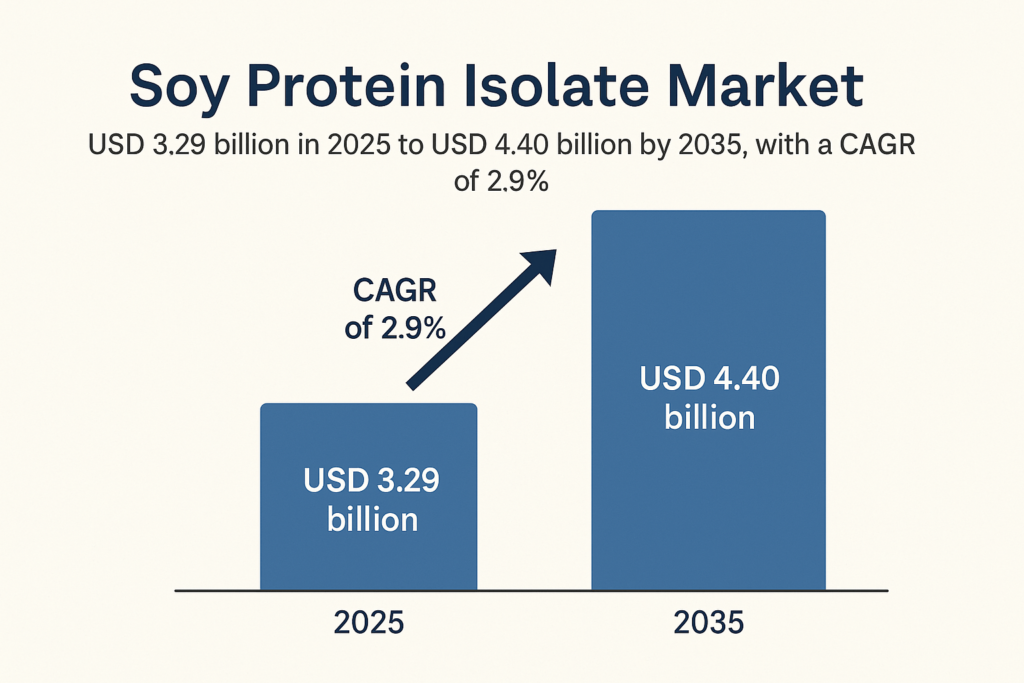
The global soy protein isolate market is projected to expand from USD 3.29 billion in 2025 to approximately USD 4.40 billion by 2035, registering a modest yet steady CAGR of 2.9% over the forecast period. This growth is fueled by the global shift toward plant-based diets, increasing focus on sustainable protein sources, and rising adoption of soy protein in sports nutrition, meat substitutes, and functional foods across both developed and emerging markets.
Uncover Essential Data – Get A Sample Copy:
https://www.futuremarketinsights.com/reports/sample/rep-gb-5832
Market Trends Highlighted
- Growing Plant-Based Movement: As consumers continue to move away from animal-based proteins due to ethical, environmental, and health concerns, soy protein isolate is gaining widespread acceptance as a high-quality, complete plant protein.
- Increased Use in Meat Alternatives: With the rise of veganism and flexitarian diets, soy protein isolate is being widely used in meat analogs, including burgers, sausages, and nuggets, to deliver texture and protein content similar to meat.
- Demand from Sports Nutrition: Athletes and fitness enthusiasts are increasingly choosing soy-based protein powders as a lactose-free and cholesterol-free alternative to whey protein.
- Clean Label & Functional Foods: Brands are reformulating processed foods with soy protein isolate to meet clean label demands, offering gluten-free, allergen-free, and low-fat protein enrichment in snacks and meal replacements.
- Technological Innovation: Advances in processing technology have improved the taste, solubility, and functional properties of soy protein isolate, making it more suitable for a range of food applications.
Get Report Link : https://www.futuremarketinsights.com/reports/soy-protein-isolate-market
Key Takeaways of the Report
- The global market will grow at a CAGR of 2.9%, reaching USD 4.40 billion by 2035.
- Health and sustainability trends continue to drive global demand across multiple consumer segments.
- The market is witnessing increased integration of soy protein isolate in beverages, bakery products, dairy alternatives, and infant nutrition.
- While North America and Europe remain dominant in terms of product development and innovation, Asia-Pacific and Latin America are experiencing higher growth rates due to changing dietary patterns and rising disposable incomes.
Regional Market Outlook – Country-Wise Highlights
United States (CAGR: 2.5%)
The U.S. market remains mature but stable, driven by consumer preference for non-dairy proteins and clean-label meat substitutes. Large food manufacturers continue to launch new soy-based product lines, especially in snacks and nutrition bars.
China (CAGR: 3.4%)
China leads in Asia due to growing awareness of plant-based nutrition and government support for food security and protein diversification. The market is benefiting from increased urban demand for ready-to-eat soy-based meals and beverages.
Germany (CAGR: 2.6%)
In Germany, demand is fueled by the country’s strong vegan and flexitarian movements, with soy protein isolate used in organic-certified meat alternatives and protein-enriched bakery products. Sustainability credentials further boost consumer trust.
Brazil (CAGR: 3.2%)
Brazil is emerging as a strong growth market with increasing soy cultivation and demand for protein-fortified local dishes. Domestic food manufacturers are incorporating soy protein isolate into plant-based meals to cater to health-conscious youth.
India (CAGR: 4.1%)
India records the highest growth rate globally, as plant-based protein gains popularity among vegetarian and health-conscious populations. A booming startup ecosystem is promoting soy-based snacks, drinks, and supplements.
Canada (CAGR: 2.8%)
Canada’s demand is supported by the popularity of lactose-free and allergen-free products and government incentives for plant-based innovation. Soy protein isolate is used in frozen meals, shakes, and protein bars.
United Kingdom (CAGR: 2.9%)
The UK market is influenced by growing demand for sustainable and animal-free diets, especially among Gen Z. Food retailers are expanding their own-label vegan ranges, with soy protein isolate featured prominently in formulations.
Japan (CAGR: 1.8%)
Japan’s slower growth is attributed to a saturated soy products market, where traditional soy foods already dominate. Nonetheless, there is growing interest in high-protein functional beverages targeting aging demographics.
South Korea (CAGR: 2.3%)
South Korea shows moderate growth, driven by a rising fitness culture and focus on body wellness among millennials. Soy protein is increasingly used in meal-replacement products and ready-to-drink shakes.
Netherlands (CAGR: 2.7%)
The Netherlands is witnessing increased application of soy protein isolate in dairy alternatives, sports nutrition, and eco-friendly processed foods, supported by a proactive regulatory stance and demand for sustainable sourcing.
Competition Analysis
- Archer Daniels Midland
- Cargill Inc.
- Fuji Oil Holdings Inc.
- Farbest
- Kerry
- Batory Food
- CHS Inc.
- Crown Soya Protein Group E.I.
- The Scoular Company
- Food Chem International
- Nutra Food Ingredients LLC
- Osage Food Products
- Dupont De Numerous Company
- Others (on additional request)
Explore Protein Industry Analysis: https://www.futuremarketinsights.com/industry-analysis/protein
Segmentation
- By Product Type:
Dry
Liquid
By Application:
Functional Foods
Bakery and Confectionery
Other Applications
- By Function:
Nutrients
Emulsifiers
Fat and Water
Restaurants
Other Functions
- By Region:
North America
Latin America
Europe
East Asia
South Asia
Oceania
Middle East & Africa