

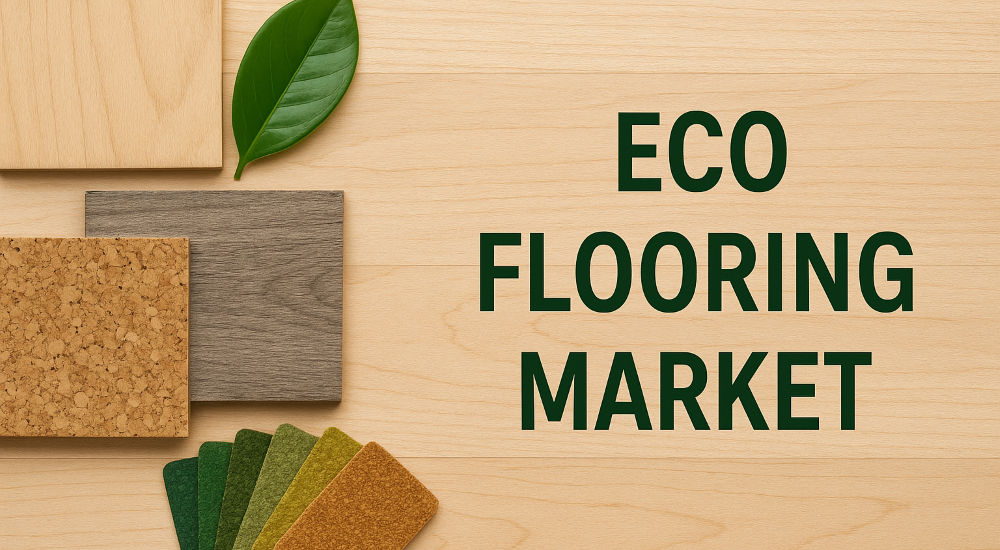
As climate consciousness shifts from the fringe to the mainstream, industries across the board are being forced to reconsider how they impact the planet. Nowhere is this more evident than in the flooring industry. What was once an afterthought in home construction and commercial design has become a focal point for sustainability. The global eco flooring market is projected to reach USD 86,570.04 million by 2025, reflecting a dramatic shift in consumer behavior, regulatory frameworks, and corporate sustainability goals.
This surge, though not entirely unexpected, is emblematic of a broader transformation in how materials are sourced, manufactured, and consumed. And while it’s tempting to view eco flooring as a niche, the data—and the demand—tell a different story.
Discover key market opportunities – Request your sample report now! https://www.futuremarketinsights.com/reports/sample/rep-gb-15478
What’s Fueling the Market Growth?
The eco flooring market’s value of USD 86.57 billion by 2025 reflects an industry on the rise, buoyed by both institutional and individual purchasing power. Key drivers include:
- Environmental Regulation: Policies aimed at reducing carbon emissions, improving air quality, and lowering resource consumption have placed pressure on construction and interior design industries.
- Corporate Sustainability Mandates: Large commercial developers are now incorporating eco flooring to meet LEED certifications and ESG commitments.
- Consumer Awareness: Millennials and Gen Z, now key players in home buying and design markets, are demanding eco-friendly solutions at every touchpoint.
- Innovations in Manufacturing: Breakthroughs in biodegradable resins, upcycled materials, and closed-loop supply chains have made eco flooring a viable competitor in durability and style.
Technology’s Quiet Revolution
What’s often overlooked is the role of Software-as-a-Service (SaaS) in supporting the growth of the eco flooring market. From supply chain optimization and carbon footprint tracking to design simulations and customer engagement platforms, SaaS is proving critical.
Globally, the enterprise SaaS market is projected to reach USD 117,477.39 million by 2035, growing at a CAGR of 3.1%. Within this, a specialized subset of SaaS solutions is being adopted by flooring companies to improve sourcing transparency, ensure regulatory compliance, and streamline B2B and B2C customer experiences.
Discover new opportunities and gain transformative insights with our Consumer Services Industry Reports! https://www.futuremarketinsights.com/industry-analysis/consumer-services
Challenges on the Path Ahead
Despite optimistic forecasts, the eco flooring market is not without hurdles. These include:
- Higher upfront costs, especially in emerging markets where budget constraints dominate.
- Supply chain vulnerabilities, particularly for materials like cork or bamboo, which are geographically constrained.
- Greenwashing risks, as unscrupulous brands market “eco-friendly” without meeting true sustainability standards.
Regional Insights
- North America: A mature market driven by strict environmental regulations and green building certifications like LEED. High consumer awareness fuels demand for bamboo, reclaimed wood, and other sustainable flooring options.
- Europe: Strong focus on sustainability supported by rigorous policies and circular economy initiatives. Countries like Germany and the UK lead with high standards for eco-friendly materials and transparency.
- Asia-Pacific: Fastest-growing region due to rapid urbanization and rising environmental awareness in China, India, and Japan. Government incentives and local production of bamboo and other materials boost market expansion.
- Latin America: Emerging market with potential in Brazil and Mexico. Growth driven by expanding construction and increasing focus on sustainable alternatives, though cost and supply remain challenges.
- Middle East & Africa: Smaller but growing market, especially in UAE and South Africa. Demand comes from sustainable mega-projects, but market growth is limited by lower awareness and import dependence.
Get Full Access of this Report: https://www.futuremarketinsights.com/reports/eco-flooring-market
Top Segments Studied in the Eco Flooring Market
By Material Type:
- Cork
- Wood
- Bamboo
- Linoleum
- Glass Tiles
- Concrete
- Wool Carpet
- Rubber
- Leather
By End Use:
- Residential
- Non-Residential
By Price Range:
- Economy
- Mid-range
- Premium
By Distribution Channel:
- Online
- Offline
By Region:
- North America
- Latin America
- East Asia
- South Asia & Pacific
- Eastern Europe
- Western Europe
- Middle East & Africa
About Future Market Insights (FMI)
Future Market Insights, Inc. (ESOMAR certified, recipient of the Stevie Award, and a member of the Greater New York Chamber of Commerce) offers profound insights into the driving factors that are boosting demand in the market. FMI stands as the leading global provider of market intelligence, advisory services, consulting, and events for the Packaging, Food and Beverage, Consumer Technology, Healthcare, Industrial, and Chemicals markets. With a vast team of over 400 analysts worldwide, FMI provides global, regional, and local expertise on diverse domains and industry trends across more than 110 countries.
Contact Us:
Future Market Insights Inc.
Christiana Corporate, 200 Continental Drive,
Suite 401, Newark, Delaware – 19713, USA
T: +1-347-918-3531
For Sales Enquiries: sales@futuremarketinsights.com
Website: https://www.futuremarketinsights.com
LinkedIn| Twitter| Blogs | YouTube




