

In the rapidly evolving healthcare sector, medical plastics have emerged as a crucial component, enabling the development of innovative medical devices and applications. These specialized plastics are engineered to meet stringent industry standards, ensuring safety, reliability, and performance in critical medical environments. From surgical instruments to packaging solutions, medical plastics play a vital role in improving patient outcomes and enhancing the efficiency of healthcare delivery.
𝐌𝐚𝐤𝐞 𝐈𝐧𝐟𝐨𝐫𝐦𝐞𝐝 𝐃𝐞𝐜𝐢𝐬𝐢𝐨𝐧𝐬 – 𝐀𝐜𝐜𝐞𝐬𝐬 𝐘𝐨𝐮𝐫 𝐒𝐚𝐦𝐩𝐥𝐞 𝐑𝐞𝐩𝐨𝐫𝐭 𝐈𝐧𝐬𝐭𝐚𝐧𝐭𝐥𝐲! https://www.futuremarketinsights.com/reports/sample/rep-gb-14980
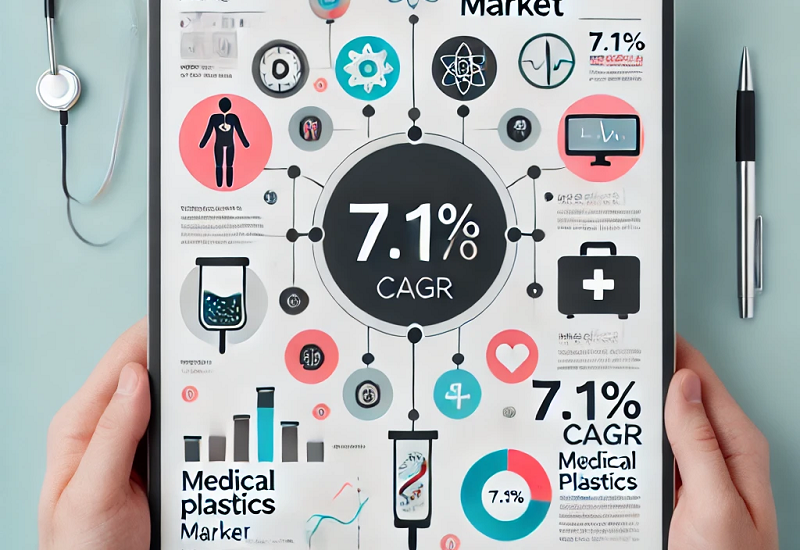
According to recent market research, the global medical plastics market stood at approximately USD 16,462.6 million in 2023. The industry is set to experience robust growth, with a year-on-year increase of 6.4% projected for 2024, bringing the market size to an estimated USD 17,561.6 million. Furthermore, the sector is expected to sustain a compound annual growth rate (CAGR) of 7.1% from 2024 to 2034, ultimately reaching a staggering USD 34,553.9 million by the end of the forecast period. This growth trajectory reflects the increasing adoption of medical plastics in diverse applications, driven by advancements in technology and a growing emphasis on patient safety.
Prominent Drivers of the Medical Plastics Market
Several key factors are fueling the growth of the medical plastics market:
- Rising Demand for Medical Devices: The global healthcare landscape is witnessing a surge in the demand for advanced medical devices, spurred by an aging population, increased prevalence of chronic diseases, and a growing focus on preventive healthcare. Medical plastics, with their versatility and adaptability, are essential for producing a wide array of devices, including diagnostic equipment, surgical instruments, and wearable health technologies.
- Cost-Effectiveness: Medical plastics, particularly materials like polyvinyl chloride (PVC), are known for their affordability and ease of manufacturing. PVC holds a significant share of the market, accounting for 27.9% of total sales. Its flexibility, durability, and resistance to chemicals make it an ideal choice for applications such as medical tubing, blood collection bags, and IV fluid bottles. The cost-effectiveness of medical plastics is a compelling factor for manufacturers aiming to produce high-quality medical products without compromising on performance.
- Innovative Material Developments: Continuous advancements in polymer science are leading to the development of new medical plastics with enhanced properties. Innovations such as antimicrobial plastics, bioresorbable materials, and high-performance polymers are creating opportunities for manufacturers to address specific healthcare challenges. These innovations are driving the adoption of medical plastics in critical applications, contributing to market growth.
- Increased Focus on Infection Control: The ongoing emphasis on infection control in healthcare settings has accelerated the demand for single-use medical devices and disposable plastics. The rise of healthcare-associated infections (HAIs) has prompted hospitals and clinics to prioritize the use of sterile, disposable products, further boosting the medical plastics market.
Browse the Complete Report! https://www.futuremarketinsights.com/reports/medical-plastics-market
Challenges Faced by the Medical Plastics Industry
While the medical plastics market presents numerous opportunities, it is not without its challenges:
- Regulatory Hurdles: The medical plastics industry is subject to stringent regulatory requirements and standards imposed by health authorities worldwide. Navigating the complex regulatory landscape can be time-consuming and costly for manufacturers, potentially hindering market growth.
- Environmental Concerns: The growing awareness of environmental issues related to plastic waste poses a challenge to the medical plastics industry. Stakeholders are increasingly scrutinizing the sustainability of medical plastics, prompting manufacturers to explore eco-friendly alternatives and recycling solutions.
- Supply Chain Disruptions: Recent global events, including the COVID-19 pandemic, have exposed vulnerabilities in supply chains across various industries. Fluctuations in raw material availability and transportation challenges may impact the timely production and delivery of medical plastics, posing risks to market stability.
- Competition from Alternatives: The emergence of alternative materials, such as metals and ceramics, in certain medical applications poses a competitive threat to the medical plastics market. Manufacturers must continuously innovate to maintain their competitive edge and address the evolving needs of healthcare providers.
Top Segments Studied in the Medical Plastics Market Research Report
By Plastic Type:
Plastic types included in the study are Polyvinyl Chloride (PVC), Thermoplastic Elastomer (TPE), Polyethylene (PE), Polycarbonate (PC), Polypropylene (PP), Polyethylene Terephthalate (PET), Polyamides, Thermoplastic Polyurethane (TPU), Polymethyl Methacrylate, Acrylonitrile Butadiene Styrene (ABS), and Silicone Rubber.
Thermoplastic Elastomer (TPE) is further segmented into Thermoplastic Elastomer Vulcanizates (TPE-V) and Thermoplastic Elastomer Styrenics (TPE-S). Silicone Rubber is categorized into Liquid Silicone Rubber, High Consistency Rubber, Room Temperature Vulcanizing (RTV) Silicone, Silicone Adhesives, and others.
By End Use:
End-use segments included in the study are medical parts and components, tubing, film and bags, surgical tools, and medical cables and connectors. Medical parts & components encompass dropper bulbs, drip chambers, gaskets and stoppers, orthopedics, blood collection chambers, medical containers, and others.
Tubing covers catheter tubing, drug delivery, gas supply, peristaltic pump, oxygen tubing, blood transport & delivery, and others. Film and Bags include biopharmaceutical storage, saline bags, waste bags, and others. Surgical Tools consist of scalpels, forceps, scissors, and others. Medical cables and connectors are segmented into diagnostic equipment, prosthetics, and others.
By Region:
Key countries of North America, Latin America, Western Europe, Eastern Europe, East Asia, South Asia, the Middle East, and Africa (MEA), have been covered in the report.
Polymers & Plastics Industry Analysis: https://www.futuremarketinsights.com/industry-analysis/polymers-and-plastics




