The global medical cleaning devices market is estimated to be valued at USD 28.4 billion in 2025 and is projected to reach USD 75.6 billion by 2035, registering a compound annual growth rate of 10.3% over the forecast period.
Hospitals are teeming with cutting-edge machines, robotic arms, AI diagnostics—and yet, patients are still dying from bacteria left behind on surgical instruments and scopes. It’s a scandal. And it’s getting worse.
The tools meant to save lives are, too often, vectors of infection. Dirty. Improperly disinfected. Rushed through broken cleaning protocols and shoved back into use. It’s 2025, and we’re still struggling to clean our tools. Why?
Get Sample Report: – https://www.futuremarketinsights.com/reports/sample/rep-gb-15470
The Illusion of Safety
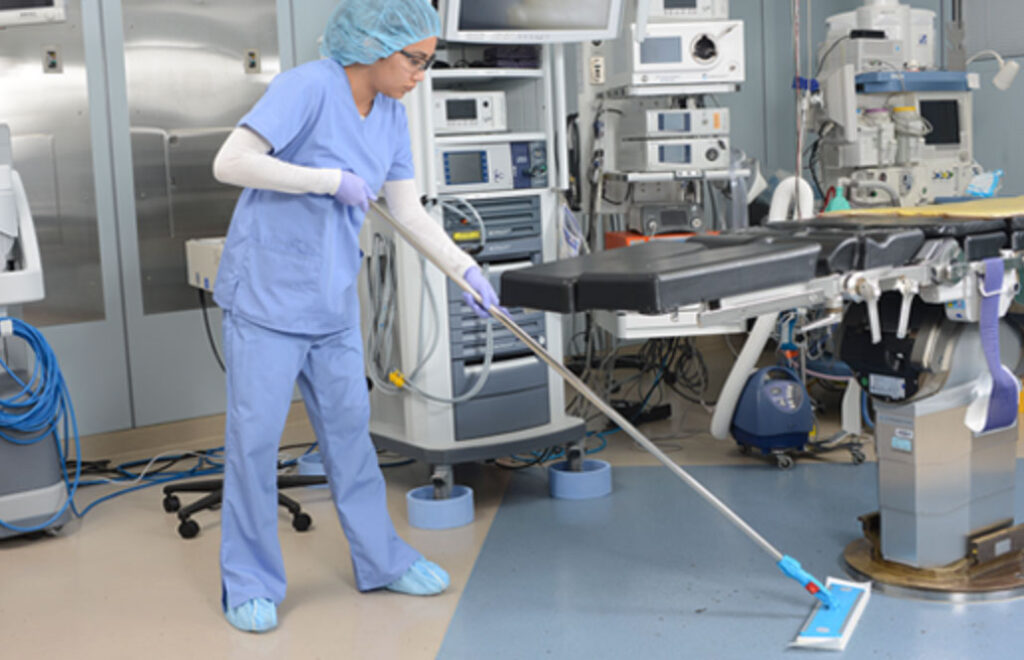
Hospitals love to talk about patient safety. Posters on the walls. Training videos. Hand-sanitizer stations every ten feet. But behind the scenes? Devices are often cleaned manually by overstretched staff, following inconsistent protocols written in technical jargon no one can decipher. The result? Contamination—on items that enter the human body.
Let’s call it what it is: institutional neglect.
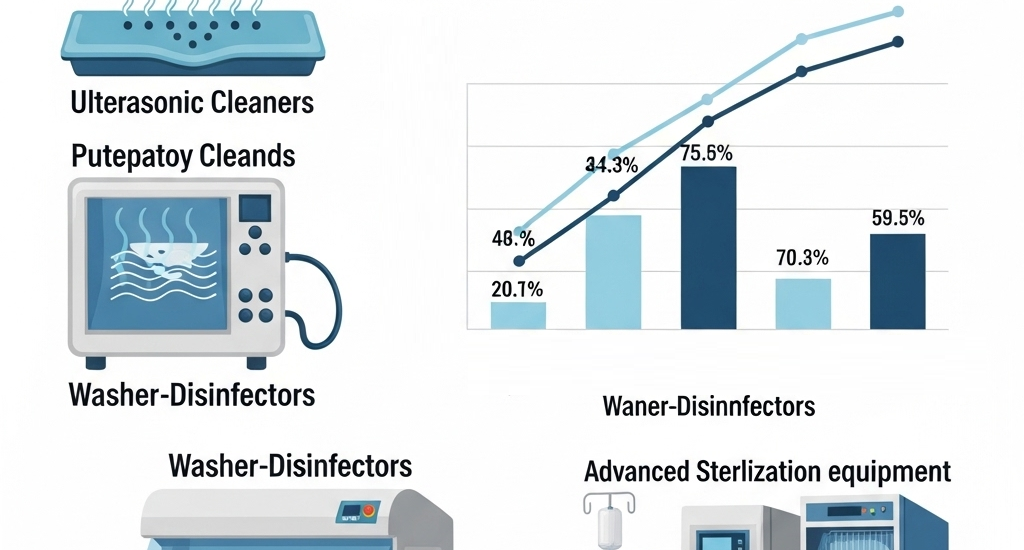
Yes, advanced systems like ultrasonic cleaners and washer-disinfectors are on the rise. FMI notes their growing adoption, especially in high-throughput surgical settings. But adoption is not the same as implementation. And implementation is not the same as enforcement. Too many facilities still cut corners, or lack the budget to buy equipment in the first place.
Innovation Is Outrunning Responsibility
There is no shortage of technology. But there is a shocking lack of urgency. The medical cleaning devices market may be expanding—but it’s not evolving fast enough where it counts: in the real-world trenches of patient care.
And while major players in the U.S., Europe, and Japan are driving demand, rural hospitals, outpatient centers, and care homes are frequently left behind. These places often rely on outdated or manual cleaning techniques, the kind that leave pathogens behind and patients at risk. It’s indefensible.
No More Excuses
Let’s stop pretending this is a marginal issue. It isn’t. A contaminated endoscope can kill just as effectively as a failed heart valve. And yet, the industry treats cleaning devices like a back-office function. That mindset must go.
Hospitals must prioritize sterilization tech—not when it’s convenient, but urgently. Cleaning protocols should be simplified and enforced, not buried in equipment manuals no one reads. And if a facility can’t afford proper disinfection systems? Then it shouldn’t be handling invasive procedures, period.
Bottom Line
We’ve spent billions developing miracle drugs and robotic surgeons. But none of that matters if the basic tools we put into patients are dirty. According to FMI, the market is growing—but too slowly, and without the accountability this crisis demands.
Explore In-Depth Analysis-Click Here to Access the Report:- https://www.futuremarketinsights.com/reports/medical-cleaning-devices-market
Top Segments Studied in the Medical Cleaning Devices Market
By Product Type:
- Ultrasonic Cleaners
- Washer Disinfectors
- Automatic Endoscope Reprocessors (AERs)
- Flushing Devices
- Sterilizers (Autoclaves)
- Drying and Storage Cabinets
- UV-C Disinfection Units
By Technology:
- Manual Cleaning
- Automated Cleaning
- Semi-Automated Cleaning
- IoT-Integrated Cleaning Systems
By End Use:
- Hospitals
- Specialty Clinics
- Diagnostic Laboratories
- Ambulatory Surgical Centers (ASCs)
- Academic & Research Institutes
By Region:
- North America
- Latin America
- East Asia
- South Asia & Pacific
- Eastern Europe
- Western Europe
- Middle East & Africa