The hydrazine hydrate is widely recognized for its use in propellants, agricultural chemicals, and water treatment. However, beyond these well-known functions lies an increasingly important, yet underreported, role it plays in the precision-driven semiconductor and electronics sectors. As global demand for miniaturized, high-performance electronic devices continues to surge, manufacturers are exploring highly reactive and selective chemical agents to meet the rigorous purity and efficiency standards of semiconductor fabrication. Among these, hydrazine hydrate is quietly emerging as a promising candidate for niche applications, particularly in cleaning and photoresist stripping processes. This subtle shift in usage marks a significant evolution in the hydrazine hydrate market, introducing a growth trajectory often overlooked in mainstream reports.
𝐇𝐲𝐝𝐫𝐚𝐳𝐢𝐧𝐞 𝐇𝐲𝐝𝐫𝐚𝐭𝐞 𝐢𝐧 𝐭𝐡𝐞 𝐂𝐨𝐧𝐭𝐞𝐱𝐭 𝐨𝐟 𝐒𝐞𝐦𝐢𝐜𝐨𝐧𝐝𝐮𝐜𝐭𝐨𝐫 𝐏𝐫𝐨𝐜𝐞𝐬𝐬𝐢𝐧𝐠
The semiconductor industry demands immaculate wafer surfaces and ultra-thin film layers, which can be achieved only through precise chemical treatments. Traditionally, wet chemicals such as hydrogen peroxide, sulfuric acid, and ammonia have dominated the cleaning process. However, their aggressiveness and limited selectivity pose challenges when applied to increasingly delicate nanoscale features. Hydrazine hydrate, with its high reducing power and controlled reactivity, offers a less invasive yet effective alternative. It selectively removes organic residues and metal contaminants without damaging sensitive structures.
𝐌𝐚𝐤𝐞 𝐈𝐧𝐟𝐨𝐫𝐦𝐞𝐝 𝐃𝐞𝐜𝐢𝐬𝐢𝐨𝐧𝐬 – 𝐀𝐜𝐜𝐞𝐬𝐬 𝐘𝐨𝐮𝐫 𝐒𝐚𝐦𝐩𝐥𝐞 𝐑𝐞𝐩𝐨𝐫𝐭 𝐈𝐧𝐬𝐭𝐚𝐧𝐭𝐥𝐲! https://www.futuremarketinsights.com/reports/sample/REP-GB-12720
In photoresist stripping applications, where leftover organic polymer layers must be eliminated after lithography, hydrazine-based formulations demonstrate superior efficiency and reduced defect generation compared to conventional solvents. Semiconductor manufacturers in Japan and South Korea have been exploring hydrazine-based chemistries for their ability to deliver enhanced surface quality with minimal environmental impact. Although usage remains limited to specialized processes, ongoing pilot-scale trials suggest broader adoption may be imminent, especially as advanced nodes below 5nm become standard.
𝐀 𝐃𝐚𝐭𝐚–𝐁𝐚𝐜𝐤𝐞𝐝 𝐏𝐞𝐫𝐬𝐩𝐞𝐜𝐭𝐢𝐯𝐞 𝐨𝐧 𝐌𝐚𝐫𝐤𝐞𝐭 𝐒𝐡𝐢𝐟𝐭𝐬
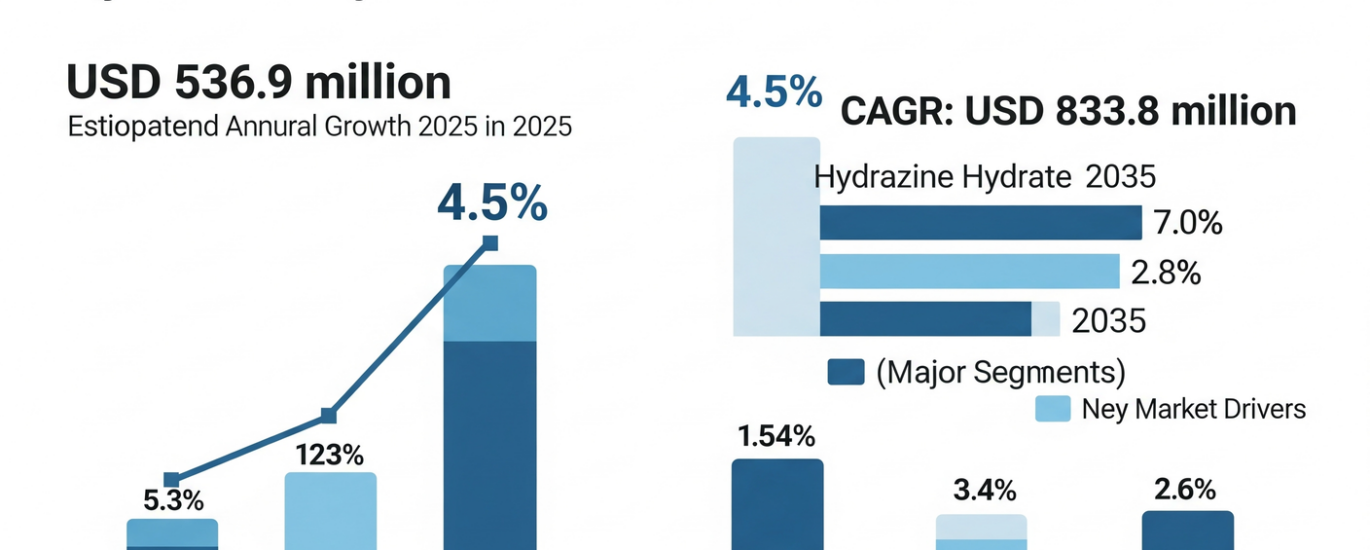
According to Future Market Insights studies the market value was USD 536.9 million in 2025, is expected to be worth USD 833.8 million in 2035, and will grow at a CAGR of 4.5% during the forecast period. While mainstream cleaning agents maintain dominance, hydrazine hydrate-based solutions are projected to witness double-digit growth within this segment. This growth is largely driven by the need for cleaner, safer alternatives in fab environments, particularly in regions where environmental regulations are tightening.
The Asian market, led by Taiwan, South Korea, and China, continues to dominate semiconductor manufacturing. These countries are home to the largest number of fabrication facilities (fabs) where experimentation with new cleaning solutions is common. Reports from Japan’s National Institute of Advanced Industrial Science and Technology (AIST) have indicated that lab-scale evaluations of hydrazine-based strippers have shown up to a 30% improvement in post-clean wafer yields for certain metal layer processes.
𝐔𝐧𝐥𝐨𝐜𝐤 𝐂𝐨𝐦𝐩𝐫𝐞𝐡𝐞𝐧𝐬𝐢𝐯𝐞 𝐌𝐚𝐫𝐤𝐞𝐭 𝐈𝐧𝐬𝐢𝐠𝐡𝐭𝐬 – 𝐄𝐱𝐩𝐥𝐨𝐫𝐞 𝐭𝐡𝐞 𝐅𝐮𝐥𝐥 𝐑𝐞𝐩𝐨𝐫𝐭 𝐍𝐨𝐰: https://www.futuremarketinsights.com/reports/hydrazine-hydrate-market
𝐄𝐧𝐯𝐢𝐫𝐨𝐧𝐦𝐞𝐧𝐭𝐚𝐥 𝐚𝐧𝐝 𝐒𝐚𝐟𝐞𝐭𝐲 𝐂𝐨𝐧𝐬𝐢𝐝𝐞𝐫𝐚𝐭𝐢𝐨𝐧𝐬 𝐚𝐬 𝐌𝐚𝐫𝐤𝐞𝐭 𝐂𝐚𝐭𝐚𝐥𝐲𝐬𝐭𝐬
One of the most persistent challenges in adopting hydrazine hydrate more widely has been its toxicological profile. It is classified as a hazardous material due to its volatility and toxicity. However, advancements in controlled delivery systems and closed-loop chemical management technologies have mitigated much of this concern in industrial settings. For instance, chemical manufacturers are now offering high-purity hydrazine hydrate blends with built-in stabilizers, allowing safe use in enclosed fab environments.
Furthermore, its application in electronics aligns with the push toward low-VOC and eco-friendly cleaning formulations. In contrast to hydrofluoric acid or other aggressive etchants, hydrazine hydrate can be more easily neutralized and treated after use. As environmental regulations across the European Union and parts of Asia become more stringent, fabs are increasingly looking to minimize the lifecycle environmental impact of their chemical processes. Hydrazine hydrate’s potential for reclamation and reuse gives it an advantage that could help reshape its industrial image.
𝐑𝐞𝐬𝐞𝐚𝐫𝐜𝐡–𝐃𝐫𝐢𝐯𝐞𝐧 𝐈𝐧𝐧𝐨𝐯𝐚𝐭𝐢𝐨𝐧𝐬 𝐚𝐧𝐝 𝐒𝐭𝐫𝐚𝐭𝐞𝐠𝐢𝐜 𝐂𝐨𝐥𝐥𝐚𝐛𝐨𝐫𝐚𝐭𝐢𝐨𝐧𝐬
Recent years have witnessed growing academic interest in hydrazine derivatives for semiconductor applications. Research teams in South Korea and Germany are experimenting with modified hydrazine molecules that retain reactivity while offering lower volatility and improved thermal stability. These innovations are being tested in collaboration with leading chipmakers, aiming to validate their effectiveness in high-volume manufacturing environments.
Moreover, chemical suppliers are forming alliances with semiconductor equipment manufacturers to co-develop hydrazine-compatible delivery and exhaust treatment systems. These collaborations are essential in ensuring that this chemical can be handled safely at scale, which is a prerequisite for its wider adoption. For instance, a recent agreement between a Japanese chemical firm and a U.S.-based fab tool company aims to commercialize a new line of single-wafer cleaning tools optimized for hydrazine-based chemistries by 2026.
𝐇𝐲𝐝𝐫𝐨𝐜𝐚𝐫𝐛𝐨𝐧𝐬, 𝐏𝐞𝐭𝐫𝐨𝐜𝐡𝐞𝐦𝐢𝐜𝐚𝐥𝐬, 𝐚𝐧𝐝 𝐎𝐫𝐠𝐚𝐧𝐢𝐜 𝐂𝐡𝐞𝐦𝐢𝐜𝐚𝐥𝐬 𝐈𝐧𝐝𝐮𝐬𝐭𝐫𝐲 𝐀𝐧𝐚𝐥𝐲𝐬𝐢𝐬: https://www.futuremarketinsights.com/industry-analysis/hydrocarbons-petrochemicals-and-organic-chemicals
𝐅𝐮𝐭𝐮𝐫𝐞 𝐎𝐮𝐭𝐥𝐨𝐨𝐤: 𝐇𝐲𝐝𝐫𝐚𝐳𝐢𝐧𝐞 𝐇𝐲𝐝𝐫𝐚𝐭𝐞’𝐬 𝐒𝐭𝐫𝐚𝐭𝐞𝐠𝐢𝐜 𝐑𝐨𝐥𝐞 𝐢𝐧 𝐀𝐝𝐯𝐚𝐧𝐜𝐞𝐝 𝐄𝐥𝐞𝐜𝐭𝐫𝐨𝐧𝐢𝐜𝐬
The evolution of semiconductor manufacturing—from planar transistors to 3D FinFETs and beyond—requires increasingly selective and gentle cleaning processes. As wafer geometries become more complex and defect tolerances tighter, hydrazine hydrate may carve out a critical niche in the electronics chemicals market. Its ability to offer selective reactivity, compatibility with sensitive materials, and potential environmental benefits positions it well for future integration into high-volume manufacturing workflows.
Geopolitical trends may also influence this shift. With growing concerns over supply chain independence and national semiconductor strategies, countries are investing in localized production capabilities and seeking diversified chemical inputs. This strategic repositioning could open doors for regional hydrazine hydrate suppliers who can offer customized formulations for domestic fabs.
In conclusion, while still an underdog in the broader hydrazine hydrate market report discussions, the compound’s role in the semiconductor and electronics cleaning space is growing steadily. As innovation in microelectronics accelerates, so too will the demand for specialized chemicals capable of supporting the next generation of technology. Hydrazine hydrate, with its overlooked yet potent capabilities, stands poised to meet this demand in unexpected and transformative ways.