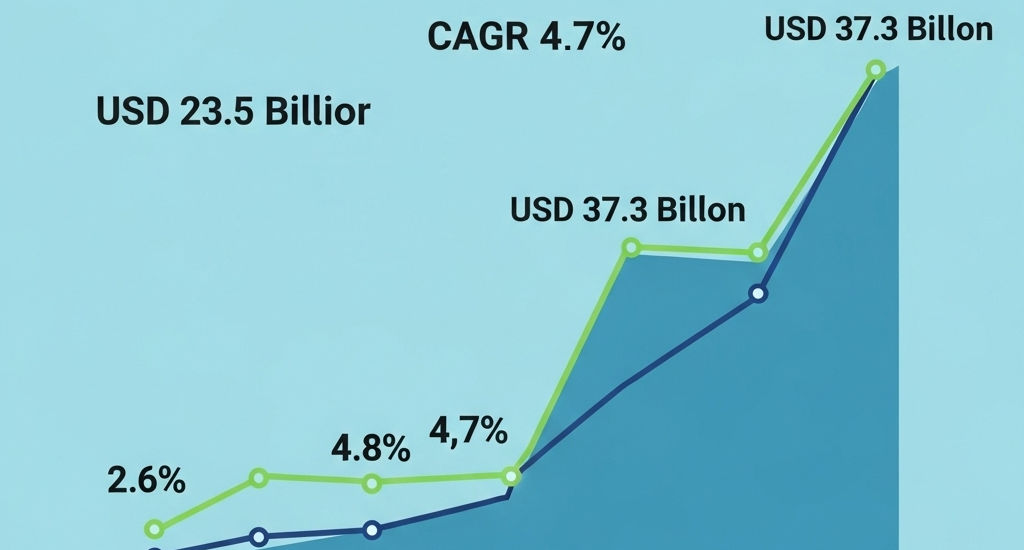
The numbers are staggering. According to Future Market Insights (FMI), The global Joint Replacement Market is estimated to be valued at USD 23.5 billion in 2025 and is projected to reach USD 37.3 billion by 2035, registering a compound annual growth rate of 4.7% over the forecast period.
FMI reports that knee replacements now dominate, accounting for 46.1% of all joint procedures worldwide. Hip replacements follow at 38.2%. Shoulders, elbows, and ankles trail behind, but their share is growing fast. And the patients? They’re getting younger. Too young, in many cases.
Get Sample Report: – https://www.futuremarketinsights.com/reports/sample/rep-gb-16281
Surgery Is No Longer the Last Resort—It’s the First Option
Here’s what’s really happening: we’re doing surgeries on people in their 40s who still have decades of wear left in their bodies. Why? Because the system makes it easy. Because insurance covers it. Because the promise of a pain-free life is more seductive than six months of physical therapy.
But nobody talks about what happens 10 or 15 years later—when that implant fails, and the patient is back on the table for a risky, complex revision. FMI points to market expansion, but it doesn’t confront the uncomfortable reality: early surgery locks patients into a lifetime of repeat procedures.
Technology Isn’t Always Progress
Robotic surgery. Advanced materials. AI-assisted precision. The industry loves to tout innovation—and sure, those tools can improve outcomes. But let’s be honest: technology isn’t neutral. It sells surgeries. It speeds up decisions. It makes expensive procedures look routine.
FMI credits tech with driving the market’s rise. No doubt. But that rise isn’t always good. If innovation just means more surgeries for more people at younger ages, then we’re not advancing—we’re retreating behind a smokescreen of progress.
The System Is Broken. And Everyone Knows It.
Here’s the quiet part no one says out loud: we are overtreating. Conservative treatments like weight loss, anti-inflammatory regimens, and physical therapy are often skipped or short-circuited. Why bother with slow fixes when there’s a quick cut and a titanium solution?
It’s not that joint replacement is wrong. Done right, it’s transformative. But we’ve built a model that rewards volume, not value. Faster surgeries. More implants. Higher bills. Repeat.
FMI’s data is clear—North America leads the global market. But that’s not just because of need. It’s because we’ve built a healthcare economy around high-cost, high-margin interventions. Meanwhile, millions in lower-income countries go without access to basic joint care, let alone surgery. That’s not a medical system. That’s a moral imbalance.
This Isn’t Just About Bones—It’s About Priorities
If we continue down this path, we’ll normalize a dangerous trend: treating aging like failure, and surgery like salvation. We’ll burden younger patients with lifetime implant management while ignoring the root causes—obesity, sedentary lifestyles, and chronic inflammation.
So what needs to change?
- Push non-surgical care first. Weight loss. Rehab. Corticosteroids. Take them seriously.
- Delay surgery when possible. Implants have limits. So do revision procedures.
- Make global access a priority. If the U.S. can afford thousands of elective surgeries a day, surely the world can afford basic orthopedic care.
- Redesign incentives. Reward better outcomes, not just more operations.
Explore In-Depth Analysis-Click Here to Access the Report:- https://www.futuremarketinsights.com/reports/joint-replacement-market
Outlook by Key Segments in the Joint Replacement Industry
By Product Types
- Hip Reconstruction
- Total Hip Reconstruction Implants
- Partial Hip Reconstruction Implants
- Revision Implants
- Knee Reconstruction
- Total Knee Reconstruction Implants
- Partial Knee Reconstruction Implants
- Revision Implants
- Shoulder Reconstruction
- Anatomic Shoulder Replacement Implants
- Reverse Shoulder Replacement Implants
- Modular Shoulder Replacement Implants
- Small Joint Reconstruction
- Ankle Replacement Implants
- Toe Replacement Implants
- Elbow Replacement Implants
- Wrist Replacement Implants
- Digits Replacement Implants
- Others
By Fixation Type:
- Cement
- Cementless
- Hybrid
By End User:
- Hospitals
- Orthopaedics Clinics
- Ambulatory Surgical Centers
By Region:
- North America
- Latin America
- Western Europe
- Eastern Europe
- South Asia and Pacific
- East Asia and Middle East and Africa (MEA)