The weight management supplement market isn’t growing because we’re getting healthier — it’s exploding because modern life is making us sick. Trapped in cycles of stress, poor diet, and misinformation, people are desperately turning to pills and powders to fix what society has broken.
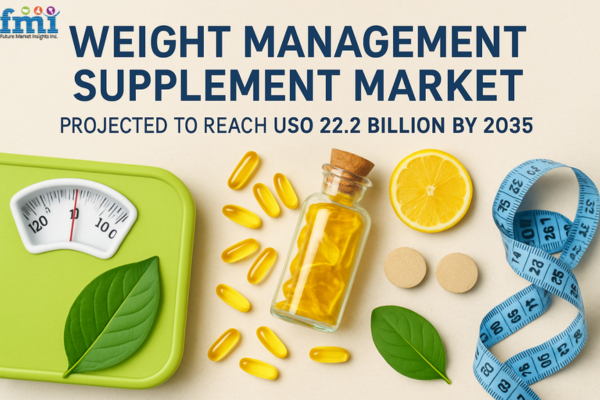
According to Future Market Insights (FMI), the global weight management supplement market is set to skyrocket from USD 5.9 billion in 2024 to a staggering USD 22.2 billion by 2035, expanding at a CAGR of 14.2%. That’s not just impressive growth. It’s a global alarm bell.
Request Sample Copy: https://www.futuremarketinsights.com/reports/sample/rep-gb-19483
We’re Not Winning — We’re Surrendering
This is no health revolution. It’s surrender. Millions are turning to appetite suppressants, fat burners, and thermogenics not because they want to — but because they feel they have no choice. Real solutions like nutritious food, time for exercise, and mental wellness support? Too expensive. Too inaccessible. Too slow.
Instead, the supplement industry offers something easier: hope in a capsule. Quick results. Easy wins. And it’s working — at least for the market. North America dominates this industry, and it’s no coincidence. The region is also home to some of the world’s highest obesity rates and most aggressive supplement marketing.
Natural Isn’t Always the Answer — But It’s Selling
There’s a growing obsession with “natural” and “plant-based” ingredients. Think green tea extract, Garcinia cambogia, L-carnitine. They’re hot. They’re marketable. And yes, they’re flying off shelves. FMI highlights that plant-based supplements are leading the charge, especially among younger consumers seeking “cleaner” alternatives.
But let’s be clear: “natural” doesn’t mean safe. And it definitely doesn’t mean effective. The truth? These labels are often little more than marketing gloss — a way to distract consumers from the fact that many of these products lack long-term evidence or oversight.
Still, brands are pivoting. Many are embracing third-party testing, transparent sourcing, and product personalization by age and gender. It’s a small step. But it’s still within the same ecosystem — one that profits from the very problem it claims to fix.
The Geography of Desperation
FMI data shows that while North America leads, Europe and Asia-Pacific aren’t far behind. Urban populations across these regions are mirroring Western health trends — rising weight gain, stress, sedentary jobs — and the market is responding with tailored supplements.
In emerging economies, the situation is more complex. Many nations are experiencing a double burden: undernutrition and obesity. It’s chaos. And in this chaos, supplements are seen as shortcuts. But in the absence of education and healthcare infrastructure, these products can do more harm than good.
Final Word: This Industry Doesn’t Reflect Progress — It Reflects Panic
Here’s the bitter truth: the weight management supplement boom doesn’t reflect a thriving wellness culture. It reflects panic. It reflects exhaustion. It reflects a world where people are cornered into solving health problems with products instead of policy.
No capsule will fix broken food systems. No powder can make up for a society that prioritizes profits over people. Supplements may offer temporary help. But they’re not the long-term answer. And the more we rely on them, the further we drift from real solutions.
Key Takeaways from FMI Report
- Market Size (2035): USD 41.3 billion
- CAGR: 7.9% (2025–2035)
- Product Trends: Surge in appetite suppressants, carb blockers, plant-based fat burners
- Top Region: North America leads in both obesity rates and supplement consumption
- Consumer Shift: Growing demand for “clean label” and personalized formulations
Ask for full Report: https://www.futuremarketinsights.com/reports/weight-management-supplement-market
Leading Brands
- Abbott Laboratories
- Herbalife Nutrition
- Pfizer
- Glanbia PLC
- NOW Foods
- Sanofi
- Almirall, S.A.
- Dr. Reddy’s Laboratories Ltd.
- Bayer AG
- Yakult Honsha Co., Ltd.
- Dentsu Inc.