

The food industry has a new golden child. It’s not soy. It’s not pea. It’s wheat protein.
Once an overlooked byproduct of flour processing, wheat-derived protein is now the backbone of protein bars, shakes, plant-based meats—even hair products and cosmetics. It’s cheap, functional, “clean,” and, perhaps most importantly, familiar. But in our rush to label it a miracle ingredient, we’ve conveniently forgotten to ask the most basic question: Is it safe for everyone?
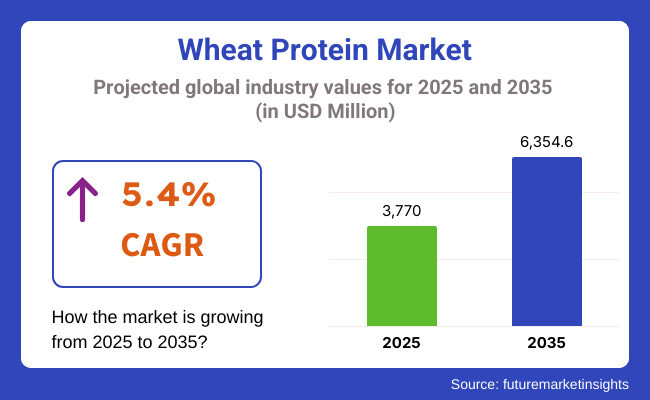
According to Future Market Insights, the global wheat protein market is on a steep upward trajectory—set to reach $11.29 billion by 2034, up from $5.9 billion in 2024. That kind of growth doesn’t happen by accident. It’s being driven by consumer demand for sustainable, plant-based alternatives to animal protein. Wheat fits the bill: abundant, inexpensive, versatile, and easy to integrate into everything from baked goods to meal replacements.
But here’s the problem: wheat protein isn’t a novelty. It’s gluten. And gluten is, for many, a problem.
Track the Latest Market Developments: Request a Sample Report: https://www.futuremarketinsights.com/reports/sample/rep-gb-6395
A Protein Built on Convenience, Not Clarity
Let’s be blunt—consumers don’t always know what they’re getting when they see “wheat protein” on an ingredient list. It sounds mild, harmless, even healthy. But behind the label is a complex set of compounds, including gliadins and glutenins—the same proteins responsible for triggering celiac disease and wheat allergies.
FMI’s research points to increasing use of wheat protein in sports nutrition and weight management products, particularly hydrolyzed and textured variants. These are processed to improve solubility and digestibility—but processing doesn’t always neutralize the underlying allergenic potential. And yet, the public is largely left in the dark about these risks.
As demand surges, safety gets sidelined.
Rising Interest in Market Trends: Our Detailed Report Provides Essential Insights: https://www.futuremarketinsights.com/reports/wheat-protein-market
Regulation Is Missing in Action
Despite wheat being one of the most common allergens globally, the rules around wheat protein use remain thin. Labels may flag “wheat” in bold. But they rarely explain what kind of wheat protein is being used, how it was processed, or whether it still contains immunoreactive compounds.
We’re watching a massive industry take shape without a clear, enforceable framework to ensure consumer safety. That’s not innovation. That’s negligence.
Growth Without Guardrails
FMI notes that wheat protein’s rise is closely tied to the clean-label movement. Consumers are avoiding soy and animal-based ingredients, turning instead to what sounds natural and uncomplicated. Wheat, with its long agricultural history, offers the illusion of simplicity. But “plant-based” doesn’t automatically mean “safe.” And “natural” certainly doesn’t mean transparent.
Let’s be clear: the wheat protein market isn’t inherently dangerous. But its rapid growth, coupled with vague labeling and minimal oversight, creates a risky mix. Especially in a market where processed variants are being introduced faster than regulations can adapt.
What’s Next?
We need standards. Not marketing promises. Clear definitions of what “wheat protein” means on a label. Testing protocols that assess how processing affects allergenicity. Regulations that put science before sales.
Because right now, the race to capitalize on wheat protein is outpacing our ability to protect the people consuming it.
The bottom line? A multi-billion-dollar market doesn’t excuse blind spots. Wheat protein might be the next big thing—but that doesn’t mean it’s ready for prime time without serious scrutiny.
Leading Wheat Protein Brands:
- Archer Daniels Midland Company
- Cargill, Inc.
- Agridient B.V.
- MGP Ingredients Inc.
- Manildra Group
- Roquette Frères SA
- Glico Nutrition Co. Ltd
- Kröner-Stärke GmbH
- Tereos SA
- Crespel & Deiters GmbH & Co. KG
- Others

Key Segments of the Report
By Product:
This segment is further categorized into Wheat Gluten, Wheat Protein Isolate, Hydrolysed Wheat Protein, and Textured Wheat Protein.
By Form:
This segment is further categorized into Dry and Liquid.
By Application:
This segment is further categorized into Animal Feed, Bakery & Confectionary, Nutrition Supplements, Dairy Products, Cosmetics and Personal Care, and Other Applications.
By Region:
Industry analysis has been carried out in key countries of North America, Latin America, Eastern Europe, Western Europe, East Asia, South Asia & Pacific, Central Asia, Balkan and Baltic Countries, Russia & Belarus and the Middle East & Africa.




