It started as a consumer revolt. People wanted fewer chemicals, fewer mystery ingredients, and fewer words they couldn’t pronounce. They wanted labels that read like recipes, not lab reports.
But what began as a call for transparency has turned into something else entirely: a marketing free-for-all. And regulators are nowhere to be found.
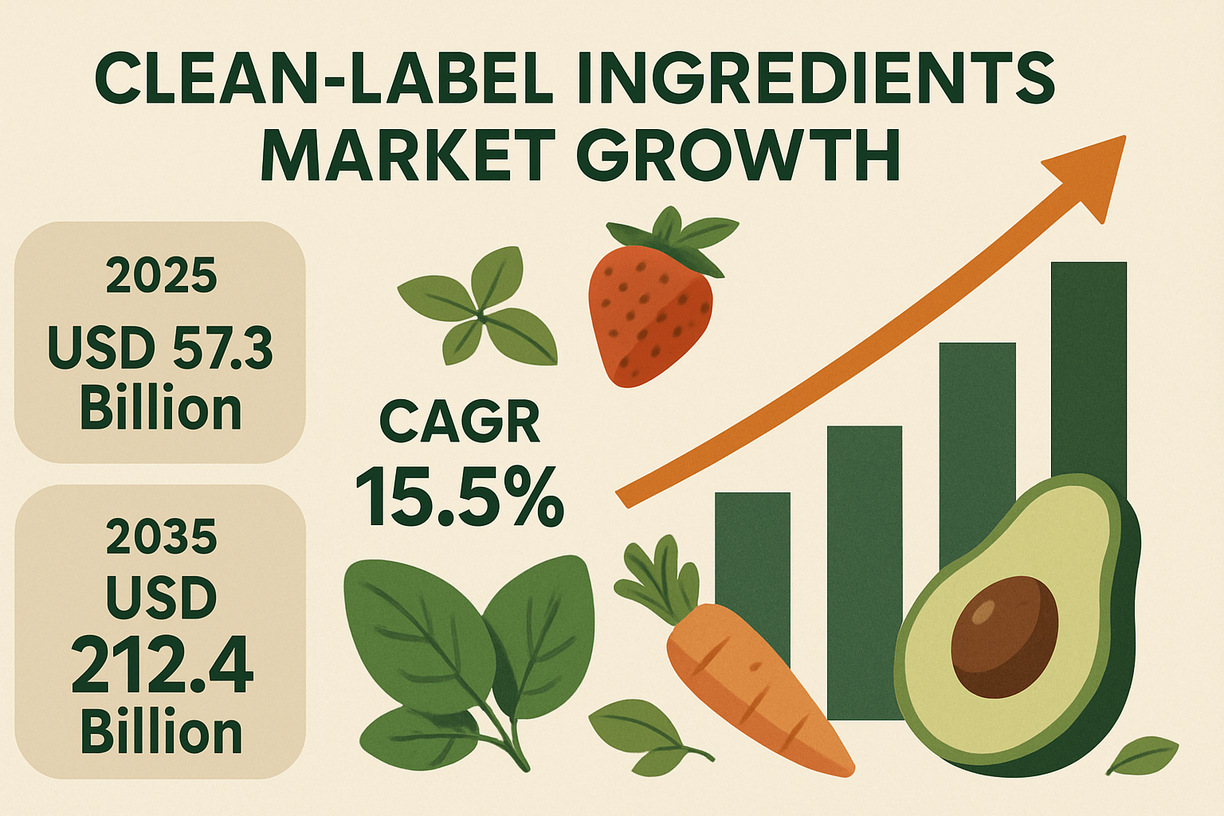
According to a recent analysis by Future Market Insights, the global clean-label ingredients market is on a tear—projected to grow from $47 billion in 2025 to more than $90 billion by 2035. That kind of growth would make anyone take notice. And the food industry certainly has.
Brands are reformulating at warp speed. Artificial preservatives are being pulled. Colorants replaced. Texturizers quietly swapped out for things that sound more plant-based, more wholesome, more “real.”
But here’s the problem: there is no legal definition of “clean label.” Not in the U.S. Not anywhere, really.
Access Key Market Insights: Request a Sample Report Now: https://www.futuremarketinsights.com/reports/sample/rep-gb-11166
A Feel-Good Phrase With No Accountability
“Clean” sells. That’s the point. It evokes safety, simplicity, and health—even if the product behind the label has none of those things. And because there’s no official regulatory framework for what counts as “clean,” the food industry is free to invent its own rules.
One company might remove artificial preservatives. Another might cut synthetic flavorings. A third might just change the name of an ingredient to something softer, friendlier. All three might call it “clean.” And they’d all be legally correct.
But legally correct and ethically honest are not the same thing.
Rising Interest in Market Trends: Our Detailed Report Provides Essential Insights: https://www.futuremarketinsights.com/reports/clean-label-ingredients-market
America’s Empty Shelf Standards
The U.S. loves to talk about innovation. But in the clean-label space, what we really have is abdication.
Companies can sell rebranded additives, unproven “natural” alternatives, or reformulated ingredients with questionable efficacy—all while advertising transparency. Meanwhile, the consumer thinks they’re buying purity. In reality, they’re buying a well-marketed compromise.
And because there’s no standardized testing, no baseline definition, and no enforcement, there is no way for the average person to tell what “clean” even means anymore.
That should be unacceptable. Especially in a country with a $1.1 trillion food industry and a long history of consumer trust being shattered by false claims.
Global Trend, Domestic Failure
The clean-label trend is not just an American obsession—it’s global. Future Market Insights points to major growth in Europe, Asia, and Latin America, where changing food habits and rising health consciousness are driving the demand.
But unlike some other regions, the U.S. remains a major market with minimal scrutiny. That combination—skyrocketing consumer interest and low regulatory pressure—is precisely what makes it so dangerous.
It’s a recipe for exploitation, not innovation.
The Illusion of Simplicity
As FMI notes, starches, plant-based gums, enzyme systems, and fermentable fibers are leading the way in new “clean” formulations. These are exciting technologies. Some are well studied. Others, less so. What’s clear is that the industry is moving fast.
But when speed replaces scrutiny, and slogans replace science, it’s only a matter of time before consumers are misled—not by a bad actor, but by a broken system.
The Bottom Line
The clean-label boom is here. It’s lucrative, global, and it’s not slowing down. But in the absence of enforceable definitions, verifiable standards, or regulatory guardrails, it is also an open invitation for abuse.
If we want clean labels to mean anything more than good design and clever copy, we need more than market growth. We need rules. We need truth. We need accountability.
Until then, the word “clean” on your food label is just that: a word. And nothing more.
Key Market Players
- Archer Daniel Midland Company
- Brisan Group
- Cargill
- Chr. Hansen A/S
- Carbon
- DSM-Firmenich
- Exberry
- Ingredients
- Kerry Group PLC
- Limagrain Ingredients
Explore Functional Food Ingredients Industry Analysis: https://www.futuremarketinsights.com/industry-analysis/functional-food-ingredients
Key Segments
By Type:
The clean-label market is segmented by type into natural colors, natural flavors, fruit and vegetable ingredients, starch & sweeteners, flour, malt and others.
By Form:
According to the form, the clean-label market is segmented into powder and liquid.
By End-Use:
Segment of the clean-label ingredients according to the form includes prepared foods/ready meals, beverages, bakery & confectionary, dairy & frozen desserts, snacks & convenience foods, and others.
By Region:
According to the region, the clean-label ingredients market is segmented into North America, Latin America, Western Europe, South Asia & Pacific, East Asia, Middle East & Africa.