

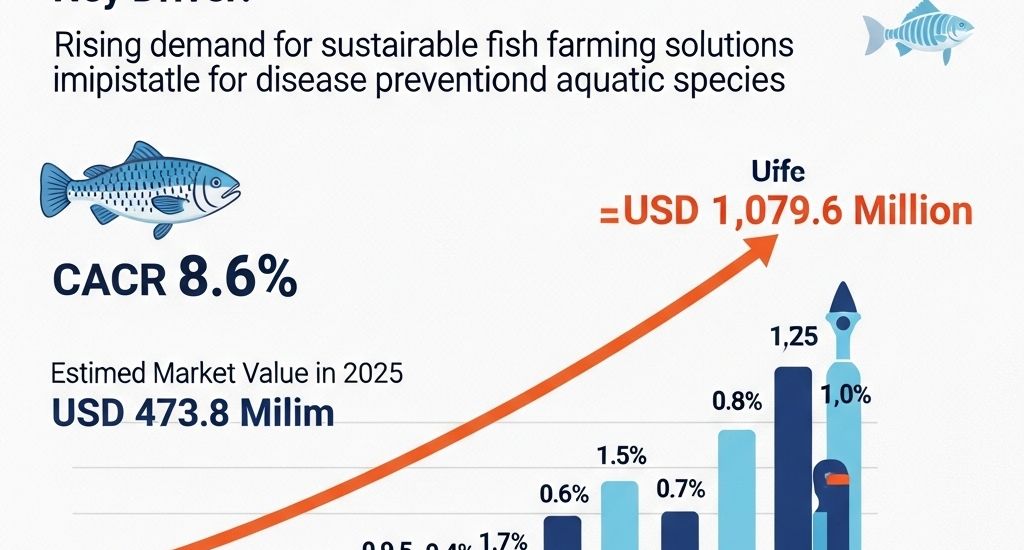
According to Future Market Insights, the global aquaculture vaccines market hit USD 473.8 million in 2025 and is projected to soar past USD 1,079.6 million by 2035, with a CAGR of 8.6%. That’s not industry fluff—that’s a market being forced to grow by necessity. Disease outbreaks are eating into profits, collapsing ecosystems, and threatening food security. The pressure is on.
After years of silence, a slow-moving crisis is beginning to surface in global aquaculture—and it’s deadly. Fish farms are under siege from bacterial outbreaks. And we’re running out of time to fix it. The solution? Not more antibiotics. Not more chemicals dumped into our oceans. The answer is vaccines. Proven. Preventive. And desperately underused.
Get Sample Report: – https://www.futuremarketinsights.com/reports/sample/rep-gb-16501
Most of the current action revolves around injectable vaccines, especially in high-value species like salmon. They dominate the market for now. But that won’t last. Immersion and oral vaccines are gaining traction fast. They’re easier to administer, cheaper at scale, and vital for countries in Asia-Pacific—where massive hatcheries can’t afford labor-intensive processes.
And yet, while the rest of the world adapts, the United States is asleep at the wheel. Federal funding is weak. Policy is scattered. And worst of all, antibiotics still flood the system. This isn’t just short-sighted—it’s reckless.
FMI’s data makes it clear: North America and Europe are key players, but Asia-Pacific is where the future is unfolding. Countries like China, India, and Vietnam aren’t waiting for permission—they’re building entire aquaculture ecosystems with vaccine strategies baked in. Meanwhile, American producers face export restrictions, mounting antibiotic resistance, and shrinking competitiveness.
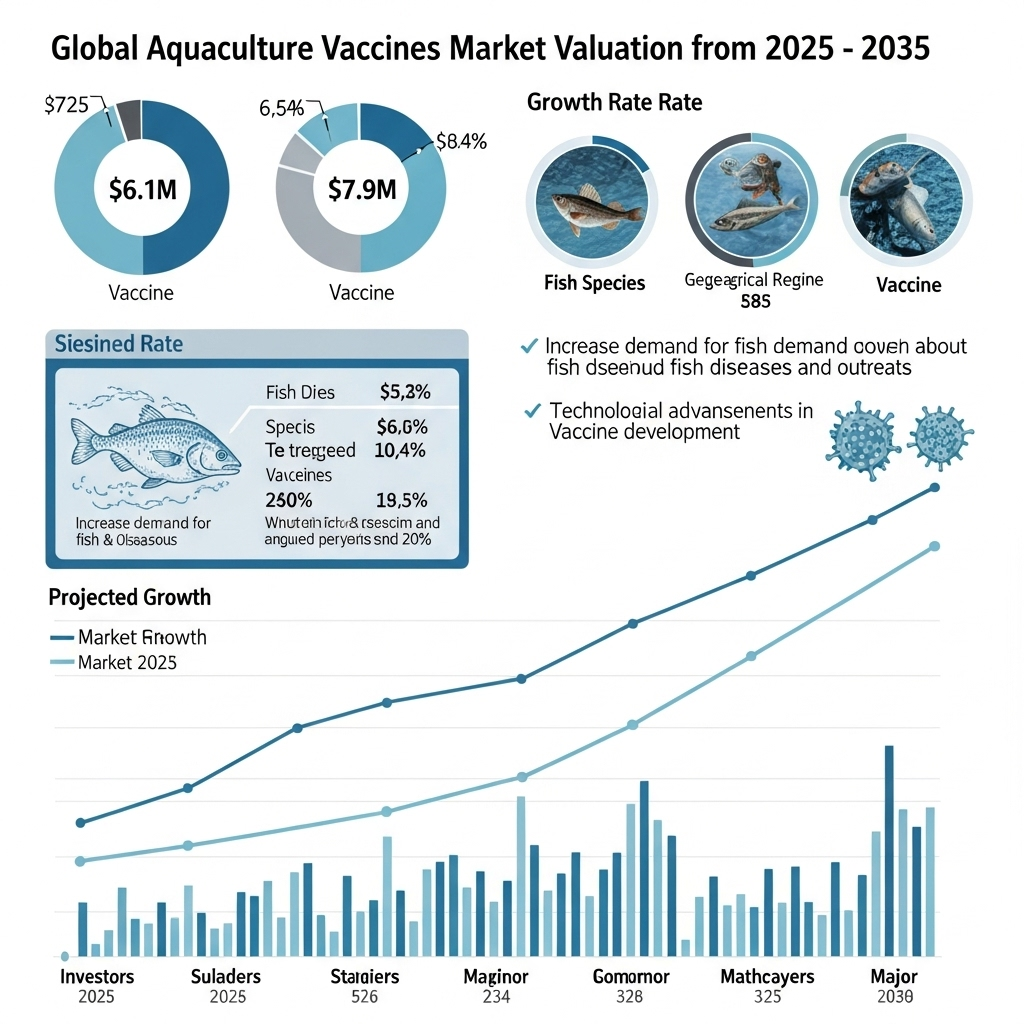
Let’s not sugarcoat this: fish are livestock now. Whether that makes you uncomfortable or not, it’s the truth. And like livestock, they need protection. Vaccines aren’t a luxury. They are a non-negotiable tool in the war against disease, economic waste, and environmental collapse.
We’ve seen this movie before. Ignore the science, cut corners, and pay the price later. This time, the warning signs are everywhere. A biologically smarter, economically stronger, and environmentally responsible path exists—and it’s spelled V-A-C-C-I-N-E-S.
The clock is ticking. Either we act like aquaculture matters, or we keep playing roulette with the health of our oceans and our food supply. The future isn’t waiting.
Explore In-Depth Analysis-Click Here to Access the Report:- https://www.futuremarketinsights.com/reports/aquaculture-vaccines-market
Key Segments:-
By Vaccine type:
In terms of vaccine type, the industry is divided into Inactivated Vaccines, DNA and Recombinant Vaccines, Live Attenuated Vaccines, Subunit Vaccines among Others
By Fish Species:
In terms of fish species, the industry is segregated into Salmon, Tilapia, Catfish, Carp, Shrimp and Other Species.
By Pathogen:
In terms of pathogen, the industry is segregated into bacteria, virus and others.
By End User:
In terms of end user, the industry is divided into commercial aquaculture farms, small-scale farmers in emerging markets, government and cooperative programs, research institutions and diagnostic labs.
By Region:
Key countries of North America, Latin America, East Asia, South Asia & Pacific, Western Europe, Eastern Europe and Middle East and Africa (MEA) have been covered in the report.




