In the shadow of more high-profile chemical markets, potassium formate has quietly become indispensable to modern industry. Whether it’s keeping airport runways ice-free without corroding the tarmac or ensuring safer, more efficient oil drilling in the Arctic, this unsung hero of industrial chemistry is finally beginning to attract the recognition—and investment—it deserves.
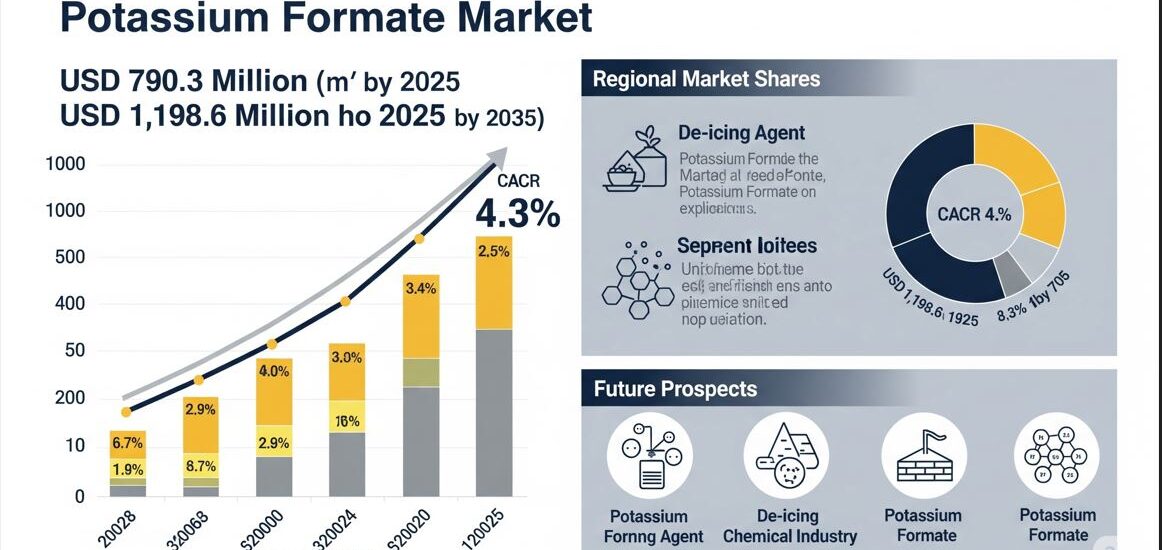
According to a new analysis from Future Market Insights, the potassium formate market is on a steady upward trajectory, projected to cross USD 950 million by 2033, with a consistent CAGR of 4.5% over the next decade. But beyond the numbers lies a more nuanced narrative: one where sustainability, performance, and geopolitical urgency intersect.
The De-Icing Dilemma: Potassium Formate as a Safer Alternative
Let’s talk about winter—a season that continues to challenge the world’s transportation infrastructure. Traditional road salts and de-icing chemicals, such as calcium chloride and sodium chloride, have long been environmental and logistical nightmares. From corroding vehicles and concrete to polluting freshwater systems, the hidden costs are enormous.
Enter potassium formate, a biodegradable, low-corrosion alternative that works at low temperatures without destroying the environment it’s trying to protect. In Scandinavia and parts of Central Europe, this chemical has become the go-to runway de-icer. Airports from Oslo to Munich are turning to potassium formate-based fluids, not because they’re trendy—but because they work without wrecking aircraft landing gear or local ecosystems.
Request Report Sample: https://www.futuremarketinsights.com/reports/sample/rep-gb-9834
FMI’s market data shows a rising demand across municipal and commercial de-icing sectors, particularly as governments re-evaluate the long-term infrastructure costs of chloride-based salts. Cities that invest in cleaner solutions now will save millions in repair and environmental remediation later.
In Oilfields, It’s a Game-Changer—But No One Talks About It
What’s less known—even within the energy sector—is potassium formate’s critical role in high-pressure, high-temperature oil and gas drilling. Unlike conventional brines, potassium formate offers high density with low toxicity, allowing operators to drill deeper, cleaner, and faster.
Future Market Insights highlights a growing reliance on formate-based fluids in offshore and Arctic drilling operations, where environmental risks are high and regulatory scrutiny is intense. The chemical’s low environmental impact and thermal stability make it ideal for closed-loop systems, where fluids are recovered and reused rather than discarded.
With energy companies under pressure to reduce ecological impact without sacrificing performance, potassium formate isn’t just useful—it’s strategic. It represents one of the few viable pathways to make drilling more sustainable without upending operational protocols.
Why Is the U.S. Still Lagging Behind?
Here’s where things get interesting—and frustrating. While Europe leads adoption, especially in infrastructure and aviation, the U.S. has been slow to move. Despite the obvious benefits, potassium formate use in American airports and municipalities remains limited, largely due to cost perception and procurement inertia.
But in the age of trillion-dollar infrastructure investments and mounting climate concerns, that excuse doesn’t hold. Investing in higher-quality de-icers like potassium formate isn’t a luxury—it’s a long-term cost-saving strategy. Reduced corrosion, fewer road repairs, and lower environmental clean-up costs are all hard-dollar benefits.
FMI’s report points to potential growth in North America, but warns that policy clarity and industry awareness will be critical for broader market penetration. Without aggressive education and regulation, the U.S. may continue to opt for short-term savings at the expense of long-term resilience.
Browse the Complete Report: https://www.futuremarketinsights.com/reports/potassium-formate-market
Sustainability Isn’t Just a Buzzword—It’s the Future of Chemicals
In many ways, potassium formate is the poster child for what the next generation of industrial chemicals should look like—effective, environmentally safe, and cost-efficient over time.
FMI’s forecast indicates that green chemistry is not just a trend, it’s a business imperative. Whether it’s lowering the environmental impact of winter maintenance, improving workplace safety in drilling rigs, or meeting ESG benchmarks, potassium formate aligns perfectly with modern industrial priorities.
And it’s not just about existing markets. New applications are emerging in HVAC systems, carbon capture technologies, and even advanced battery chemistries—all of which could further expand demand for potassium formate and accelerate innovation.