

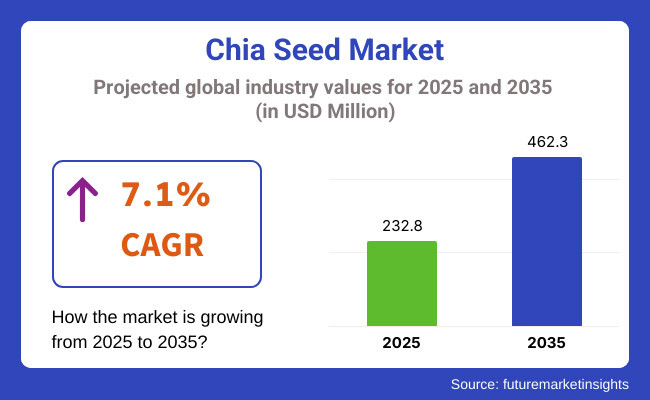
The global chia seed market is poised for substantial growth, projected to rise from USD 232.8 million in 2025 to USD 462.3 million by 2035, at a CAGR of 7.1%. This surge reflects the increasing global shift toward health-conscious, plant-based, and clean-label food consumption. Known for their rich nutritional profile, chia seeds are gaining traction across food and beverage segments, from functional drinks to bakery products and dietary supplements.
Get Ahead of Market Shifts: Request Your Sample Report: https://www.futuremarketinsights.com/reports/sample/rep-gb-4439
Market Trends Highlighted:
The rising popularity of chia seeds is largely driven by the global movement toward wellness and sustainable nutrition. Consumer preference for superfoods with high fiber, omega-3 content, and antioxidants has positioned chia as a staple in plant-based and functional diets. The trend of clean-label food production is pushing manufacturers to offer organic, non-GMO, and allergen-free chia products. Additionally, the surge in veganism and vegetarianism worldwide has further boosted the inclusion of chia seeds in everyday diets, including in fortified foods, snacks, and ready-to-eat meals.
Heightened Market Interest: Our Complete Report Delivers Extensive Analysis and Trends: https://www.futuremarketinsights.com/reports/chia-seed-market
Recent Developments:
Key developments in the market include the expansion of certified organic chia seed supply chains, collaborations between global exporters and domestic health food producers, and product innovations targeting niche segments such as sports nutrition, elderly health, and gluten-free options. Technological advancements in food processing have also led to the incorporation of chia seeds in convenient formats like chia milk, powdered blends, and pre-soaked snack packs.
Key Takeaways of the Report:
The market is expected to nearly double by 2035, growing at a steady CAGR of 7.1%.
Organic chia seeds hold a dominant share, making up 55% of global sales in 2025.
Increasing consumer interest in digestive and heart health is fueling chia consumption.
E-commerce and health-focused retail are expanding accessibility and awareness globally.
Regional markets such as the U.S. and Japan lead in volume and innovation.
Market Drivers:
- Nutritional Value: Rich in omega-3s, fiber, protein, and antioxidants, chia seeds are being embraced as a superfood.
- Plant-Based Lifestyle Adoption: The growing number of vegetarian and vegan consumers worldwide is significantly driving demand.
- Functional Food Growth: Health-conscious consumers are looking for ingredients that support digestion, heart health, and weight management.
- Clean Label Movement: Increasing demand for organic, allergen-free, and non-GMO foods supports chia seed sales.
- Rise of E-commerce: Digital platforms are making chia seeds more accessible, especially in emerging economies.
Regional Insights:
United States:
With a projected value of USD 51 million by 2025 and a CAGR of 6.7%, the U.S. remains the largest market. Factors such as growing health awareness, preference for clean-label products, and the mainstreaming of plant-based diets support the strong demand. The integration of chia seeds into cereals, snacks, and functional beverages continues to drive innovation in the market.
Japan:
Japan is set to witness a CAGR of 7.5%, reaching USD 29 million by 2025. The aging yet health-conscious population and traditional emphasis on nutritional wellness contribute to the country’s growing interest in chia. Chia seeds are increasingly featured in both traditional and modern food formats, from rice blends to smoothies and health bars.
India:
India’s market is growing at a CAGR of 5.3%, reaching USD 22 million by 2025. The country’s rising middle class, expanding urban retail, and vegetarian dietary habits make it a promising market for chia-based products. Government health initiatives and consumer education are further aiding chia’s integration into the Indian diet, particularly in bakery items and beverages.
Germany & United Kingdom:
Both countries are showing robust demand for chia seeds, with Germany growing at 6.0% CAGR and the UK at 5.6%. Trends around organic food consumption, fitness, and sustainable nutrition are supporting consistent market expansion in these regions.
Country-Wise CAGR Analysis (2025–2035):
| Country | Market Volume (USD Million) | CAGR (%) |
| United States | 51.0 | 6.7% |
| Japan | 29.0 | 7.5% |
| India | 22.0 | 5.3% |
| Germany | 20.0 | 6.0% |
| United Kingdom | 18.0 | 5.6% |
Competition Outlook:
The global chia seed market is moderately fragmented, with both international exporters and regional players competing on product quality, certification, and price. Key players are focusing on organic certification, sustainable sourcing practices, and strategic partnerships to enhance market penetration. Notable market participants are also investing in product diversification—introducing chia oils, powdered supplements, and chia-based dairy alternatives—to stay ahead in the competitive landscape.
Leading Chia Seed Brands
- The Chia Company
- Benexia Europe S.A.
- Glanbia Nutritionals, Inc.
- Mamma Chia LLC
- Navitas Organics
- Bob’s Red Mill Natural Foods, Inc.
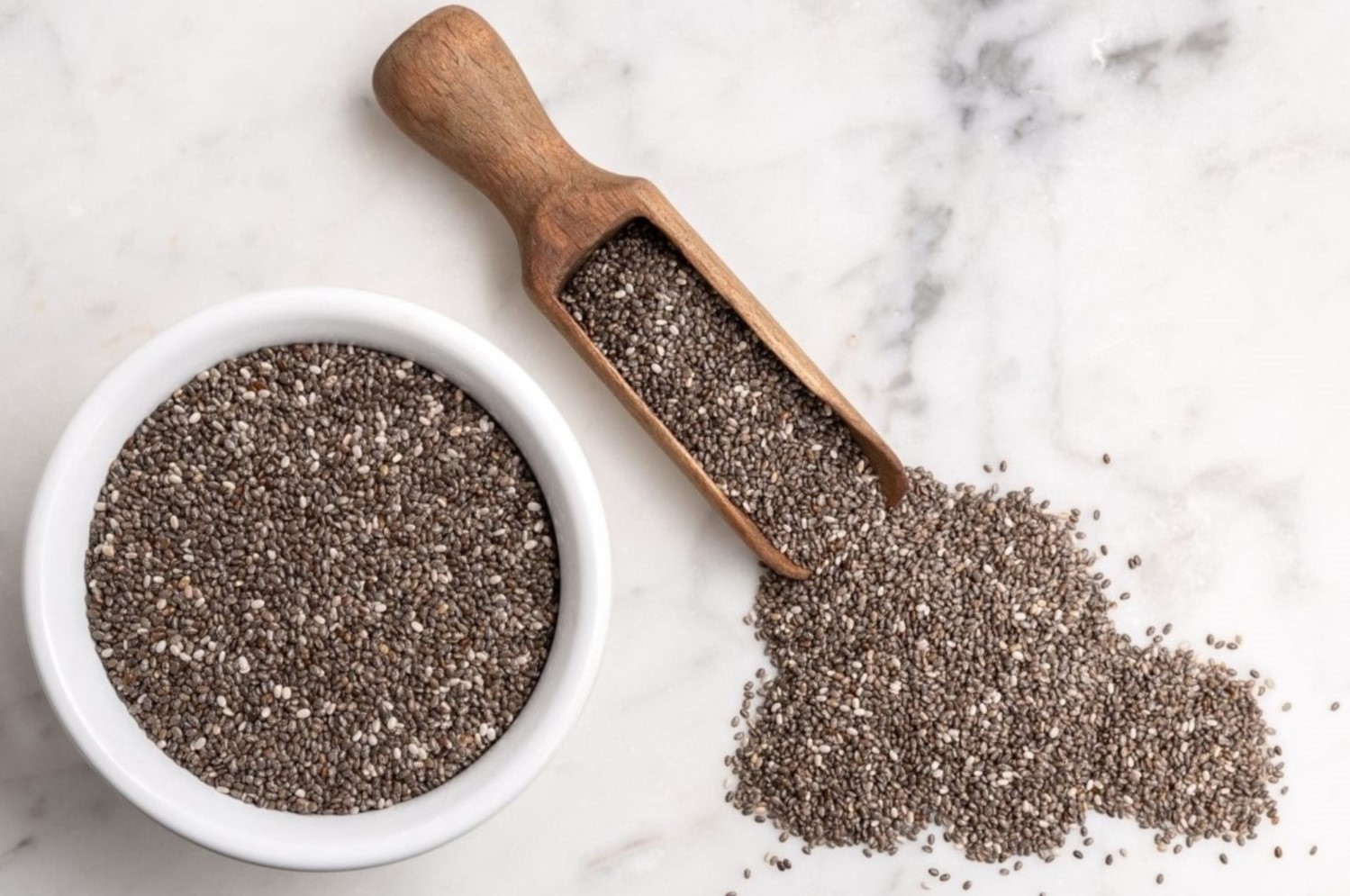 Explore Fruits and Vegetables Industry Analysis: https://www.futuremarketinsights.com/industry-analysis/fruits-and-vegetables
Key Segments
By Origin:
The market is segmented into organic and conventional chia seeds.
By Color:
Chia seeds are categorized by color into black, white, and brown varieties.
By Form:
The market includes whole chia seeds, ground chia seeds, chia seed oil, and other forms.
By End-use Application:
Applications encompass the food and beverages sector, including packed chia, nutritional bars, bakery and snacks, breakfast cereals, beverages, and others; the personal care products and cosmetics sector; the animal feed and pet food sector; nutritional and dietary supplements; and other end-use applications.
By Region:
The market is analyzed across North America, Latin America, Western Europe, Eastern Europe, South Asia & Pacific, East Asia, Central Asia, Balkan and Baltic countries, Russia and Belarus, and the Middle East & Africa.




