

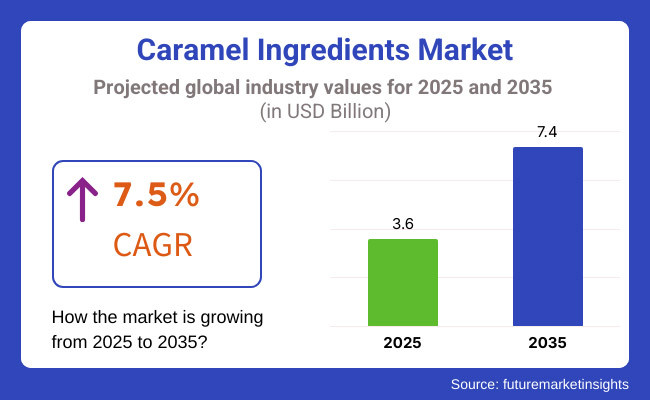
 The global caramel ingredients market is poised for significant expansion, with current valuations of approximately USD 3.6 billion expected to double, reaching USD 7.4 billion by 2035. This growth, projected at a CAGR of 7.5%, reflects the rising demand for caramel components in bakery, confectionery, beverage, and snack products. A shift toward clean-label, naturally derived ingredients is also fueling innovation, reshaping the competitive landscape of the industry.
Get Ahead of Market Shifts: Request Your Sample Report: https://www.futuremarketinsights.com/reports/sample/rep-gb-11408
Key Industry Highlights
- Market Size and Growth: The caramel ingredients market is expected to grow from USD 3.6 billion in 2025 to USD 7.4 billion by 2035, marking a CAGR of 7.5%. This growth is primarily fueled by increasing consumer preference for natural, flavorful, and visually appealing food and beverage products.
- Consumer Preferences: The push for clean-label and transparent ingredient lists is encouraging manufacturers to adopt naturally derived caramel products, especially for premium applications in snacks, desserts, and beverages.
- Applications Expansion: Beyond traditional usage in confectionery, caramel ingredients are being embraced in plant-based alternatives, ready-to-eat snacks, and gourmet products, expanding the scope of innovation.
Growing Need for Market Insights: Access Our Full Report for Thorough Analysis and Trends: https://www.futuremarketinsights.com/reports/caramel-ingredients-market
Collaboration Between Small Market Players to Strengthen Product Portfolio
The competitive dynamics of the caramel ingredients market have witnessed a surge in partnerships, mergers, and co-branding efforts—particularly among small and mid-sized players. These collaborations are aimed at enhancing product offerings through improved quality, innovative formulations, and tailored solutions for niche markets. Many artisanal and regional producers are capitalizing on the trend toward premiumization by creating unique, clean-label caramel products. Strategic alliances with organic and plant-based food companies are also gaining traction to cater to the evolving health-conscious consumer base.
Market Concentration and Competitive Outlook
While large food ingredient corporations hold a significant share of the market, the landscape remains moderately fragmented due to the influx of niche brands and startups emphasizing artisanal and sustainable products. Market leaders are investing in R&D and reformulation to comply with global food safety regulations and consumer demand for reduced sugar, non-GMO, and natural colorants.
Multinational giants like Cargill and Kerry Group are expected to continue dominating, thanks to robust global distribution channels and strong customer bases. However, smaller firms focusing on clean-label caramel syrups, powders, and inclusions are likely to disrupt the market by offering customized solutions for emerging applications.
Country-wise Insights
United States
The U.S. caramel ingredients market is growing at a CAGR of 7.5%, fueled by a deep-rooted love for sweet flavors and the influence of major food chains like Starbucks. Popular offerings such as caramel macchiatos have cemented caramel’s status in beverage menus. Consumer demands for transparency and natural products are pushing producers to develop caramel ingredients free from artificial additives.
United Kingdom
With a CAGR of 7.6%, the UK market reflects a unique blend of tradition and innovation. Timeless favorites like sticky toffee pudding are merging with modern snack innovations, such as caramel-infused gourmet popcorn and crisps. The country’s growing preference for artisanal and indulgent treats bodes well for niche caramel producers.
European Union
The EU market, expected to grow at 7.2% CAGR, is heavily influenced by a strong regulatory push toward natural additives. Traditional pastry and confectionery sectors continue to incorporate caramel, while plant-based alternatives present new growth opportunities. Sustainability goals are driving low-processed and eco-conscious caramel ingredient development.
Japan
Japan’s caramel ingredient market, growing at 7.5% CAGR, is characterized by innovation in high-end confectionery. Products like Glico’s Caramel Almond Pretz highlight the integration of caramel into traditional Japanese snacks. With gifting culture playing a vital role, premium caramel products are positioned to gain further traction.
South Korea
South Korea’s market is anticipated to expand at a CAGR of 7.2%. The popularity of caramel-infused snacks is rising, propelled by media influence from K-pop and K-drama culture. From traditional snacks to Westernized fusions, caramel ingredients are becoming staples in the dynamic Korean snack food industry, with appeal spreading to international markets.
Competition Outlook
The caramel ingredients market is entering a phase of heightened innovation and brand differentiation. While major players continue to dominate through economies of scale, emerging brands are quickly gaining ground through tailored offerings and agile production capabilities. Companies are increasingly focusing on:
- Developing organic, vegan, and allergen-free caramel options.
- Innovating in flavor combinations (e.g., sea salt caramel, spicy caramel).
- Leveraging e-commerce and direct-to-consumer platforms for global reach.
In the coming years, market competition will intensify as both multinational and regional firms invest in novel applications, sustainability initiatives, and technology-driven formulation techniques.
Key Company Profile
- Cargill, Incorporated
- Kerry Group
- Sensient Technologies Corporation
- Puratos Group
- Sethness Caramel Color
- DDW The Color House
- Nigay
- Bakels Worldwide
- Martin Braun KG
- Alvin Caramel Colours (India) Private Ltd

Key Segments
By Type:
- Inclusions
- Fillings
- Toppings
- Shades
- Flavours
- Others
By Application:
- Confectionery Products
- Ice Creams & Cakes
- Bakery Products
- Beverages
- Alcoholic
- Non-Alcoholic
- Others
By Form:
- Stable
- Liquid
- Powder or Granular
By Region:
- North America
- Latin America
- Western Europe
- Eastern Europe
- East Asia
- South Asia Pacific
- Middle East and Africa




