The Silica for Solution-Polymerized Styrene-Butadiene Rubber (S-SBR) market is expected to experience substantial growth from 2025 to 2035. As electric vehicles (EVs) become a central force in the global automotive transition, the components that power their performance — from batteries to tires — are undergoing rapid innovation. Among the most crucial yet underexplored aspects of this evolution lies in tire material science, particularly in the interaction between Solution Styrene-Butadiene Rubber (S-SBR) and high-dispersion silica. While silica as a reinforcing filler is widely acknowledged in conventional green tires, the specialized use of high-dispersion or precipitated silica in combination with S-SBR for low rolling resistance EV tires remains a niche yet highly consequential topic.
This article delves into the hidden technical and commercial relevance of high-dispersion silica in EV tire performance, highlighting its pivotal role in achieving regulatory compliance, enhancing efficiency, and unlocking growth potential in the S-SBR market.
𝐌𝐚𝐤𝐞 𝐈𝐧𝐟𝐨𝐫𝐦𝐞𝐝 𝐃𝐞𝐜𝐢𝐬𝐢𝐨𝐧𝐬 – 𝐀𝐜𝐜𝐞𝐬𝐬 𝐘𝐨𝐮𝐫 𝐒𝐚𝐦𝐩𝐥𝐞 𝐑𝐞𝐩𝐨𝐫𝐭 𝐈𝐧𝐬𝐭𝐚𝐧𝐭𝐥𝐲! https://www.futuremarketinsights.com/reports/sample/rep-gb-8395
Understanding High-Dispersion Silica: A Technical Deep Dive
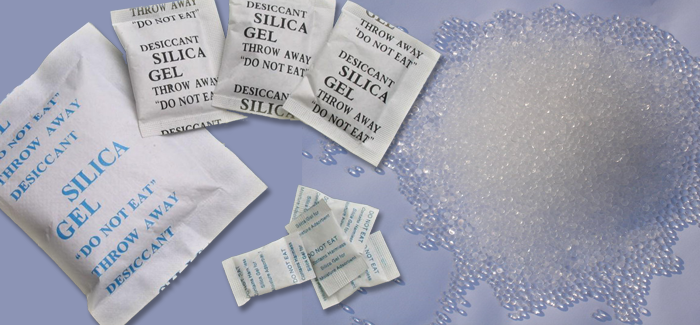
Traditional reinforcing fillers in tire manufacturing often struggle with uniform dispersion, limiting their ability to improve performance without compromising durability. High-dispersion silica, often referred to as precipitated silica, addresses this limitation. With a high surface area, optimized porosity, and a silanol-rich surface, this form of silica interacts more effectively with S-SBR polymers. The result is a tire compound that balances traction, durability, and energy efficiency, characteristics that are critical for the unique requirements of electric vehicles.
Unlike carbon black, high-dispersion silica is engineered to maintain flexibility while lowering hysteresis losses. This directly reduces energy dissipation during tire rotation, which translates to lower rolling resistance — a key parameter for EVs aiming to maximize driving range per charge. A study published by the Rubber Division of the American Chemical Society showed that the inclusion of optimized silica-S-SBR compounds can reduce rolling resistance by over 25% compared to conventional tire formulations.
Moreover, the coupling agents used to bridge silica with S-SBR, such as bifunctional silanes, significantly enhance interfacial bonding, leading to improved wear resistance and wet grip. These synergies form the foundation of next-generation tread formulations tailored specifically for EV dynamics, including heavier vehicle weights and high torque outputs.
Strategic Importance in EV Tire Design
Electric vehicles exert significantly different forces on tires compared to internal combustion engine (ICE) vehicles. Instant torque, regenerative braking, and higher curb weights accelerate tread wear, demanding tire compounds that are simultaneously soft and durable. S-SBR, when reinforced with high-dispersion silica, offers a solution that meets these needs while preserving critical attributes like traction and temperature resistance.
𝐔𝐧𝐥𝐨𝐜𝐤 𝐂𝐨𝐦𝐩𝐫𝐞𝐡𝐞𝐧𝐬𝐢𝐯𝐞 𝐌𝐚𝐫𝐤𝐞𝐭 𝐈𝐧𝐬𝐢𝐠𝐡𝐭𝐬 – 𝐄𝐱𝐩𝐥𝐨𝐫𝐞 𝐭𝐡𝐞 𝐅𝐮𝐥𝐥 𝐑𝐞𝐩𝐨𝐫𝐭 𝐍𝐨𝐰: https://www.futuremarketinsights.com/reports/silica-for-s-sbr-market
Global tire manufacturers have already begun integrating these compounds in their EV-focused product lines. Michelin’s e.Primacy and Bridgestone’s Turanza EV tires prominently feature silica-enhanced tread compounds specifically designed for EVs. In both cases, manufacturers highlight reduced rolling resistance and longer tread life as key benefits attributed to silica-S-SBR integration.
Notably, Continental’s EcoContact 6 tire series uses a proprietary silica compound in the tread that reportedly improves mileage by up to 20%, directly linking silica performance to real-world energy efficiency. These examples underscore the practical application of high-dispersion silica in achieving both technical performance and environmental benchmarks.
Regional Trends and Market Challenges
The application of high-dispersion silica in the S-SBR segment is most mature in innovation-driven regions such as Japan, Germany, and South Korea, where both EV adoption and green tire technologies are advancing in tandem. Companies like Evonik Industries, PPG Industries, and Solvay are heavily investing in the development of specialty silicas optimized for S-SBR compatibility.
However, challenges remain. The production of high-dispersion silica involves complex precipitation, drying, and surface treatment processes that demand substantial energy and raw material control. These technical barriers contribute to higher costs, limiting broader adoption in price-sensitive markets. Moreover, fluctuations in silane coupling agent availability and rising logistics costs have disrupted supply chains, particularly for tire makers in Southeast Asia and India.
Despite these challenges, the pricing gap between carbon black and specialty silica is narrowing, driven by environmental regulations and demand for sustainable alternatives. This is paving the way for increased market penetration of advanced silica in regions where tire labeling and eco-design policies are being adopted more aggressively.
Future Outlook: Sustainable Integration & Policy Push
One of the most significant drivers of silica-S-SBR innovation is regulatory. The European Union’s tire labeling scheme, which includes rolling resistance and wet grip ratings, has incentivized manufacturers to adopt materials that score highly on both fronts. Similarly, Japan’s voluntary labeling program and the United States’ efforts to reduce vehicular CO₂ emissions through tire efficiency are pushing the industry toward more sustainable compounds.
General & Advanced Materials: https://www.futuremarketinsights.com/industry-analysis/general-and-advanced-materials
Looking ahead, the convergence of net-zero mobility targets, recyclable tire technologies, and circular economy policies is expected to accelerate demand for silica-reinforced S-SBR systems. Furthermore, R&D efforts are now focusing on bio-based silica sources and functionalized S-SBR polymers that improve interaction without requiring toxic or high-emission intermediates.
According to a 2034 report by Future Market Insights, the global market for green tire materials — which includes high-dispersion silica — is expected to surpass USD 2,007.2 million by 2035, with a compound annual growth rate (CAGR) of over 7.3%. Much of this growth is anticipated to come from OEMs targeting performance-grade EV tires for long-range, luxury, and autonomous vehicles.
High-dispersion silica may not dominate mainstream headlines in the S-SBR market, but its role in shaping the performance characteristics of electric vehicle tires is profound and growing. By enabling the delicate balance of grip, wear resistance, and energy efficiency, this advanced filler is more than a materials science breakthrough — it is a critical enabler of cleaner, longer-lasting mobility.
For stakeholders in the S-SBR and tire manufacturing ecosystems, recognizing the strategic value of this niche material could unlock new avenues of product innovation, regulatory alignment, and market leadership in the fast-evolving EV landscape.