

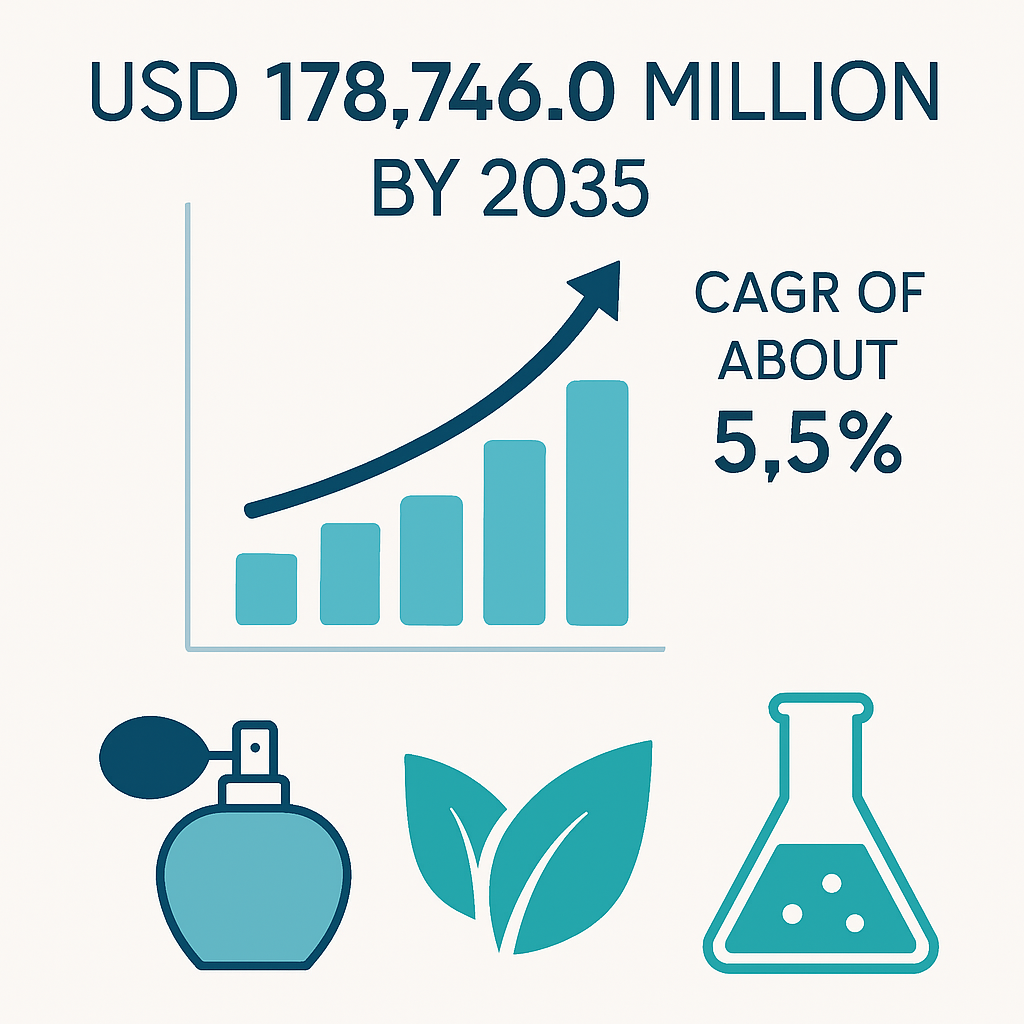
The global esters market is set to grow significantly, with its value expected to increase from USD 104.6 billion in 2025 to USD 178.7 billion by 2035, marking a steady CAGR of 5.5% during the forecast period. This robust expansion is propelled by widespread consumption across diverse industries, where esters are extensively utilized in the formulation of lubricants, plasticizers, and functional additives. Their versatility and performance-enhancing properties continue to make them essential in applications ranging from automotive and personal care to food, pharmaceuticals, and industrial manufacturing.
Unveil Market Trends: Get Your Sample Report Now! https://www.futuremarketinsights.com/reports/sample/rep-gb-1394
Key Industry Highlights
- Growing Environmental Awareness:
There is increasing global demand for biodegradable esters as an eco-friendly alternative to traditional petroleum-based products, particularly in the lubricants and personal care industries. - Expanding Personal Care and Cosmetic Industry:
Esters such as emollients, emollient esters, and emollient solvents are extensively used in skin and hair care formulations, contributing significantly to market revenue. - Automotive and Industrial Lubricant Demand:
Synthetic esters are gaining popularity in engine oils, hydraulic fluids, and refrigeration lubricants, offering superior thermal stability and lubrication performance under extreme conditions. - Rise in Processed Food Consumption:
Esters are used as flavoring agents and food additives. Rising demand for packaged and convenience food boosts ester utilization in the food & beverage sector. - Pharmaceutical Application Growth:
Esters find extensive usage in drug delivery systems, ointments, and excipients, increasing their value in pharmaceutical formulations.
Collaboration Between Small Market Players to Strengthen Product Portfolio
- Niche ester manufacturers are forming strategic alliances with regional distributors and specialty chemical producers to expand product availability and access new application areas.
- Joint R&D initiatives among small and mid-sized players are fostering innovation in green chemistry-based ester production.
- Companies are leveraging technology-sharing agreements to develop high-purity and multifunctional esters, targeting performance-intensive sectors like aerospace and medical lubricants.
- Collaborative ventures are helping regional players compete with established multinationals by offering custom-formulated ester blends tailored to specific industry needs.
Surge in Market Demand: Explore Comprehensive Trends and Analysis in Our Full Report! https://www.futuremarketinsights.com/reports/esters-market
Market Concentration
- The global esters market is moderately fragmented, with a mix of multinational corporations and numerous regional producers.
- Top-tier players dominate through economies of scale, global distribution networks, and extensive R&D capabilities.
- The market sees significant innovation pressure, with companies competing on the basis of formulation flexibility, environmental safety, and functional performance.
- Emerging players are increasingly focused on bio-based esters to tap into sustainability-focused customer segments, gradually shifting the market away from fossil-derived chemicals.
Country-wise Insights
United States:
The U.S. remains a key market, especially in synthetic esters for lubricants and personal care products. Regulatory frameworks favoring environmentally safer formulations and demand from the automotive and industrial sectors are driving growth.
Germany:
Germany leads ester production in Europe due to a robust chemical manufacturing base and strong demand from the automotive and cosmetic industries. The country is a hotspot for R&D in eco-friendly chemical formulations.
China:
China dominates in volume production of esters, supplying to both domestic and export markets. Rapid urbanization, a booming cosmetics sector, and rising automotive production are key contributors.
India:
India’s esters market is expanding due to rising demand from food processing, pharmaceuticals, and industrial lubricants. Government initiatives promoting Make in India are encouraging local ester production.
Brazil:
Brazil is witnessing increased ester usage in personal care and food applications, supported by a growing middle class and rising demand for natural and bio-based ingredients.
Competition Outlook
- Product Development: These companies are heavily investing in bio-based esters, offering solutions with low toxicity and high biodegradability to meet regulatory compliance and customer demand.
- Mergers & Acquisitions: Large players are acquiring specialty ester producers to expand their product range and gain access to high-growth regions.
- Focus on Sustainability: Market leaders are prioritizing carbon footprint reduction and offering green alternatives across industries like lubricants, cosmetics, and pharmaceuticals.
- Regional Expansion: Companies are building manufacturing bases in Asia-Pacific and Latin America to tap into the fast-growing local markets and lower production costs.
Hydrocarbons, Petrochemicals, and Organic Chemicals Industry Analysis: https://www.futuremarketinsights.com/industry-analysis/hydrocarbons-petrochemicals-and-organic-chemicals
Key Company Insights
- BASF SE
- Evonik Industries AG
- Lanxess AG
- ExxonMobil Corporation
- Croda International Plc
- INEOS Group
- Solvay S.A.
- KLK OLEO
- DuPont de Nemours, Inc.
- Esters and Solvents LLP
- Corbion N.V.
- Stepan Company
- Emery Oleochemicals
- Oxea GmbH
- Sasol Limited
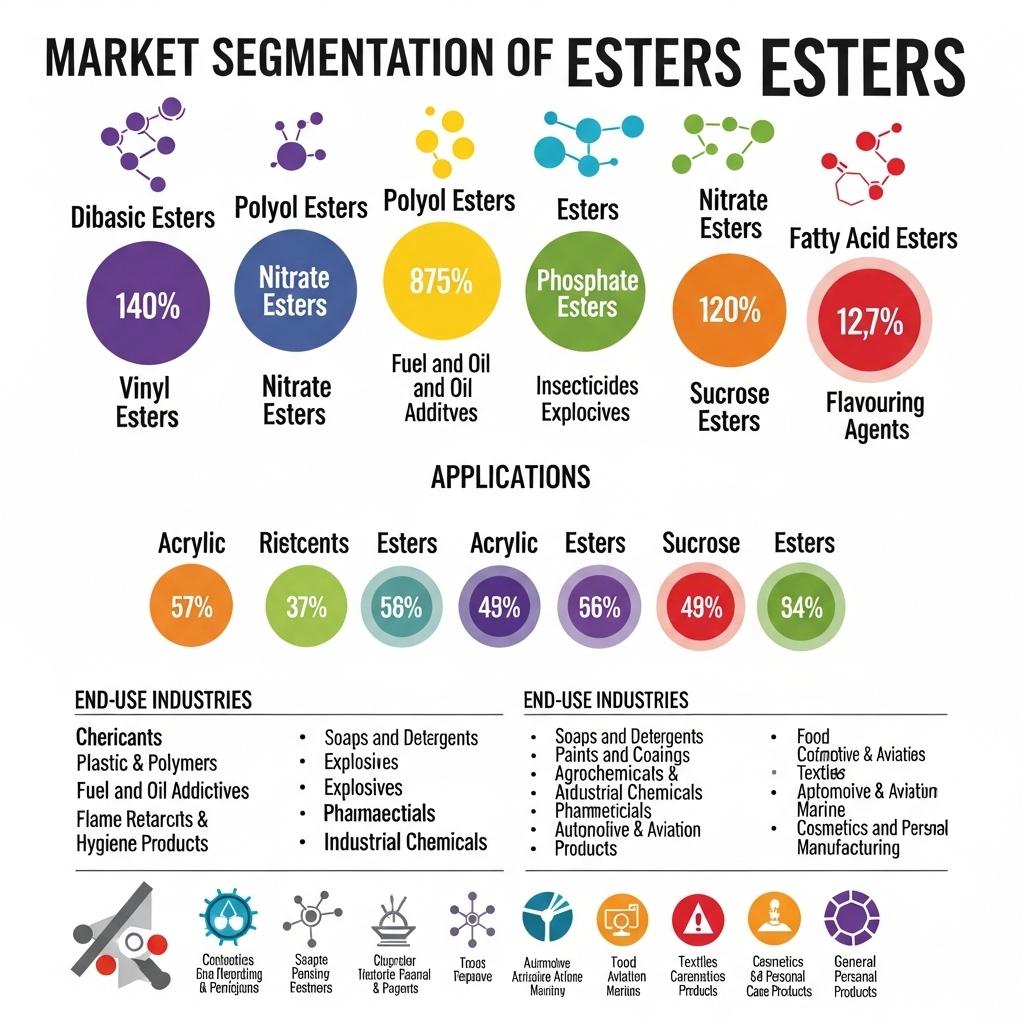
Market Segmentation
By Product:
Dibasic Esters, Polyol Esters, Methyl Esters, Nitrate Esters, Vinyl Esters, Phosphate Esters, Acrylic Esters, Sucrose Esters, Fatty Acid Esters
By Application:
Lubricants, Solvents, Plasticizers, Fuel and Oil Additives, Flame Retardants, Insecticides, Explosives, Surfactants, Flavoring Agents
By End Use Industry:
Chemicals, Plastic and Polymers, Soaps and Detergents, Explosives, Paints and Coatings, Agrochemicals and Domestic Hygiene Products, Pharmaceuticals, Industrial Chemicals, Food, Automotive and Aviation, Marine, Textiles, Cosmetics and Personal Care Products, General Manufacturing




