Future Market Insights (FMI), an ESOMAR Certified Market Research and Consulting Firm, has published its latest analysis of the global Large Diameter Steel Pipes Market, forecasting steady expansion driven by surging investments in oil & gas infrastructure and growing applications in transportation and water management.
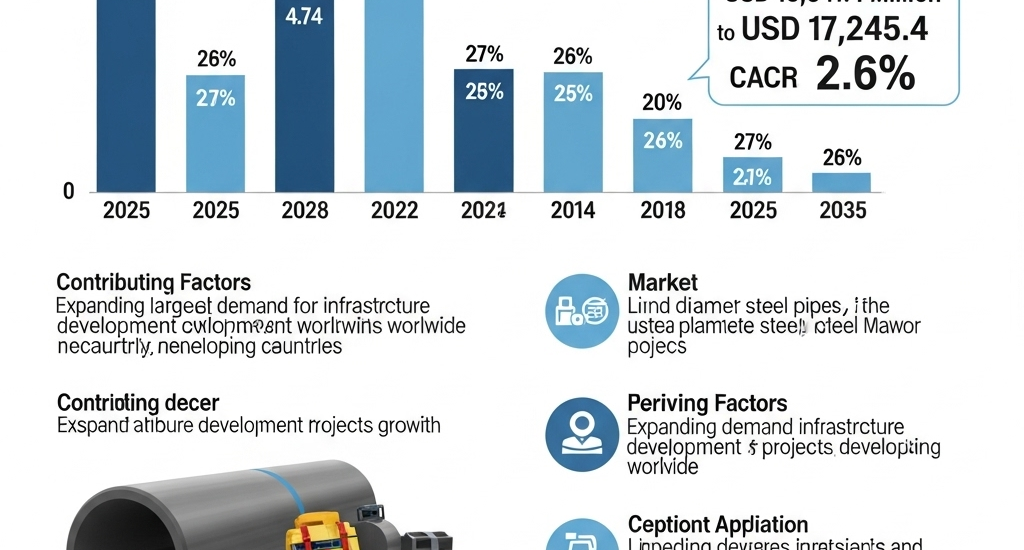
According to the new study, the global large diameter steel pipes market is set to advance at a CAGR of 2.6%, growing from USD 13,341.4 million in 2025 to USD 17,245.4 million by 2035.
This robust market performance is attributed to the increasing reliance on durable, corrosion-resistant pipeline solutions for high-pressure systems in key industries.
Stay at the Forefront of Industry Trends: Request a Sample for an In-Depth Market Analysis and Discover Lucrative Growth Prospects: https://www.futuremarketinsights.com/reports/sample/rep-gb-17155
Key Market Dynamics
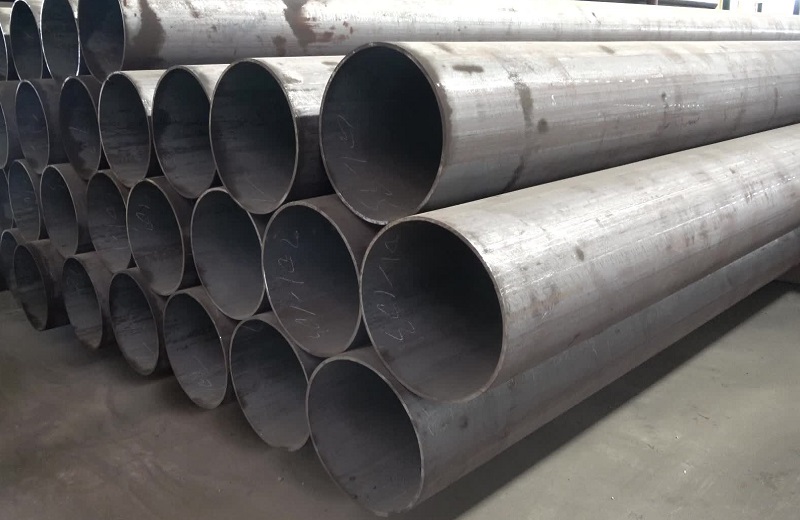
Large diameter steel pipes play a pivotal role in sectors requiring efficient fluid transportation over long distances. Their notable physical and chemical resilience, including excellent corrosion resistance and minimal ecological footprint, make them a preferred choice for critical applications in the oil & gas, water treatment, and chemical industries.
The upswing in global oil & gas production has particularly amplified the demand for these pipes. Parallel to this, expanding municipal water networks and the construction of extensive irrigation channels are expected to generate significant market opportunities through the forecast period.
Regional Insights
The market study highlights Asia Pacific as a primary growth hub, underpinned by rapid industrialization and strong expansion in the energy sector. Countries such as India and China continue to invest heavily in oil & gas infrastructure, which, alongside the growth of automotive and chemical manufacturing, bolsters demand for large diameter steel pipelines.
Similarly, Europe and North America are witnessing considerable investments to upgrade aging energy transport networks and adopt advanced pipeline technologies. This trend is projected to support a 2.8% CAGR in North America, positioning the region as a lucrative market for industry players.
Browse Full Report Here: https://www.futuremarketinsights.com/reports/large-diameter-steel-pipes-market
Market Segmentation
In terms of product type, the report segments the market into Longitudinal Submerged Arc Welded (LSAW) and Spiral Submerged Arc Welded (SSAW) pipes. Among these, the LSAW segment is forecasted to achieve a CAGR of 3.2% during the analysis period, reflecting its growing adoption for high-pressure applications in energy transport and large infrastructure projects.
By application, the oil & gas segment dominates, with a projected CAGR of 3.4%, reaffirming the sector’s central role in driving market growth. Other critical end-use segments include water treatment and the chemical industry, which are set to benefit from the global focus on sustainable water management and industrial fluid systems.
Competitive Landscape
The competitive landscape features prominent market leaders such as:
- American Cast Iron Pipe Company
- American Piping Products, Inc.
- Borusan Mannesmann Boru Sanayi ve Ticaret A.S.
- Baoji Petroleum Steel Pipe Co., Ltd.
- BERG PIPE
Recent developments underscore strategic investments and partnerships aimed at strengthening supply chains and expanding production capacities:
- July 2021: American Piping Products expanded its North Houston Rosslyn steel pipe yard by an additional 10 acres, enhancing its distribution and processing capabilities.
- November 2022: Summit Carbon Solutions announced a significant collaboration with American Steel Pipe for sourcing American-made high-strength steel line pipes to support advanced carbon capture and storage infrastructure.
Latest Automation Auxiliary Reports: https://www.futuremarketinsights.com/industry-analysis/automation-auxiliary
Future Outlook
The large diameter steel pipes market is poised for sustained advancement as industries worldwide prioritize robust and efficient fluid transport systems. The synergy of technological innovation, increasing energy demands, and substantial infrastructure investments across emerging and developed economies bodes well for the market’s long-term prospects.