

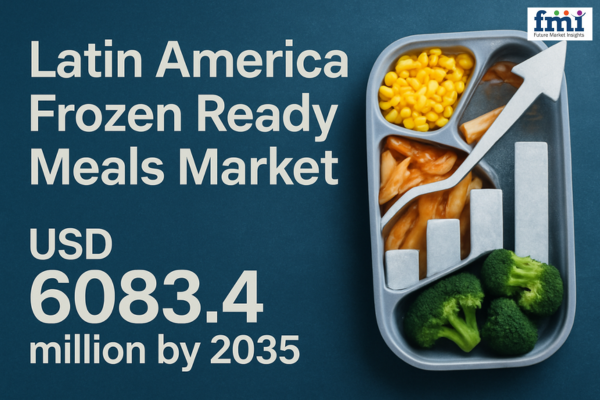
The Latin America Frozen Ready Meals market is poised for robust expansion, with sales expected to increase from USD 3,488.0 million in 2025 to USD 6,083.4 million by 2035. This growth reflects a steady compound annual growth rate (CAGR) of 5.7% over the forecast period. Driven by evolving lifestyles, urbanization, and time-constrained consumers, the demand for convenient yet culturally resonant meal options is on the rise across key Latin American markets.
The frozen ready meals sector in Latin America is witnessing a transformation, shaped by health-conscious choices and traditional culinary preferences. Consumers are gravitating towards products that offer quick preparation without compromising on taste or authenticity. Popular categories across the region include frozen lasagna, rice-based dishes, empanadas, beef and chicken entrées, as well as regional favorites such as enchiladas and tamales.
Brazil leads the regional market with a 36% share, followed by Mexico at 21%. The remaining 43% of the market is distributed across other Latin American countries, underscoring a broad regional demand. The growing middle class, expansion of retail chains, and rising adoption of Western-style consumption habits are further amplifying the market’s momentum.
Get a Taste of the Full Report – Request a Sample Today: https://www.futuremarketinsights.com/reports/sample/rep-gb-22219
Key Palm Oil Market Trends Highlighted
- Clean Label Demand: There is a growing preference for clean-label and additive-free frozen ready meals, prompting manufacturers to reformulate recipes using palm oil with sustainability certifications.
- Plant-Based and Vegan Variants: As plant-based diets gain traction, frozen ready meal producers are using palm oil as a key ingredient in meat alternatives to achieve desired taste and texture.
- Convenient Packaging: Packaging innovations, including microwaveable and recyclable trays using palm oil-derived materials, are improving consumer experience and eco-efficiency.
- Private Label Expansion: Retailers are introducing their own brands of frozen meals containing palm oil blends, offering competitive pricing and driving market penetration in low-income segments.
Palm Oil Industry Developments
- Sustainable Sourcing Initiatives: Leading frozen food companies in Latin America are committing to Roundtable on Sustainable Palm Oil (RSPO) standards, ensuring responsible sourcing throughout the value chain.
- Regional Processing Growth: Investments in local palm oil refining facilities in Colombia and Ecuador are lowering costs and improving supply consistency for frozen food manufacturers.
- Innovation in Fat Blends: Product developers are creating customized palm oil and palm kernel oil blends to meet performance, cost, and nutritional requirements in ready meals.
- Government Regulations: Countries like Brazil and Argentina are introducing labeling regulations for trans fats, encouraging the use of palm oil as a healthier alternative.

Key Takeaways of Report
- The Latin America Frozen Ready Meals Market is projected to grow at a CAGR of 5.7% between 2025 and 2035.
- Sales are expected to rise from USD 3,488.0 million in 2025 to USD 6,083.4 million by 2035.
- Brazil dominates the market with 36% share, followed by Mexico at 21%.
- Frozen lasagna, empanadas, tamales, and meat-based dishes are among the top-selling product types.
- Rising demand for sustainable, palm oil-based ingredients is shaping product formulation trends.
Palm Oil Market Drivers
- Affordability and Stability: Palm oil’s cost-effectiveness and high oxidative stability make it ideal for long shelf-life frozen meals.
- Neutral Flavor and Versatility: Its neutral taste enhances the authentic flavors of Latin American cuisine, supporting diverse meal types.
- Shelf Life Extension: Palm oil helps maintain the texture and appearance of frozen dishes, making it a key ingredient in ready meals.
- Health and Functionality: Modified palm oil derivatives provide healthier profiles (low trans fats) without compromising on performance.
Access All the Insights You Need – Download Full Report Now: https://www.futuremarketinsights.com/reports/latin-america-frozen-ready-meals-market
Palm Oil Market Regional Insights
- Brazil: As the largest frozen ready meals market in Latin America, Brazil’s palm oil demand is boosted by the rapid urbanization and presence of domestic manufacturers integrating palm oil into their product lines.
- Mexico: A major importer of palm oil from Colombia, Mexico utilizes palm oil extensively in frozen enchiladas and tamales, catering to both traditional and modern consumers.
- Other LATAM Countries: Countries such as Argentina, Colombia, Chile, and Peru are witnessing increased demand for frozen ready meals and a parallel rise in palm oil usage for culinary and technical applications.
Competition Outlook
The competitive landscape in the Latin America frozen ready meals market is shaped by global and regional players vying for consumer loyalty. Key companies are expanding product portfolios with palm oil-based options that meet local taste preferences and health expectations.
Brands are focusing on:
- Sustainable Sourcing: Partnering with palm oil producers that offer traceable and RSPO-certified supply chains.
- Innovation in Flavors: Introducing regional recipes using palm oil to recreate traditional dishes like feijoada or mole poblano.
- Retail Expansion: Strengthening presence in supermarket freezers and online grocery platforms with bundled offers and meal kits.
Major players in the Latin American frozen food ecosystem are
- BRF S.A.
- Nestlé S.A.
- Sigma Alimentos
- Sadia (part of BRF)
- Seara Alimentos
Explore Convenience Food Industry Analysis: https://www.futuremarketinsights.com/industry-analysis/convinience-food
Key segmentation
By Product Type:
As per product type, the industry has been categorized into Vegetarian Meals, Chicken Meals, Beef Meals, and Other Meals.
By Distribution Channel:
As per distribution channel, the industry has been categorized into Food Chain Services, Modern Trade, Departmental Stores, Online Stores, and Other Distribution Channel.
By Packaging Type:
This segment is further categorized into Aluminium Can, Plastic, and Glass.
By Country:
Industry analysis has been carried out in key countries of Brazil, Mexico and Rest of Latin America.




