

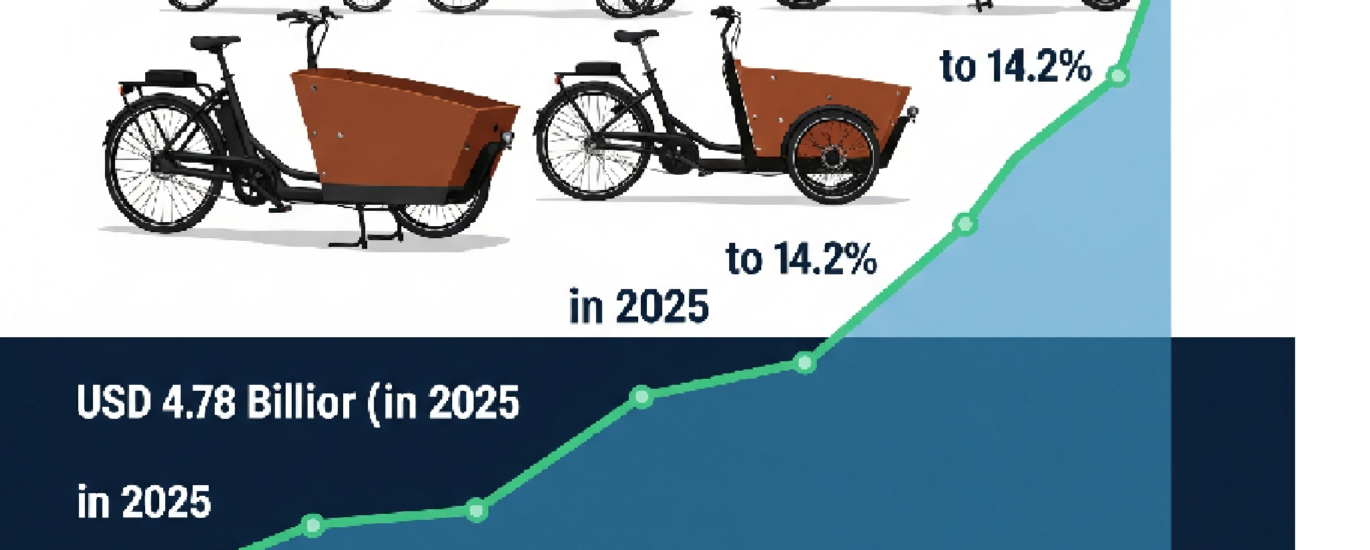
The global electric cargo bike market is projected to grow significantly, rising from USD 4.78 billion in 2025 to USD 18.05 billion by 2035, marking a robust CAGR of 14.2% over the forecast period. This surge is being fueled by mounting regulatory and consumer pressure to decarbonize last-mile delivery, reduce traffic congestion, and enhance the efficiency of urban transport systems. E-cargo bikes are emerging as viable alternatives to vans and trucks for short-range deliveries, particularly in dense urban areas where emissions and space constraints pose major logistical hurdles.
Governments and municipalities worldwide are actively encouraging the adoption of electric cargo bikes through financial incentives, dedicated cycling infrastructure, and vehicle restrictions in low-emission zones (LEZs). From grocery deliveries and food distribution to courier services and family transportation, these bikes offer an eco-friendly, cost-effective, and flexible transport solution. Innovations in battery range, frame strength, and payload capacity are further enhancing their utility across multiple sectors.
Get Ahead with Our Report: Request Your Sample Now!
https://www.futuremarketinsights.com/reports/sample/rep-gb-7803
Market Trends
-
Rise of e-commerce and growing demand for sustainable last-mile delivery.
-
Adoption of cargo-sharing platforms and fleet-as-a-service (FaaS) business models.
-
Development of modular cargo boxes and interchangeable battery systems.
-
Emergence of compact urban mobility solutions to counter city congestion.
-
Popularity of longtail and front-loader cargo bike models for commercial use.
Driving Forces Behind Market Growth
-
Increasing pressure to reduce carbon emissions in urban freight and logistics.
-
Government support through grants, tax incentives, and infrastructure development.
-
Expanding use of e-cargo bikes in logistics, retail, food delivery, and postal services.
-
Cost-efficiency compared to fuel-powered vehicles for last-mile delivery.
-
Rising fuel prices and urban vehicle access restrictions encouraging bike adoption.
Challenges and Opportunities
-
Challenges:
-
Limited payload and range capacity compared to vans.
-
Lack of standardized regulations across regions.
-
Battery degradation and replacement costs.
-
Infrastructure gaps, such as dedicated cycling lanes and secure parking.
-
-
Opportunities:
-
Growing demand for eco-conscious urban transportation solutions.
-
Increasing penetration in emerging markets with dense population centers.
-
Potential for integration with smart city logistics platforms.
-
Innovation in solar-powered and AI-enabled cargo bikes.
-
Recent Industry Developments
-
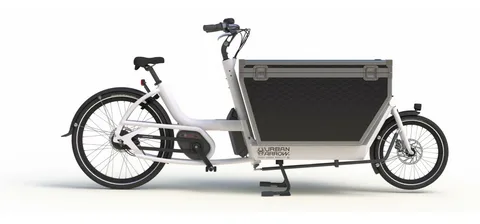
Urban Arrow introduced a next-gen electric cargo bike with upgraded Bosch motors and longer battery life in early 2025.
-
Tern Bicycles launched a high-capacity cargo e-bike with dual battery support targeting small businesses and couriers.
-
Amazon and DHL expanded their cargo bike fleets across major European cities to meet green delivery goals.
-
Zoomo partnered with last-mile delivery platforms to roll out subscription-based cargo bike fleets in North America and Australia.
Thorough Market Evaluation: Full Report
https://www.futuremarketinsights.com/reports/electric-cargo-bikes-market
Regional Analysis
-
Europe:
-
Dominates the market due to strong urban cycling culture, regulatory support, and widespread infrastructure.
-
Countries like Germany, the Netherlands, and France are key adopters of commercial e-cargo bikes.
-
-
North America:
-
Rapid growth driven by municipal pilot programs and the rise of eco-conscious delivery services.
-
Adoption led by major cities like New York, Portland, and San Francisco.
-
-
Asia-Pacific:
-
Rising demand in urban centers of China, India, and Japan due to pollution concerns and delivery demand.
-
Strong domestic manufacturing base supporting low-cost cargo bike production.
-
-
Latin America and Middle East & Africa:
-
Emerging markets showing growing interest due to cost advantages and low operational barriers.
-
Initial adoption led by retailers and courier firms in urban centers.
-




