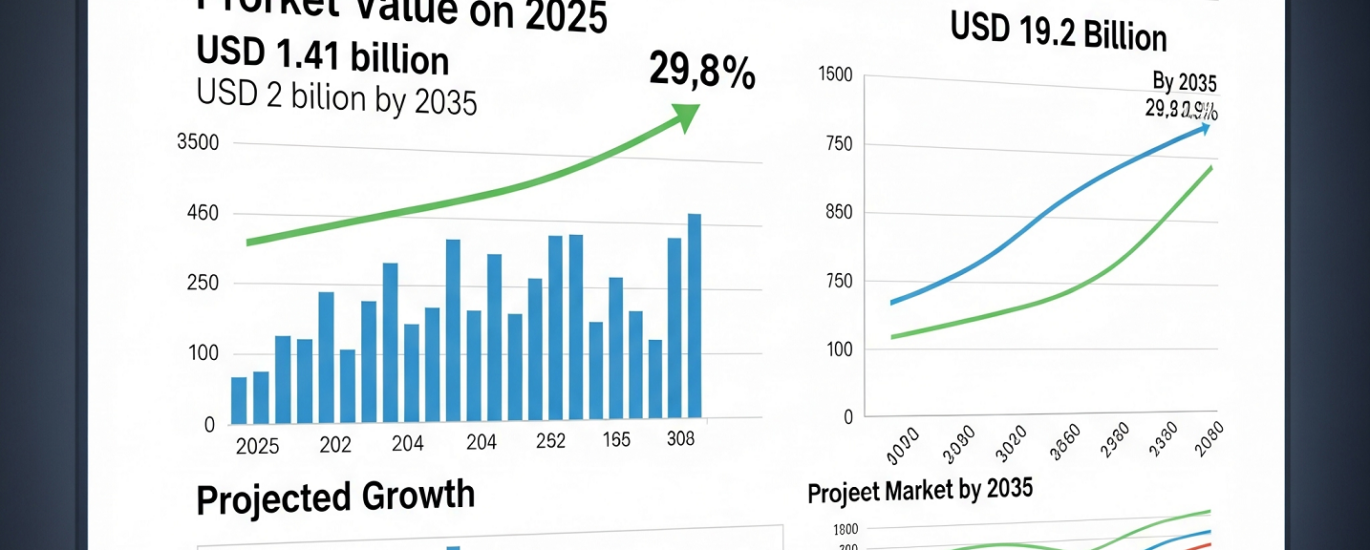
The global healthcare virtual assistants market is poised for exceptional growth, projected to grow from USD 1.41 billion in 2025 to USD 19.2 billion by 2035, reflecting a remarkable CAGR of 29.8% during the forecast period. This exponential growth is attributed to rising healthcare digitization, increased adoption of AI-based technologies, and a growing demand for improved patient engagement and operational efficiency across healthcare systems.
Healthcare virtual a.ssistants (HVAs) are becoming integral in modern medical practices by automating routine administrative tasks, enhancing patient communication, and providing timely medical information. Hospitals, clinics, and telemedicine platforms are increasingly deploying these tools to reduce the burden on medical staff, improve appointment scheduling, streamline billing inquiries, and ensure round-the-clock availability of healthcare guidance. The technology is reshaping patient experiences by providing personalized, real-time interactions via voice and chat platforms.
Get Ahead with Our Report: Request Your Sample Now!
https://www.futuremarketinsights.com/reports/sample/rep-gb-11792
Key Market Trends
-
AI & NLP Integration: Accelerated use of artificial intelligence and natural language processing in HVAs.
-
Telehealth Expansion: Increasing use of virtual assistants in telemedicine platforms post-pandemic.
-
Voice-Enabled Tech: Surge in demand for voice-based assistants for elderly and visually impaired patients.
-
Omnichannel Platforms: Integration across mobile, web, EHRs, and wearables.
Driving Forces Behind Market Growth
-
Rise in Chronic Diseases: Growing need for patient monitoring and medication reminders.
-
Administrative Burden: HVAs reduce time spent on repetitive administrative tasks.
-
Healthcare Staff Shortages: Automation bridges the workforce gap.
-
Consumer Expectations: Demand for fast, personalized, and always-on health communication.

Challenges and Opportunities
-
Challenges
-
Data privacy and compliance with HIPAA and GDPR.
-
Integration with legacy healthcare systems.
-
Resistance from traditional healthcare staff.
-
-
Opportunities
-
Advancements in generative AI and machine learning.
-
Rising smartphone penetration and internet connectivity.
-
Expansion in underserved rural and remote healthcare markets.
-
Recent Industry Developments
-
Amazon Clinic & Alexa Health Integration – Enhanced virtual health navigation for patients.
-
Google Cloud’s Med-PaLM 2 Launch – Conversational AI model for medical queries.
-
Nuance Communications & Microsoft – Expanded clinical documentation automation.
-
Babylon Health & Teladoc Health – Incorporation of AI chatbots into digital health platforms.
Exhaustive Market Report: A Complete Study
https://www.futuremarketinsights.com/reports/healthcare-virtual-assistants-market
Regional Analysis
-
North America
-
Largest market share; strong tech infrastructure and early adoption.
-
U.S. leads with aggressive AI health policies and major player presence.
-
-
Europe
-
Rapid growth in Germany, U.K., and France due to digital health investments.
-
Compliance with GDPR ensures secure data applications in HVAs.
-
-
Asia-Pacific
-
Fastest-growing region; rising healthcare IT spending in India and China.
-
Growing telehealth penetration in Southeast Asia.
-
-
Latin America & MEA
-
Emerging markets with potential due to lack of healthcare professionals.
-
Gradual adoption of AI-based healthcare tech in urban centers.
-