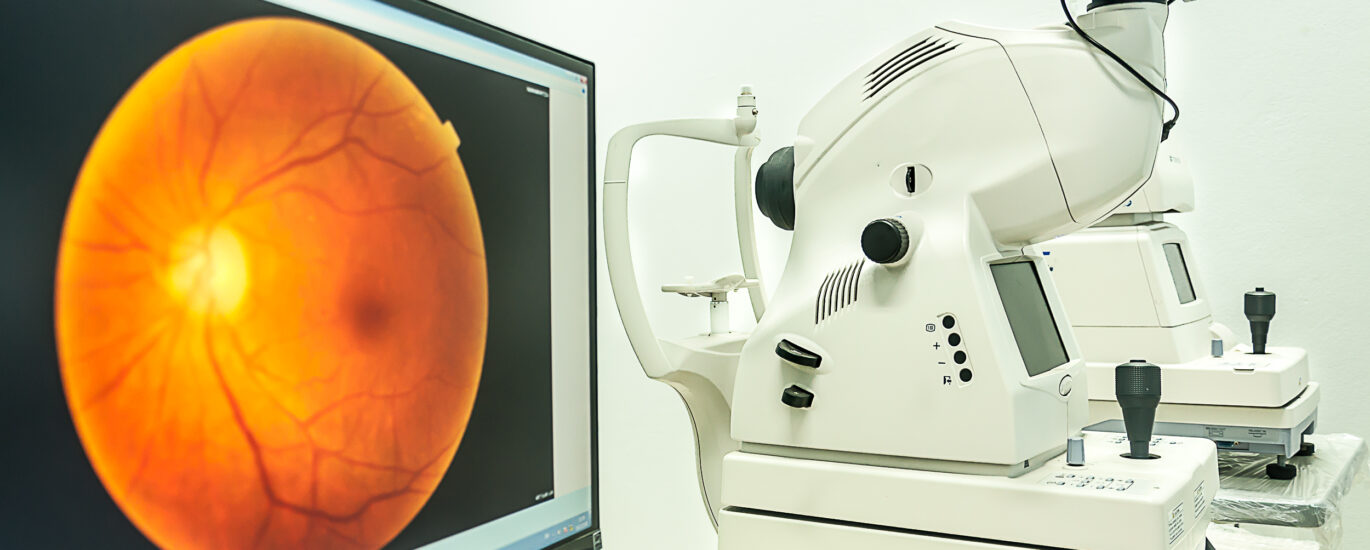
The global Widefield Imaging Systems Market is estimated to be valued at USD 744.2 million in 2025 and is projected to reach USD 1,271.3 million by 2035, registering a compound annual growth rate (CAGR) of 5.5% over the forecast period. This growth is driven by the increasing prevalence of retinal diseases, such as diabetic retinopathy and age-related macular degeneration, which necessitate advanced diagnostic tools for early detection and management.
The widefield imaging systems market has been gaining significant traction in recent years, driven by the increasing need for advanced diagnostic tools in ophthalmology and other medical fields. These systems offer comprehensive imaging of the retina, enabling early detection and monitoring of various eye disorders. Unlike traditional imaging techniques, widefield imaging captures a larger view of the retina, providing clinicians with more detailed and accurate data. This has become particularly important for managing chronic conditions such as diabetic retinopathy, retinal vein occlusion, and age-related macular degeneration. The demand for early and non-invasive diagnostic methods is accelerating the adoption of widefield imaging technologies across hospitals, specialty clinics, and research centers.
The evolution of widefield imaging systems has also been influenced by technological advancements in optical coherence tomography (OCT), scanning laser ophthalmoscopy (SLO), and fundus photography. These innovations have enhanced the resolution, speed, and ease of use of modern imaging equipment. Moreover, the shift towards digitized medical records and telemedicine has further elevated the need for high-quality imaging solutions. As a result, the widefield imaging systems market continues to experience robust growth, driven by both clinical efficacy and operational efficiency.
Get Sample Report: – https://www.futuremarketinsights.com/reports/sample/rep-gb-1732
Market Trends
A notable trend within the widefield imaging systems market is the growing integration of artificial intelligence (AI) and machine learning (ML) into diagnostic imaging platforms. These technologies are being utilized to enhance image analysis, improve diagnostic accuracy, and assist ophthalmologists in identifying subtle changes in the retina that may indicate disease progression. The use of AI not only reduces the time required for analysis but also minimizes human error, which is crucial in early disease detection.
Another key trend is the rising popularity of portable and handheld widefield imaging devices. These compact systems are particularly useful in remote and underserved areas, where access to comprehensive eye care is limited. Their mobility and ease of use make them ideal for community outreach programs and home-based patient care. Additionally, the growing focus on pediatric ophthalmology has increased the demand for devices that can efficiently image uncooperative or non-sedated children, further expanding the potential of the widefield imaging systems market.
Moreover, collaborations between technology firms and healthcare providers are resulting in the development of user-friendly interfaces, cloud-based storage solutions, and improved data interoperability. These enhancements are encouraging more institutions to invest in advanced imaging tools, thereby propelling the market forward.
Challenges and Opportunities
Despite the promising growth trajectory, the widefield imaging systems market faces several challenges. One of the primary obstacles is the high cost associated with purchasing and maintaining these advanced imaging systems. The initial investment required can be a significant barrier for small clinics and healthcare providers in low-income regions. Additionally, the cost of training staff to operate these systems and interpret the images adds to the overall expense.
Another challenge lies in the standardization of image formats and reporting protocols. Variability in imaging results across different devices can hinder effective diagnosis and data sharing. The lack of universally accepted standards limits interoperability and makes it difficult to integrate these systems into existing hospital information systems.
However, these challenges also open up new opportunities. There is a growing interest in developing cost-effective solutions that can deliver high-quality imaging at a fraction of the cost. Manufacturers are exploring ways to reduce production costs through modular designs, scalable components, and open-source software platforms. Furthermore, governments and non-governmental organizations are increasingly supporting initiatives aimed at improving access to advanced diagnostic tools in underserved regions, providing a fertile ground for market expansion.
Key Regional Insights
Geographically, the widefield imaging systems market exhibits varied dynamics across different regions. North America remains a dominant force, largely due to the presence of well-established healthcare infrastructure, high levels of healthcare expenditure, and early adoption of advanced technologies. The United States, in particular, is a major contributor to market growth, supported by a strong network of ophthalmology clinics and research institutions.
In Europe, the market is witnessing steady growth driven by favorable reimbursement policies, government support for technological innovation, and a rising aging population. Countries such as Germany, the United Kingdom, and France are at the forefront, leveraging advanced diagnostic tools to manage the increasing prevalence of retinal diseases.
The Asia-Pacific region presents immense growth potential due to a rapidly expanding healthcare sector, rising disposable income, and a growing awareness of eye health. Emerging economies like China and India are investing heavily in healthcare modernization, creating opportunities for the adoption of widefield imaging systems. Moreover, the high incidence of diabetes in these countries has led to increased demand for effective screening tools for diabetic retinopathy.
Latin America and the Middle East & Africa regions are gradually embracing advanced diagnostic technologies. While infrastructure limitations and affordability remain concerns, international aid programs and public-private partnerships are playing a vital role in facilitating market penetration.
Competitive Outlook
The widefield imaging systems market is characterized by intense competition, with numerous players striving to differentiate their offerings through technological innovation, superior image quality, and enhanced user experience. The competitive landscape includes a mix of established companies and emerging startups, each focusing on expanding their product portfolios and entering new regional markets.
Strategic alliances, mergers, and acquisitions are common tactics adopted by key players to strengthen their market position. Companies are also investing heavily in research and development to stay ahead in a rapidly evolving technological landscape. Additionally, customer-centric approaches such as after-sales service, training, and technical support are gaining importance in fostering long-term relationships and brand loyalty.
Regulatory compliance is another area of focus, as companies seek to obtain approvals from agencies like the FDA and CE to ensure product safety and marketability. With the growing emphasis on quality and reliability, firms that can consistently deliver high-performance solutions are likely to gain a competitive edge.
Top Companies
Several companies stand out in the widefield imaging systems market due to their innovative technologies and strong market presence. These organizations are continuously introducing new products that cater to the diverse needs of healthcare providers. Their contributions have significantly influenced the market’s growth and direction.
Prominent players include global leaders in medical imaging and ophthalmic devices. These companies offer a wide range of solutions, from advanced fundus cameras to multimodal imaging systems that integrate OCT and fluorescein angiography. They focus on developing intuitive interfaces and AI-powered diagnostic tools to improve workflow and clinical outcomes. Their commitment to quality and innovation has earned them trust among ophthalmologists and healthcare institutions worldwide.
Emerging startups and mid-sized firms are also making their mark by introducing cost-effective and portable imaging solutions. Their agility and focus on niche applications have enabled them to capture specific segments of the market, particularly in developing regions.
Explore In-Depth Analysis-Click Here to Access the Report:- https://www.futuremarketinsights.com/reports/wide-field-imaging-systems-market
Segmentation Outlook
The widefield imaging systems market can be segmented based on product type, modality, end-user, and application. Each segment reflects unique demand patterns and growth drivers, offering valuable insights into market dynamics.
In terms of product type, the market includes standalone and integrated systems. Standalone systems are preferred in large hospitals and research settings, while integrated devices are gaining popularity in smaller clinics due to their space-saving design and ease of use.
Based on modality, the market is divided into color imaging, fluorescein angiography, autofluorescence imaging, and OCT. Each modality serves different diagnostic purposes, with OCT emerging as a particularly valuable tool for in-depth retinal analysis.
The end-user segment comprises hospitals, ophthalmology clinics, and ambulatory surgical centers. Hospitals represent the largest share due to their extensive infrastructure and ability to invest in high-end technology. However, the rise in specialized eye care centers is shifting some of the demand toward clinics and outpatient facilities.
By application, the market spans across diabetic retinopathy, retinal vein occlusion, age-related macular degeneration, and other retinal disorders. As the global burden of these diseases increases, the demand for accurate and early diagnostic solutions continues to rise, reinforcing the significance of widefield imaging systems.
About Future Market Insights (FMI)
Future Market Insights, Inc. (ESOMAR certified, recipient of the Stevie Award, and a member of the Greater New York Chamber of Commerce) offers profound insights into the driving factors that are boosting demand in the market. FMI stands as the leading global provider of market intelligence, advisory services, consulting, and events for the Packaging, Food and Beverage, Consumer Technology, Healthcare, Industrial, and Chemicals markets. With a vast team of over 400 analysts worldwide, FMI provides global, regional, and local expertise on diverse domains and industry trends across more than 110 countries.
Contact Us:
Future Market Insights Inc.
Christiana Corporate, 200 Continental Drive,
Suite 401, Newark, Delaware – 19713, USA
T: +1-347-918-3531
For Sales Enquiries: sales@futuremarketinsights.com
Website: https://www.futuremarketinsights.com
LinkedIn| Twitter| Blogs | YouTube