The global portable ultrasound bladder scanner market is projected to grow from USD 144.1 million in 2025 to USD 194.2 million by 2035, advancing at a CAGR of 3.1%. This steady growth is fueled by the increasing prevalence of urological disorders such as urinary incontinence, urinary retention, and benign prostatic hyperplasia (BPH).
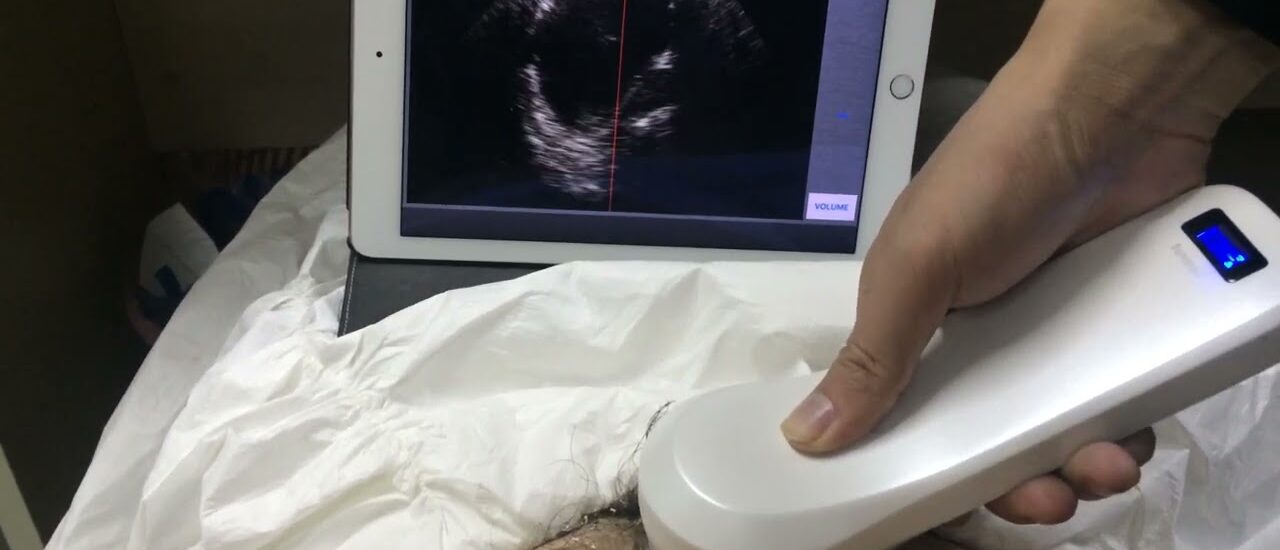
The portable ultrasound bladder scanner market has emerged as a crucial segment within the broader medical imaging landscape. These non-invasive diagnostic devices are designed to accurately assess bladder volume and detect urinary retention issues, significantly reducing the need for catheterization. With rising global awareness regarding patient comfort, hygiene, and efficient clinical workflow, portable ultrasound bladder scanners have become indispensable in hospitals, outpatient clinics, urology centers, and even in-home healthcare settings. The market is witnessing a steady rise in demand, driven by increasing incidences of urological disorders, an aging population, and a growing emphasis on point-of-care diagnostics.
Technological advancements are also enhancing the usability and accuracy of portable ultrasound bladder scanners. Devices are now more compact, lightweight, and offer improved imaging clarity. Wireless and Bluetooth-enabled models are simplifying data sharing and remote monitoring. As healthcare systems across the globe transition toward more patient-centric and cost-effective care, the portable ultrasound bladder scanner market is poised for sustained growth in the coming years.
Get Sample Report: – https://www.futuremarketinsights.com/reports/sample/rep-gb-2008
Size & Trends
The size of the portable ultrasound bladder scanner market is expanding due to an uptick in diagnostic procedures requiring real-time bladder assessments. A key trend propelling the market includes the growing preference for portable, hand-held, and easy-to-operate medical devices among healthcare professionals. These scanners eliminate the need for complex setup, making them suitable for use across diverse healthcare environments, including rural and resource-limited areas.
Another significant trend is the increased integration of artificial intelligence and cloud-based systems in these devices. This integration not only enhances diagnostic precision but also allows for better patient data management. The market is also seeing a growing adoption of bladder scanners in homecare, rehabilitation, and elderly care facilities, thanks to their non-invasive nature and ease of use. As governments continue to invest in improving primary healthcare infrastructure, especially in developing economies, the demand trajectory for portable ultrasound bladder scanners will likely continue its upward climb.
Key Highlights
The portable ultrasound bladder scanner market has witnessed several noteworthy developments in recent years. One of the most impactful highlights is the rising adoption of these scanners in emergency departments, where rapid diagnosis can significantly influence patient outcomes. Their portability allows clinicians to assess bladder conditions on the spot, streamlining the treatment process and reducing hospital stays.
The surge in minimally invasive diagnostic technologies is another vital highlight. These scanners align with the healthcare industry’s growing emphasis on minimizing patient discomfort while ensuring diagnostic accuracy. Additionally, the post-pandemic healthcare landscape has increased the need for infection control, which bladder scanners address effectively by reducing catheter-associated infections. These developments underscore the device’s importance not only in improving patient care but also in enhancing operational efficiency in clinical settings.
Challenges and Opportunities
Despite its growth, the portable ultrasound bladder scanner market faces certain challenges. One primary concern is the high cost of advanced bladder scanners, which may restrict adoption, particularly in low- and middle-income countries. Additionally, the lack of trained personnel to operate these devices can lead to underutilization, especially in remote areas where technical expertise is limited.
However, these challenges present opportunities for innovation and strategic investments. Manufacturers have the chance to develop cost-effective models tailored to emerging markets. Training programs and mobile healthcare initiatives can be deployed to bridge the knowledge gap among healthcare workers. Another promising opportunity lies in the increasing use of telemedicine, where portable bladder scanners can serve as a critical tool for remote diagnostics and virtual consultations. Partnerships with public health agencies and NGOs could further accelerate market penetration, especially in underserved regions.
Key Benefits for Stakeholders
The growth of the portable ultrasound bladder scanner market offers substantial benefits to various stakeholders across the healthcare ecosystem. For healthcare providers, these scanners significantly enhance diagnostic speed and accuracy while reducing dependence on invasive procedures. This, in turn, improves patient safety and satisfaction levels.
Patients benefit from quicker diagnoses and reduced exposure to catheter-related complications, making bladder scanners a preferred choice for elderly and chronically ill individuals. For healthcare administrators and policymakers, the adoption of portable scanners contributes to improved operational efficiencies and reduced costs, as early diagnosis often leads to better outcomes and fewer complications. Device manufacturers and investors also stand to gain from this expanding market, particularly as they innovate to meet the growing demand for compact and technologically advanced solutions.
Market Share by Geographical Region
The portable ultrasound bladder scanner market exhibits a varied regional landscape, with North America holding a dominant share due to advanced healthcare infrastructure, higher adoption of point-of-care devices, and strong reimbursement frameworks. The United States, in particular, has been a key contributor, driven by growing cases of urinary incontinence and urological disorders among its aging population.
Europe follows closely, with countries like Germany, France, and the United Kingdom leading in device adoption across hospitals and long-term care facilities. In the Asia-Pacific region, rapid urbanization, increasing healthcare investments, and a burgeoning elderly population are catalyzing market expansion. China and India are emerging as significant growth hubs due to improving medical infrastructure and rising awareness of non-invasive diagnostic tools.
Latin America and the Middle East & Africa are relatively nascent but promising markets. Governments in these regions are making concerted efforts to enhance healthcare access, which is likely to boost the demand for portable bladder scanners in the foreseeable future.
Competitive Outlook
The competitive landscape of the portable ultrasound bladder scanner market is characterized by a mix of established players and innovative startups. Leading companies are focusing on continuous product development, strategic partnerships, and regional expansion to strengthen their market position. Emphasis is being placed on creating devices with enhanced battery life, intuitive user interfaces, and connectivity features.
The market also sees robust competition based on pricing and technological differentiation. While larger companies dominate with comprehensive product portfolios and global distribution networks, smaller players are gaining traction through niche innovations and customer-focused solutions. Mergers and acquisitions are becoming common strategies to expand technological capabilities and enter new regional markets.
Explore In-Depth Analysis-Click Here to Access the Report:- https://www.futuremarketinsights.com/reports/portable-ultrasound-bladder-scanner-market
Top Companies
Several companies are at the forefront of innovation in the portable ultrasound bladder scanner market. Firms like Verathon Inc., dBMEDx Inc., and Vitacon US, Inc. are recognized for their advanced devices that offer high imaging accuracy and ease of use. Their products are widely used in clinical settings across North America and Europe.
Other key players include Echo-Son SA, LABORIE, and C. R. Bard, Inc., which are known for their diverse product lines and emphasis on research and development. Many of these companies are also investing heavily in AI integration, aiming to improve diagnostic automation and reduce clinician dependency. The competitive dynamic is further intensified by the entry of regional players focusing on affordable solutions for emerging markets. These top companies are continuously reshaping the market with their commitment to innovation and quality.
Segmentation Outlook
The portable ultrasound bladder scanner market can be segmented based on product type, end-user, and application. In terms of product type, the market is divided into handheld and trolley-based scanners. Handheld devices are gaining popularity due to their compact nature and flexibility, making them ideal for homecare and point-of-care use.
From an end-user perspective, hospitals hold the largest share due to higher patient volumes and the availability of skilled professionals. However, diagnostic centers, ambulatory surgical centers, and homecare settings are also witnessing increased adoption, especially with the rise of personalized healthcare.
Regarding application, the most common use of bladder scanners is in urology, followed by obstetrics and gynecology, rehabilitation, and geriatrics. Each segment presents unique growth opportunities as healthcare continues to shift toward early detection and preventive care. The segmentation outlook thus underscores the device’s versatility across medical disciplines, further solidifying its role in the evolving diagnostic landscape.
About Future Market Insights (FMI)
Future Market Insights, Inc. (ESOMAR certified, recipient of the Stevie Award, and a member of the Greater New York Chamber of Commerce) offers profound insights into the driving factors that are boosting demand in the market. FMI stands as the leading global provider of market intelligence, advisory services, consulting, and events for the Packaging, Food and Beverage, Consumer Technology, Healthcare, Industrial, and Chemicals markets. With a vast team of over 400 analysts worldwide, FMI provides global, regional, and local expertise on diverse domains and industry trends across more than 110 countries.
Contact Us:
Future Market Insights Inc.
Christiana Corporate, 200 Continental Drive,
Suite 401, Newark, Delaware – 19713, USA
T: +1-347-918-3531
For Sales Enquiries: sales@futuremarketinsights.com
Website: https://www.futuremarketinsights.com
LinkedIn| Twitter| Blogs | YouTube