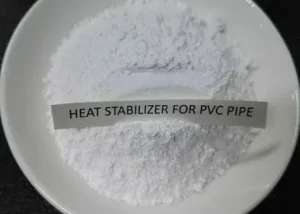
The global sales of heat stabilizers are estimated to be worth USD 5,120.0 million in 2025 and are anticipated to reach USD 9,299.7 million by 2035. Sales are projected to rise at a compound annual growth rate (CAGR) of 6.2% over the forecast period between 2025 and 2035. The market’s expansion is being significantly fueled by the rising demand for polyvinyl chloride (PVC) products across various sectors such as construction, automotive, electrical and electronics, and packaging. Heat stabilizers are essential additives that prevent PVC degradation at high temperatures during processing and application, thereby enhancing the material’s lifespan and performance. As industries increasingly seek durable, weather-resistant, and cost-effective materials, the role of heat stabilizers in ensuring product integrity becomes even more critical.
Moreover, the trend toward sustainability and eco-friendly formulations is encouraging manufacturers to develop non-toxic, lead-free heat stabilizer solutions. This shift is further propelled by stringent environmental regulations and growing consumer awareness, especially in North America and Europe. The replacement of lead-based stabilizers with calcium-zinc and organotin variants is gaining momentum, particularly in applications such as pipes, window profiles, cable insulation, and medical-grade PVC. The increasing investments in infrastructure projects in emerging economies like India, Indonesia, and Brazil are further boosting the demand for stabilized PVC, thereby creating strong growth opportunities for heat stabilizer suppliers worldwide.
Get Ahead with Our Report: Request Your Sample Now!
https://www.futuremarketinsights.com/reports/sample/rep-gb-1269
Key Takeaways
The heat stabilizers market is set to experience steady growth due to the critical role these additives play in the processing of thermoplastics, particularly PVC. With PVC continuing to be the polymer of choice in sectors like construction and wire & cable, the demand for high-performance, thermally stable materials is on the rise. Heat stabilizers not only enhance thermal resistance but also contribute to color retention and mechanical stability during manufacturing and end-use. Additionally, there is increasing preference for advanced stabilizer systems that ensure lower VOC emissions, meet regulatory compliance, and deliver better compatibility with other additive systems.
Emerging Trends in the Global Market
One of the prominent trends reshaping the heat stabilizers market is the widespread transition from lead-based stabilizers to non-toxic alternatives. Calcium-zinc, barium-zinc, and organotin-based stabilizers are witnessing increased adoption across end-use industries due to their environmental compatibility and compliance with safety standards such as REACH and RoHS. Furthermore, manufacturers are focusing on nanotechnology-based solutions and hybrid stabilizer systems that offer enhanced dispersion, longer thermal protection, and reduced additive loading. The rise of automation in plastic manufacturing and the adoption of Industry 4.0 practices are also supporting the use of smart stabilizer formulations that ensure consistent quality and optimized process control.
Another emerging trend is the rising demand for bio-based and sustainable heat stabilizers. With growing global emphasis on green chemistry and circular economy principles, companies are investing in the research and commercialization of stabilizers derived from renewable resources. These innovations aim to reduce the carbon footprint associated with plastic production and improve end-of-life recyclability. Additionally, customized stabilizer systems are being developed to cater to specific needs across applications such as rigid PVC profiles, flexible films, automotive interiors, and consumer goods.
Significant Developments in Global Sector: Trends and Opportunities in the Market
The global heat stabilizers sector is seeing significant developments in terms of regulatory shifts, innovation in product portfolios, and strategic investments by key industry players. Regulatory bodies across regions are enforcing stricter controls on the use of heavy metals and hazardous substances in plastic additives, leading to a rapid phase-out of traditional stabilizers and the rise of safer alternatives. Governments in Asia-Pacific and Latin America are also promoting infrastructure modernization and electrification, further contributing to the expansion of stabilized PVC applications.
The market presents multiple opportunities for new entrants and established players alike. There is a growing need for stabilizer systems that offer high processing stability and weather resistance for outdoor applications such as cladding, drainage pipes, and roofing membranes. Similarly, the electronics and automotive sectors require advanced stabilizers with superior thermal aging resistance to protect critical components. Collaborations between chemical companies and OEMs are fostering the development of application-specific solutions that improve overall product durability and sustainability.
Recent Developments in the Market
In recent years, the heat stabilizers market has witnessed a series of product launches, partnerships, and capacity expansions aimed at meeting the evolving demands of the plastics industry. Companies such as Baerlocher, Songwon, Adeka, and PMC Group have introduced lead-free stabilizer technologies designed for both rigid and flexible PVC applications. Baerlocher expanded its calcium-based stabilizer production facilities in Germany and India to cater to the surging demand in Europe and Asia. Songwon Industrial launched a new range of high-efficiency stabilizers targeting cable and wire insulation materials. Moreover, R&D initiatives are focusing on synergistic combinations of stabilizers with other performance additives to reduce formulation costs and enhance processing efficiency.
Digitalization is also playing a key role in recent market developments. Suppliers are leveraging data analytics and simulation tools to design stabilizer systems that offer predictable thermal performance under varying processing conditions. This data-driven approach not only improves product reliability but also reduces time-to-market for customized solutions. Strategic acquisitions and mergers, particularly in the Asia-Pacific region, are helping companies broaden their market reach and technology capabilities.
Exhaustive Market Report: A Complete Study
https://www.futuremarketinsights.com/reports/heat-stabilizer-market
Competition Outlook
The global heat stabilizers market is characterized by the presence of a mix of multinational corporations and regional players. Leading companies include Baerlocher GmbH, Songwon Industrial Co. Ltd., PMC Group Inc., Adeka Corporation, Arkema S.A., Clariant AG, Reagens S.p.A., Valtris Specialty Chemicals, Eastman Chemical Company, and Kisuma Chemicals. These players are focusing on expanding their global footprint, investing in research and innovation, and aligning their product offerings with evolving environmental regulations. Competitive advantage is being built around technological innovation, formulation versatility, sustainable product lines, and strong technical support for end-users.
Key Segmentations
The heat stabilizers market can be segmented based on product type, application, end-use industry, and region. By product type, the market includes lead-based, calcium-based, barium-based, tin-based, and mixed metal stabilizers, with calcium-based stabilizers showing the highest growth. In terms of application, pipes and fittings, window profiles, wires and cables, coatings, and flooring are major contributors to overall demand. The end-use industry segment includes building and construction, electrical and electronics, packaging, automotive, and healthcare, with construction dominating due to extensive PVC usage. Regionally, Asia-Pacific leads the market, driven by high plastic consumption and infrastructure investments, followed by North America and Europe, which are leading the transition to eco-friendly stabilizer systems.
About Future Market Insights (FMI)
Future Market Insights, Inc. (ESOMAR certified, recipient of the Stevie Award, and a member of the Greater New York Chamber of Commerce) offers profound insights into the driving factors that are boosting demand in the market. FMI stands as the leading global provider of market intelligence, advisory services, consulting, and events for the Packaging, Food and Beverage, Consumer Technology, Healthcare, Industrial, and Chemicals markets. With a vast team of 400 analysts worldwide, FMI provides global, regional, and local expertise on diverse domains and industry trends across more than 110 countries.
Contact Us:
Future Market Insights Inc.
Christiana Corporate, 200 Continental Drive,
Suite 401, Newark, Delaware – 19713, USA
T: +1-845-579-5705
For Sales Enquiries: sales@futuremarketinsights.com
Website: https://www.futuremarketinsights.com
LinkedIn| Twitter| Blogs | YouTube