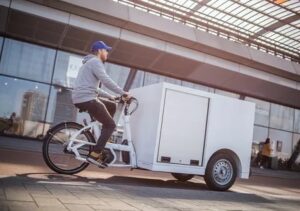
The cargo bike market is evaluated at USD 7,921.5 million in 2024 and is poised to witness remarkable growth over the next decade. With a projected Compound Annual Growth Rate (CAGR) of 13.1% from 2024 to 2034, the industry is expected to reach USD 27,182 million by 2034. This significant expansion is attributed to the rising demand for sustainable last-mile delivery solutions, the rapid urbanization of global cities, and a growing emphasis on low-emission transport alternatives. The online buying experience has further contributed to the market’s popularity, making cargo bikes a favored choice among both commercial enterprises and individuals.
The global surge in e-commerce and shifting consumer preferences towards eco-friendly logistics have created fertile ground for cargo bike adoption. Governments across Europe, North America, and parts of Asia are actively encouraging the use of electric and pedal-powered cargo bikes to reduce traffic congestion and carbon emissions in urban centers. As cities become increasingly congested, cargo bikes offer a practical and agile alternative to delivery vans and trucks, particularly for last-mile delivery applications. The proliferation of digital retail and online grocery services has added fuel to this demand, prompting both established logistics companies and startups to integrate cargo bikes into their delivery fleets.
Get Ahead with Our Report: Request Your Sample Now!
https://www.futuremarketinsights.com/reports/sample/rep-gb-13678
Key Takeaways
The cargo bike market is set to expand from USD 7.9 billion in 2024 to USD 27.1 billion by 2034, reflecting a CAGR of 13.1%. This growth is predominantly powered by the rise in online commerce, evolving consumer preferences, and the supportive role of government policies focused on reducing urban emissions. E-cargo bikes are expected to hold a dominant market share during this period, thanks to technological advancements in battery efficiency and extended range capabilities. Moreover, the growing awareness of environmental sustainability is pushing businesses to rethink their logistics strategies and embrace emission-free delivery vehicles.
Emerging Trends in the Global Market
One of the most prominent trends in the cargo bike market is the rise of electric cargo bikes, or e-cargo bikes, which are rapidly gaining traction in both business-to-business (B2B) and business-to-consumer (B2C) segments. These bikes are increasingly preferred for food delivery, parcel delivery, and courier services due to their ability to cover longer distances without driver fatigue. Another key trend is the integration of IoT and GPS tracking systems into cargo bikes, allowing fleet managers to monitor routes, improve delivery times, and optimize fuel efficiency.
Another emerging trend is the customization of cargo bikes for various business use-cases. Manufacturers are now offering modular cargo boxes, cold storage compartments, and detachable trailers to cater to specific industry needs such as pharmaceuticals, perishable food items, and large-volume goods. Subscription-based models and leasing options for businesses are also gaining popularity, reducing the financial barrier to entry for small and medium-sized enterprises (SMEs) and startups.
Significant Developments and Opportunities
Significant developments include several national and municipal governments introducing incentive programs, tax rebates, and dedicated cycling infrastructure to promote cargo bike usage. In European cities such as Amsterdam, Copenhagen, and Berlin, low-emission zones and vehicle access restrictions have accelerated the shift toward cargo bike logistics. These policy changes are creating opportunities for manufacturers and service providers to expand into new regions.
The increased funding and venture capital investment into e-mobility startups also reflect the sector’s potential. Cargo bike-sharing services, supported by digital platforms, are now being trialed in multiple cities, offering on-demand logistics solutions to individuals and micro-businesses. This development is expected to open up further growth avenues for stakeholders and push innovation within the sector.
Recent Developments in the Market
The last few years have seen major players expanding their global footprint through acquisitions, strategic partnerships, and product innovation. For instance, multiple cargo bike manufacturers have partnered with major logistics and e-commerce companies to deploy specialized fleets for urban delivery. Some players are also entering untapped markets in South America, Africa, and Southeast Asia, where urbanization is increasing and demand for sustainable transport options is rising.
Innovations in battery technology, lightweight materials, and drivetrain systems have also played a critical role in making cargo bikes more versatile and commercially viable. The inclusion of swappable batteries and smart charging infrastructure has helped overcome previous limitations in range and operational downtime. Companies are now focusing on creating compact, foldable, and multi-use models tailored for both personal and business use, enhancing product appeal across segments.
Exhaustive Market Report: A Complete Study
https://www.futuremarketinsights.com/reports/cargo-bike-market
Competition Outlook
The cargo bike market is characterized by the presence of both established global brands and regional startups. Companies like Rad Power Bikes, Urban Arrow, Riese & Müller, Yuba Bicycles, Tern Bicycles, and Carla Cargo have been leading the innovation charge with a diverse range of cargo bike models catering to different payload capacities and usage types. These firms are continuously investing in R&D to enhance performance, safety features, and design flexibility.
Key Players
The competitive landscape also includes emerging players focusing on software integration, fleet management platforms, and service-based logistics solutions. Companies offering subscription-based cargo bike fleets and full-service logistics using electric cargo bikes are gradually becoming integral to urban delivery ecosystems. While Europe currently leads the market in terms of volume and regulatory support, North America and Asia-Pacific are expected to witness faster growth rates over the forecast period due to increasing urbanization and infrastructure development.
Key Segmentations
The market can be segmented based on product type, propulsion type, application, and geography. By product type, the two-wheeler, three-wheeler, and four-wheeler categories serve different load and terrain requirements. By propulsion, the market is divided into electric and non-electric cargo bikes, with electric holding the dominant share due to growing demand for energy-efficient mobility. Application-wise, the market spans commercial and personal usage, with commercial applications like retail delivery, courier services, and food distribution showing the highest growth. Geographically, Europe remains the largest market, while Asia-Pacific and North America are emerging as high-growth regions driven by technological adoption and supportive policies.
About Future Market Insights (FMI)
Future Market Insights, Inc. (ESOMAR certified, recipient of the Stevie Award, and a member of the Greater New York Chamber of Commerce) offers profound insights into the driving factors that are boosting demand in the market. FMI stands as the leading global provider of market intelligence, advisory services, consulting, and events for the Packaging, Food and Beverage, Consumer Technology, Healthcare, Industrial, and Chemicals markets. With a vast team of 400 analysts worldwide, FMI provides global, regional, and local expertise on diverse domains and industry trends across more than 110 countries.
Contact Us:
Future Market Insights Inc.
Christiana Corporate, 200 Continental Drive,
Suite 401, Newark, Delaware – 19713, USA
T: +1-845-579-5705
For Sales Enquiries: sales@futuremarketinsights.com
Website: https://www.futuremarketinsights.com
LinkedIn| Twitter| Blogs | YouTube