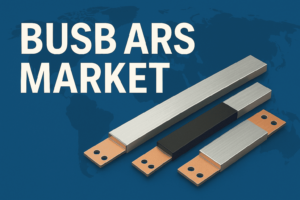
The global busbars market is poised for steady growth, with its value anticipated to rise from approximately USD 20.56 billion in 2025 to about USD 31.02 billion by 2035. This growth reflects a compound annual growth rate (CAGR) of 4.2% over the forecast period.
The busbars market is entering a phase of robust development, driven by the surging demand for efficient power distribution systems, renewable energy integration, and expansive infrastructure upgrades worldwide. Busbars—critical metallic strips or bars that conduct electricity within switchgear, distribution boards, and substations—are fundamental to reliable, high-capacity power transmission. Their adoption across commercial, industrial, and utility-scale applications is rising as nations strive for enhanced energy efficiency, reduced transmission losses, and sustainable urbanization.
Uncover Market Opportunities: Access a Sample Report Now!https://www.futuremarketinsights.com/reports/sample/rep-gb-4249
Driving Forces Behind Market Growth
- Energy Efficiency and Loss Reduction
Governments and utilities are under immense pressure to optimize energy consumption and reduce losses during transmission and distribution. Busbars, known for their low impedance and compact construction, facilitate efficient energy flow while minimizing resistive heat losses compared to traditional wiring systems. Their application in switchgear and distribution systems improves the overall energy performance of facilities. - Renewable Energy Integration
The rapid deployment of solar and wind power infrastructure has bolstered demand for busbars, especially in inverter systems, transformer connections, and energy storage units. With the global renewable capacity expected to double by 2030, busbars are crucial for connecting these decentralized generation sources to grid systems, ensuring minimal interruptions and fault-tolerant configurations. - Urbanization and Infrastructure Growth
Developing countries in Asia, Africa, and Latin America are investing heavily in urban infrastructure—smart cities, metro projects, data centers, and commercial buildings. These projects demand compact and high-capacity electrical layouts, favoring the installation of busbars over conventional cable-based systems due to ease of installation, maintenance, and superior load handling. - Industrial Automation and Electrification
Industries such as manufacturing, automotive, and chemicals are transitioning to automated and electrified operations, further driving the need for reliable electrical infrastructure. Busbars support high-current environments, making them suitable for machine tools, motor control centers, and robotic assembly lines. - Technological Advancements
Innovations in busbar insulation, design modularity, and integration with IoT sensors are helping manufacturers meet the growing expectations for safety, scalability, and real-time energy monitoring. For instance, laminated and sandwich busbars are gaining popularity in electric vehicles (EVs) and battery systems for their space-saving benefits and excellent thermal performance.
Market Challenges & Strategic Responses
- High Initial Installation Cost
One of the notable challenges in busbar adoption is the higher initial cost compared to traditional cabling solutions. Especially for small- and medium-scale enterprises, the upfront investment can be a deterrent. - Material Price Volatility
Copper and aluminum—the primary materials for busbars—are subject to price fluctuations due to global supply chain dynamics and geopolitical tensions. This volatility can impact profit margins and planning for large-scale installations. - Standardization and Compatibility Issues
Inconsistencies in regional electrical standards and voltage requirements can pose a challenge for global manufacturers and OEMs aiming to scale their solutions. - Space Constraints in Retrofitting Projects
Installing busbars in aging buildings or industrial plants where space is constrained can be technically challenging and costly.
Increased Market Demand: Get In-Depth Analysis and Insights with Our Complete Report!https://www.futuremarketinsights.com/reports/busbars-market
Regional Market Outlook
- Asia-Pacific
Asia-Pacific dominates the global busbars market and is expected to maintain its leadership through 2035. Rapid industrialization in China and India, coupled with massive government investments in energy infrastructure, smart grids, and metro rail projects, fuel demand. Additionally, Japan and South Korea are adopting busbars in EV manufacturing and robotics, adding to regional growth. - North America
The North American market is witnessing renewed interest due to the electrification of commercial buildings, data centers, and ongoing modernization of aging grid infrastructure. The U.S. Inflation Reduction Act (IRA) and investments in domestic manufacturing have increased demand for busbars in green buildings and utility-scale energy storage. - Europe
Europe is a mature yet steadily growing market, driven by strong regulatory support for energy efficiency and building decarbonization. Countries like Germany, the UK, and France are integrating busbars into renewable energy installations, electric vehicle charging infrastructure, and smart homes. The European Union’s Green Deal further bolsters demand through incentives for sustainable construction. - Middle East & Africa
In the Middle East, countries like the UAE and Saudi Arabia are embracing busbars as part of their vision to develop smart cities and advanced transportation systems (e.g., NEOM and Riyadh Metro). Africa, while still nascent in market share, holds untapped potential as grid expansion and urban electrification projects accelerate across the continent. - Latin America
Latin America is an emerging market, with Brazil and Mexico spearheading demand through industrial expansion and clean energy policies. The trend toward distributed energy systems and energy-efficient commercial infrastructure supports future busbar adoption in the region.
Key Players
- ABB Ltd.
- Schneider Electric
- Siemens AG
- Legrand
- Eaton Corporation
- General Electric
- Wöhner GmbH & Co. KG
- Rittal GmbH & Co. KG
- Mersen
- C&S Electric
Automation Auxiliary Industry Analysis: https://www.futuremarketinsights.com/industry-analysis/automation-auxiliary
Key Market Segments
By Product Type:
- Copper
- Aluminum
By Power Rating:
- Low
- Medium
- High
By End Use:
- Commercial
- Industrial
By Region:
- North America
- Latin America
- East Asia
- South Asia and Pacific
- Western Europe
- Eastern Europe
- Middle East & Africa
About Future Market Insights (FMI)
Future Market Insights, Inc. (ESOMAR certified, recipient of the Stevie Award, and a member of the Greater New York Chamber of Commerce) offers profound insights into the driving factors that are boosting demand in the market. FMI stands as the leading global provider of market intelligence, advisory services, consulting, and events for the Packaging, Food and Beverage, Consumer Technology, Healthcare, Industrial, and Chemicals markets. With a vast team of over 400 analysts worldwide, FMI provides global, regional, and local expertise on diverse domains and industry trends across more than 110 countries. Join us as we commemorate 10 years of delivering trusted market insights. Reflecting on a decade of achievements, we continue to lead with integrity, innovation, and expertise.
Contact Us:
Future Market Insights Inc.
Christiana Corporate, 200 Continental Drive,
Suite 401, Newark, Delaware – 19713, USA
T: +1-347-918-3531
For Sales Enquiries: sales@futuremarketinsights.com
Website: https://www.futuremarketinsights.com
LinkedIn| Twitter| Blogs | YouTube