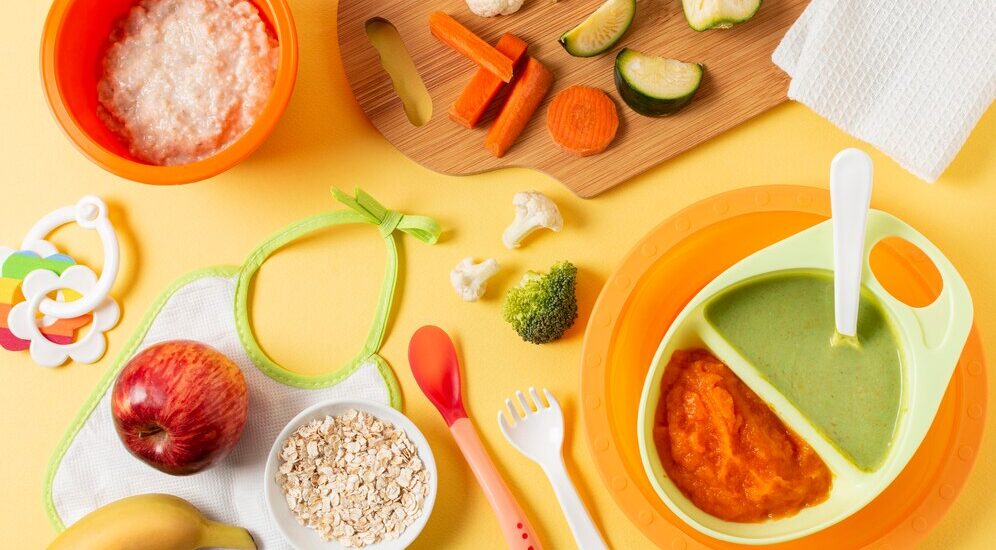
The global hypo anti-allergic baby food market was valued at USD 3,560.7 million in 2025 and is projected to grow at a compound annual growth rate (CAGR) of 3.5%, reaching approximately USD 5,015.3 million by 2035. This steady growth trajectory is attributed to increasing parental awareness about infant food allergies, a growing number of lactose and gluten-intolerant infants, and a rising preference for clean-label and hypoallergenic food products across developed and emerging economies.
Manufacturers are prioritizing innovation by introducing allergy-safe products fortified with essential nutrients and free from common allergens such as dairy, soy, wheat, and nuts. As incidences of childhood food allergies continue to rise globally, the market for hypo anti-allergic baby foods is becoming increasingly important in ensuring infant health and nutrition without triggering allergic reactions.
Start Your Market Research Journey – Request a Free Sample: https://www.futuremarketinsights.com/reports/sample/rep-gb-2715
𝐌𝐞𝐫𝐠𝐞𝐫𝐬 𝐚𝐧𝐝 𝐀𝐜𝐪𝐮𝐢𝐬𝐢𝐭𝐢𝐨𝐧𝐬
Several strategic mergers and acquisitions are shaping the competitive landscape of the hypo anti-allergic baby food market. In 2024, Nestlé acquired a minority stake in an allergen-free baby food startup to expand its product line tailored to sensitive infants. Similarly, Danone enhanced its portfolio by acquiring a UK-based hypoallergenic baby food brand known for its organic and dairy-free offerings. These moves reflect the growing interest of global conglomerates in capturing a larger share of this niche but rapidly expanding market.
𝐊𝐞𝐲 𝐓𝐚𝐤𝐞𝐚𝐰𝐚𝐲𝐬
- The hypo anti-allergic baby food market is expected to grow from USD 3.56 billion in 2025 to USD 5.01 billion by 2035, driven by a 3.5% CAGR.
- Increasing food allergy incidences among infants are fueling demand for allergen-free nutritional solutions.
- M&A activity is intensifying as global players invest in specialty food startups to diversify their portfolios.
- Clean-label, plant-based, and organic formulations are gaining prominence.
𝐄𝐦𝐞𝐫𝐠𝐢𝐧𝐠 𝐓𝐫𝐞𝐧𝐝𝐬 𝐢𝐧 𝐆𝐥𝐨𝐛𝐚𝐥 𝐌𝐚𝐫𝐤𝐞𝐭
One of the major trends is the increasing adoption of plant-based hypoallergenic baby foods, particularly in North America and Europe. There’s also a strong push toward functional baby foods that provide added benefits such as immunity-boosting ingredients and probiotics. Additionally, digitally native brands are disrupting the space with direct-to-consumer (DTC) subscription models, allowing parents to access tailor-made hypoallergenic nutrition plans for their infants.
𝐒𝐢𝐠𝐧𝐢𝐟𝐢𝐜𝐚𝐧𝐭 𝐃𝐞𝐯𝐞𝐥𝐨𝐩𝐦𝐞𝐧𝐭𝐬 𝐢𝐧 𝐆𝐥𝐨𝐛𝐚𝐥 𝐒𝐞𝐜𝐭𝐨𝐫
Regulatory advancements are also contributing to market growth. In 2025, the European Food Safety Authority (EFSA) approved new labeling standards for hypoallergenic baby foods, increasing transparency and consumer trust. Additionally, innovations in hydrolyzed protein technologies and the use of novel grain sources are creating new product opportunities for companies targeting allergen-free nutrition.
𝐓𝐫𝐞𝐧𝐝𝐬 𝐚𝐧𝐝 𝐎𝐩𝐩𝐨𝐫𝐭𝐮𝐧𝐢𝐭𝐢𝐞𝐬 𝐢𝐧 𝐭𝐡𝐞 𝐌𝐚𝐫𝐤𝐞𝐭
As more parents seek preventive approaches to infant health, the demand for hypoallergenic baby food is expected to rise. The increasing availability of products through e-commerce platforms is further driving accessibility. There are notable opportunities for brands that can combine allergen-free formulations with organic and non-GMO claims, especially in premium markets like the U.S., Australia, and Germany.
The Complete Picture Awaits – Download the Full Report: https://www.futuremarketinsights.com/reports/hypo-anti-allergic-baby-food-market
𝐑𝐞𝐜𝐞𝐧𝐭 𝐃𝐞𝐯𝐞𝐥𝐨𝐩𝐦𝐞𝐧𝐭𝐬 𝐢𝐧 𝐭𝐡𝐞 𝐌𝐚𝐫𝐤𝐞𝐭
- In early 2025, HiPP launched a new line of oat-based hypoallergenic baby cereals in European markets.
- Gerber (Nestlé) expanded its range of allergen-free pouches with enhanced probiotic blends.
- Little Spoon, a U.S.-based brand, secured Series C funding to scale its allergen-free baby food delivery model nationwide.
𝐂𝐨𝐦𝐩𝐞𝐭𝐢𝐭𝐢𝐨𝐧 𝐎𝐮𝐭𝐥𝐨𝐨𝐤
The competitive landscape is dominated by major players such as Nestlé, Danone, HiPP, and Mead Johnson Nutrition, with increasing competition from startups and regional organic brands. Differentiation is largely based on formulation innovation, certifications (organic, non-GMO, gluten-free), and brand trust. Strategic partnerships with pediatricians and healthcare networks are also helping companies establish credibility.
Leading Brands
- Nestle
- HiPP Organic
- Danone Nutricia
- Parent’s Choice Infant Formula
- Abbott Laboratories
- Mead Johnson Nutrition
- Enfamil USA
- Natures one
- Humana-baby
- Earth’s Best
𝐑𝐞𝐠𝐢𝐨𝐧-𝐰𝐢𝐬𝐞 𝐈𝐧𝐬𝐢𝐠𝐡𝐭𝐬
- United States: The U.S. market is witnessing a strong CAGR of 9.3%, driven by a rising prevalence of food allergies and increasing consumer spending on premium baby nutrition.
- Germany: With a 10.4% CAGR, Germany is leading Europe’s market, supported by strict food safety standards and high demand for organic, allergen-free products.
- China: The Chinese market, growing at 7.5%, is benefiting from expanding middle-class awareness about infant health and allergy risks.
- Australia: A robust CAGR of 11.3% highlights Australia’s strong inclination toward organic and hypoallergenic food options for infants.
- India: At 8.2% CAGR, India shows promise, fueled by rising urbanization, improved healthcare access, and growing awareness of pediatric allergies.
Explore Food Supplement and Nutrition Industry Analysis: https://www.futuremarketinsights.com/industry-analysis/food-supplement-and-nutrition
Key Segments of the Report
By Product Form:
As per product form, the industry has been categorized into Liquid Milk and Milk Powder.
By Product Origin:
This segment is further categorized into Organic and Conventional.
By Age of the Child:
This segment is further categorized into Newborn, Baby, and Toddler.
By Distribution Channel:
This segment is further categorized into Hypermarkets / Supermarkets, Convenience Stores, Pharmacies & Drugstores, Specialty Stores, and Online Retail.
By Region:
The market is analyzed across North America, Latin America, Western Europe, Eastern Europe, South Asia & Pacific, East Asia, Central Asia, Balkan and Baltic countries, Russia and Belarus, and the Middle East & Africa.
About Future Market Insights (FMI)
Future Market Insights, Inc. (ESOMAR certified, recipient of the Stevie Award, and a member of the Greater New York Chamber of Commerce) offers profound insights into the driving factors that are boosting demand in the market. FMI stands as the leading global provider of market intelligence, advisory services, consulting, and events for the Packaging, Food and Beverage, Consumer Technology, Healthcare, Industrial, and Chemicals markets. With a vast team of over 400 analysts worldwide, FMI provides global, regional, and local expertise on diverse domains and industry trends across more than 110 countries.
Contact Us:
Future Market Insights Inc.
Christiana Corporate, 200 Continental Drive,
Suite 401, Newark, Delaware – 19713, USA
T: +1-347-918-3531
For Sales Enquiries: sales@futuremarketinsights.com
Website: https://www.futuremarketinsights.com
LinkedIn| Twitter| Blogs | YouTube