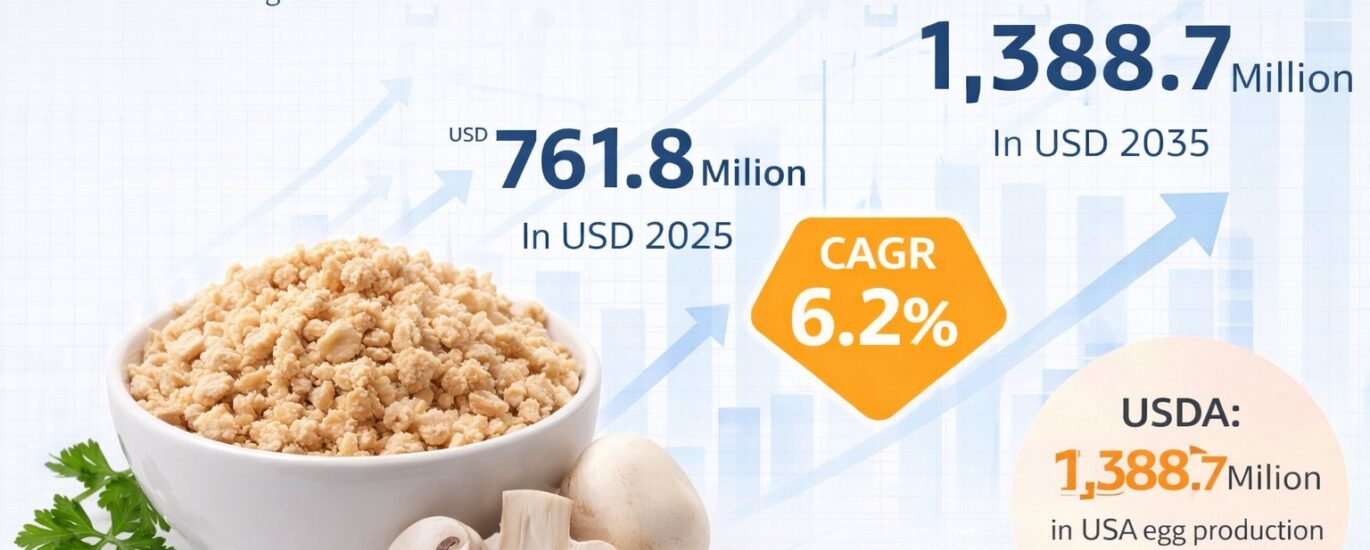
The global mycoprotein market is gaining steady traction as consumers and food manufacturers increasingly shift toward sustainable and alternative protein sources. Valued at approximately USD 761.8 million in 2025, the market is projected to reach USD 1,388.7 million by 2035, expanding at a CAGR of 6.2% during the forecast period. This growth reflects a structural transition in global protein consumption patterns, driven by environmental concerns, health awareness, and evolving dietary preferences.
Demand momentum is being reinforced by the rapid adoption of plant-based diets and flexitarian lifestyles, where consumers seek to reduce meat consumption without compromising on taste and texture. Mycoprotein, derived from fungal fermentation, offers a high-protein, low-fat, and cholesterol-free alternative that aligns well with these evolving expectations.
Get detailed market forecasts, competitive benchmarking, and pricing trends: https://www.futuremarketinsights.com/reports/sample/rep-gb-14826
Market Overview
The mycoprotein market is transitioning from a niche alternative protein segment into a mainstream ingredient category within food processing and foodservice industries. Its unique fibrous structure allows it to replicate meat-like textures, making it highly suitable for applications such as burgers, sausages, nuggets, meatballs, and ready-to-eat meals.
By 2030, the market is expected to witness accelerated adoption across retail and quick-service restaurant channels, supported by increased product availability and improved consumer awareness. Growth is particularly evident in developed markets such as North America and Europe, where sustainability and clean-label preferences are well established, while emerging economies are contributing through volume expansion.
Speak to Analyst : Customize insights for your business strategy – https://www.futuremarketinsights.com/customization-available/rep-gb-14826
Key Growth Drivers
The primary driver of market expansion is the growing demand for sustainable and environmentally friendly protein sources. Mycoprotein production requires significantly less land, water, and energy compared to conventional livestock farming, making it a preferred option for environmentally conscious consumers.
Health-driven consumption trends are also playing a critical role. Mycoprotein’s nutritional profile—rich in protein and fiber while being low in saturated fat—positions it as an attractive alternative for health-focused consumers, athletes, and individuals managing lifestyle-related conditions.
Supply Chain and Pricing Trends
The mycoprotein supply chain is centered around fermentation technology, involving raw material sourcing, microbial cultivation, processing, and distribution through food manufacturers and retailers.
- Fermentation producers cultivate fungal strains using controlled bioreactors.
• Ingredient processors convert biomass into usable protein formats such as mince or chunks.
• Food manufacturers integrate mycoprotein into packaged foods and ready meals.
• Retail and foodservice channels distribute products to end consumers.
Segment Analysis
By form, minced mycoprotein dominates the market, accounting for a significant share due to its versatility in replicating ground meat across a wide range of applications. Its adaptability in global cuisines enhances its appeal among both manufacturers and consumers.
By type, food-grade mycoprotein leads the segment, supported by rising demand for clean-label and sustainable ingredients. Its application spans frozen foods, snacks, ready meals, and protein-enriched products, reinforcing its position as a core ingredient in the alternative protein ecosystem.
Regional Outlook
North America remains a leading market, driven by strong consumer awareness, robust distribution networks, and continuous innovation in plant-based food products. The United States, in particular, is witnessing increased investments in fermentation-based protein technologies.
Europe is another key region, with countries such as the United Kingdom and Germany leading adoption due to high vegetarian and vegan populations, as well as stringent sustainability regulations.
Unlock 360° insights for strategic decision making and investment planning: https://www.futuremarketinsights.com/checkout/14826
Competitive Landscape
The mycoprotein market is moderately consolidated, with leading players focusing on innovation, capacity expansion, and strategic partnerships to strengthen their market position.
Key players include: Marlow Foods Ltd. (Quorn Foods), Nature’s Fynd, ENOUGH (3F BIO), MycoTechnology Inc., Prime Roots, and MyForest Foods. These companies are investing heavily in R&D to enhance product quality, scalability, and sustainability credentials.
Startups and emerging players are also entering the market with novel fermentation technologies and differentiated product offerings, intensifying competition and driving innovation.
Future Outlook
The mycoprotein market is poised for sustained growth over the next decade, supported by technological advancements in fermentation, increasing consumer acceptance, and expanding applications across food categories.
Future opportunities are expected to center around product diversification, cost optimization, and integration into mainstream food systems. Innovations in hybrid proteins, fortified formulations, and functional ingredients will further enhance market potential.
About FMI
Future Market Insights (FMI) is a globally recognized provider of market intelligence, delivering actionable insights across industries including food and beverage, healthcare, chemicals, and advanced manufacturing.
Contact Us
Future Market Insights Inc.
Christiana Corporate, 200 Continental Drive,
Suite 401, Newark, Delaware – 19713, USA
T: +1-347-918-3531
For Sales Enquiries: sales@futuremarketinsights.com
Website: https://www.futuremarketinsights.com