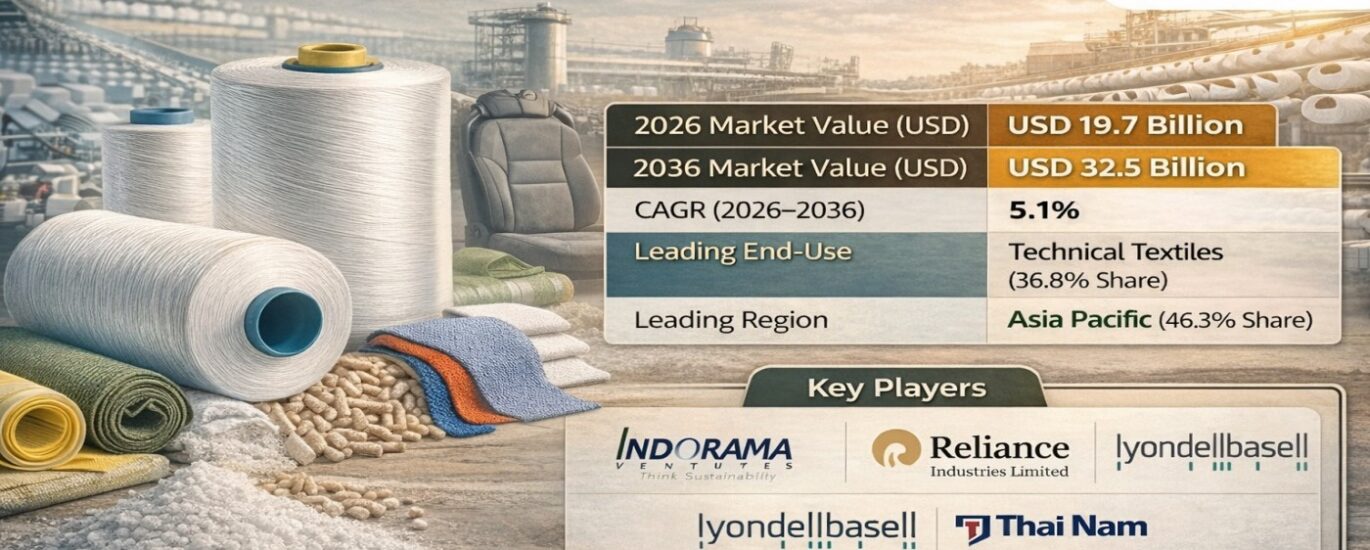
The global polypropylene yarn market is entering a phase of performance-driven expansion, where growth is not solely tied to production volumes but increasingly influenced by material efficiency, consistency, and application-specific innovation. As industries transition toward engineered textiles and high-performance materials, polypropylene yarn continues to gain traction as a reliable and scalable solution.
Emerging Industry Trends
- Shift Toward Technical & Performance Textiles
A significant transformation is underway as textile demand shifts from conventional fabrics to technical and functional textiles. Polypropylene yarn is widely used in:
- Geotextiles for infrastructure and soil stabilization
- Automotive interiors (seat fabrics, insulation layers)
- Filtration systems and industrial fabrics
- Protective and medical textiles
This shift is reinforcing demand for yarns that deliver precision, durability, and resistance under extreme conditions.
- Sustainability & Energy Efficiency Focus
Polypropylene yarn is gaining attention for its lower environmental footprint compared to other synthetic fibers. Key sustainability advantages include:
- Lower energy requirements during processing
- Reduced water usage in dyeing due to hydrophobic nature
- Recyclability and potential for circular textile systems
Manufacturers are increasingly investing in eco-efficient spinning technologies and recycling initiatives to align with global sustainability goals.
- Automation in Textile Manufacturing
Automation and smart textile manufacturing systems are driving demand for highly consistent raw materials. Polypropylene yarn fits well into automated environments due to:
- Uniform denier distribution
- Predictable processing behavior
- Reduced machine downtime
As textile plants adopt AI-driven quality control and automated weaving systems, material consistency becomes a critical selection factor.
Get detailed market forecasts, competitive benchmarking, and pricing trends: https://www.futuremarketinsights.com/reports/sample/rep-gb-11244
End-Use Industry Expansion
Automotive Sector
Polypropylene yarn is widely used in:
- Seat covers and upholstery
- Carpets and trunk liners
- Insulation and acoustic components
Its lightweight nature and resistance to chemicals and wear support automotive manufacturers in improving fuel efficiency and durability.
Construction & Infrastructure
In construction applications, polypropylene yarn is used in:
- Geotextiles for road stabilization
- Drainage and erosion control systems
- Concrete reinforcement fibers
Rising global infrastructure projects are significantly contributing to demand.
Healthcare & Hygiene Products
Growth in non-woven polypropylene yarn applications is supported by:
- Disposable hygiene products
- Medical textiles and protective wear
- Filtration materials
Its non-toxic, lightweight, and moisture-resistant properties make it suitable for sensitive applications.
Innovation & Technology Developments
Manufacturers are focusing on enhancing yarn performance through:
- Advanced spinning technologies for improved fiber uniformity
- Additive integration for UV resistance and antimicrobial properties
- High-tenacity yarn development for industrial-grade applications
Continuous R&D is enabling polypropylene yarn to meet specialized industrial requirements with greater precision.
Supply Chain & Raw Material Insights
The market remains closely linked to polypropylene polymer availability, which is influenced by:
- Crude oil price fluctuations
- Petrochemical industry output
- Competing demand from packaging and plastics sectors
To mitigate risks, companies are:
- Diversifying sourcing strategies
- Expanding regional production facilities
- Strengthening supplier partnerships
Opportunities in Emerging Markets
Developing economies are becoming key growth hubs due to:
- Rapid industrialization
- Expansion of textile manufacturing clusters
- Increasing export-oriented production
Countries in Asia Pacific, Latin America, and parts of Africa are witnessing rising investments in textile infrastructure, creating long-term growth opportunities.
Challenges in the Market
Despite steady growth, the market faces certain constraints:
- Volatility in raw material prices
- Competition from alternative synthetic fibers (polyester, nylon)
- Environmental concerns related to plastic-based materials
- Supply chain disruptions in polymer production
Addressing these challenges requires innovation, cost optimization, and sustainable production strategies.
Strategic Outlook for Industry Players
To remain competitive, companies are focusing on:
- Developing specialty yarn grades for niche applications
- Expanding global distribution networks
- Investing in sustainable production technologies
- Strengthening technical collaboration with textile manufacturers
Strategic partnerships across the value chain are becoming essential to ensure consistent quality and supply reliability.
Long-Term Market Outlook
The polypropylene yarn market is expected to maintain steady and resilient growth through 2036, supported by:
- Increasing demand for high-performance and technical textiles
- Expansion of industrial and infrastructure applications
- Advancements in fiber engineering and manufacturing technologies
As industries continue to prioritize efficiency, durability, and cost-effectiveness, polypropylene yarn will remain a core material in next-generation textile solutions worldwide.
About Future Market Insights (FMI)
Future Market Insights, Inc. (ESOMAR certified, recipient of the Stevie Award, and a member of the Greater New York Chamber of Commerce) offers profound insights into the driving factors that are boosting demand in the market. FMI stands as the leading global provider of market intelligence, advisory services, consulting, and events for the Packaging, Food and Beverage, Consumer Technology, Healthcare, Industrial, and Chemicals markets. With a vast team of over 400 analysts worldwide, FMI provides global, regional, and local expertise on diverse domains and industry trends across more than 110 countries.
Contact Us:
Future Market Insights Inc.
Christiana Corporate, 200 Continental Drive,
Suite 401, Newark, Delaware – 19713, USA
T: +1-347-918-3531
For Sales Enquiries: sales@futuremarketinsights.com
Website: https://www.futuremarketinsights.com
LinkedIn| Twitter| Blogs | YouTube