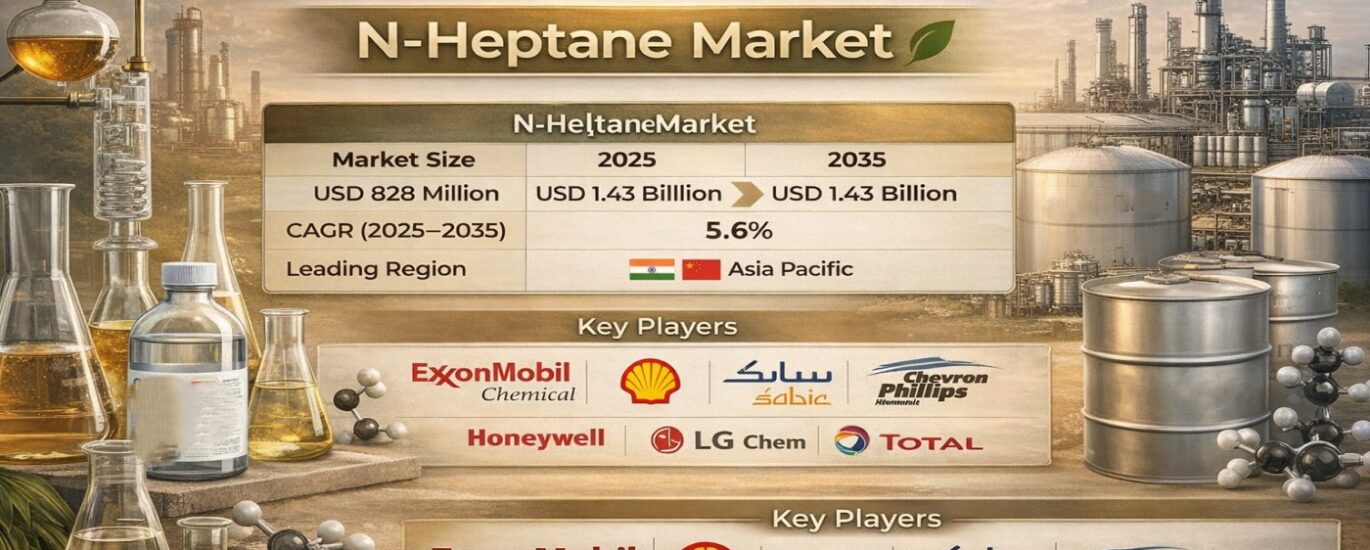
The global N-Heptane market is projected to expand from USD 828.4 million in 2025 to USD 1,428.5 million by 2035, registering a CAGR of 5.6% over the forecast period. Growth is being driven by rising demand for high-purity solvents across pharmaceutical manufacturing, electronics cleaning, and specialty chemical processing.
The market is witnessing a structural shift toward ultra-high-purity (>99%) grades, which are expected to account for 44.2% of total demand, reflecting stringent regulatory requirements and increasing quality standards in API synthesis and precision manufacturing.
Key Market Drivers
- Pharmaceutical Manufacturing Expansion
The pharmaceutical segment dominates with a 31.0% market share, fueled by:
- Rising global demand for generic drugs and APIs
- Increasing investment in drug manufacturing infrastructure
- Growing need for high-purity solvents in synthesis, extraction, and purification
- Growth in Electronics and Precision Cleaning
N-heptane is increasingly used in:
- Semiconductor and electronics cleaning
- Precision component manufacturing
Its low residue and non-polar characteristics make it ideal for sensitive applications.
- Fuel Blending and Petrochemical Integration
As a straight-chain alkane, n-heptane plays a role in:
- Fuel testing and octane calibration
- Gasoline blending
Demand remains stable due to growth in automotive and fuel consumption in emerging economies.
- Environmental and Regulatory Shift
- Adoption of low-aromatic solvents
- Increasing compliance with VOC emission regulations
- Demand for eco-friendly and safer solvent alternatives
Get detailed market forecasts, competitive benchmarking, and pricing trends: https://www.futuremarketinsights.com/reports/sample/rep-gb-6547
Market Segmentation Analysis
By Purity
- >99% Purity – 44.2% share (dominant)
- 95–99% Purity
- <95% Purity
High-purity grades are essential for pharmaceutical and electronics applications, ensuring compliance and performance consistency.
By Application
- Pharmaceuticals – 31.0% (leading segment)
- Adhesives & Sealants
- Electronics
- Paints & Coatings
- Plastics & Polymers
Supply Chain Analysis (Who Supplies Whom)
The N-heptane value chain is highly integrated:
Upstream Suppliers
- Crude oil producers and refiners supply feedstock to petrochemical processors.
Midstream Producers
- Companies such as ExxonMobil Chemical, Shell Chemicals, and SABIC produce and refine n-heptane via distillation and purification processes.
Downstream Distributors
- Specialty chemical distributors supply to:
- Pharmaceutical manufacturers
- Electronics producers
- Adhesive and coatings companies
End Users
- API manufacturers
- Semiconductor companies
- Industrial processors
Pricing Trends and Cost Dynamics
- Prices are closely linked to crude oil volatility
- Premium pricing for >99% purity grades
- Increasing cost pressure due to:
- Energy-intensive purification processes
- Environmental compliance investments
However, high-performance applications justify premium margins, especially in pharmaceuticals and electronics.
Regional Analysis
High-Growth Regions
- North America – Regulatory-driven demand and pharmaceutical strength
- East Asia – Electronics manufacturing hub
- Western Europe – Strong compliance and specialty chemicals market
Fastest Growing Countries
- India (6.9% CAGR) – API production and “Make in India” push
- China (6.6% CAGR) – Electronics and specialty chemicals expansion
- Brazil (5.1% CAGR) – Packaging, automotive, and generics growth
Competitive Landscape
The market is moderately consolidated, with top players holding 60–65% share.
Leading Companies
- ExxonMobil Chemical
- Shell Chemicals
- SABIC
- Chevron Phillips Chemical
- Honeywell International
Challengers and Regional Players
- LG Chem
- TotalEnergies Petrochemicals
- Reliance Industries
- Maruzen Petrochemical
- Zhejiang Materials Industry Group
Competitive Focus Areas
- Ultra-high purity production
- Supply chain reliability
- Regulatory compliance
- Advanced purification technologies
Key Trends Shaping the Market
- Shift toward pharmaceutical-grade solvents
- Growth in electronics cleaning applications
- Development of low-aromatic and eco-friendly variants
- Increased adoption of advanced distillation and purification systems
Market Restraints and Risks
- Crude oil price volatility impacting margins
- Stringent environmental regulations (VOC emissions)
- Competition from bio-based and alternative solvents
- High capital requirements for purification infrastructure
Investment Opportunities
- Expansion of high-purity production facilities
- Investment in green solvent technologies
- Growth in emerging markets (India, China, Southeast Asia)
- Development of electronics-grade solvent solutions
Future Outlook
The N-heptane market is expected to maintain steady, quality-driven growth, supported by:
- Expanding pharmaceutical manufacturing capacity
- Rising demand for precision solvents in electronics
- Increasing environmental compliance requirements
Future innovation will focus on:
- Sustainable production methods
- Enhanced purity standards
- Specialty application development
As industries move toward higher performance and stricter regulatory compliance, N-heptane will remain a critical specialty solvent across global value chains.