The global plant-based protein market is entering a new phase of expansion as demand shifts beyond meat substitutes into beverages, bakery, ready-to-eat meals, dairy alternatives, and sports nutrition applications. Manufacturers are increasingly seeking plant protein systems that can deliver reliable texture, solubility, taste masking, and nutritional consistency across large-scale food production.
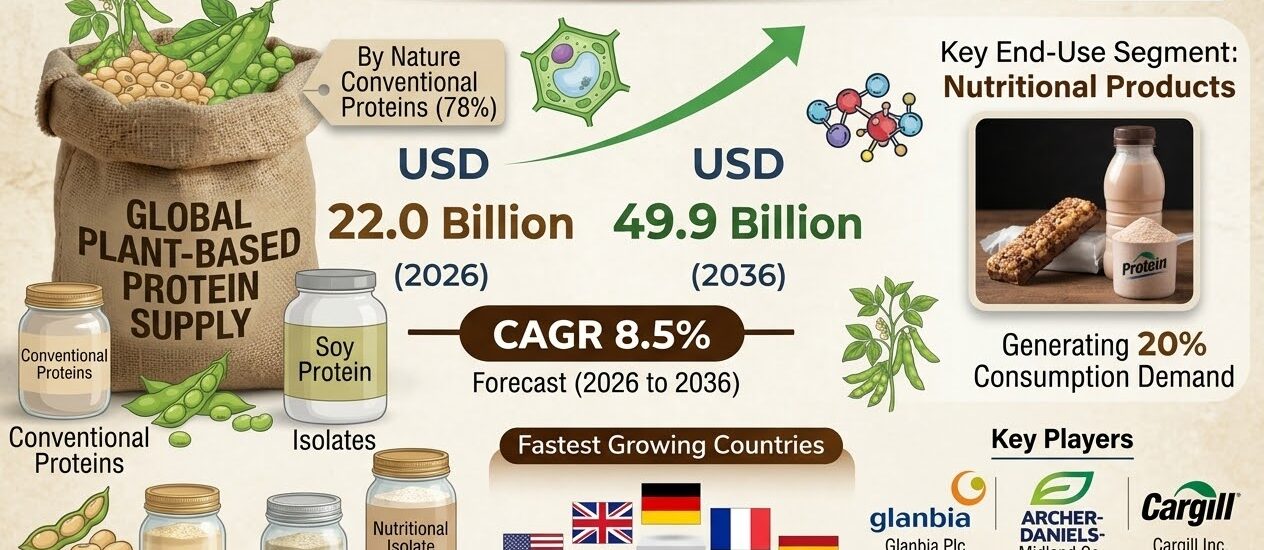
The market is projected to grow from USD 22.0 billion in 2026 to USD 49.9 billion by 2036, registering a CAGR of 8.5% during the forecast period. Growth is being driven by rising protein-focused consumption, increasing adoption of vegan and flexitarian diets, and stronger demand for application-ready ingredient systems.
Request For Sample Report | Customize Report | Purchase Full Report- https://www.futuremarketinsights.com/reports/sample/rep-gb-11442
Functional Performance and Nutrition Continue to Drive Market Growth
The plant-based protein market is increasingly being shaped by performance requirements across food and beverage applications. Manufacturers are prioritizing ingredients that provide predictable texture, emulsification, heat stability, dispersibility, and taste performance.
Key Growth Drivers Include:
- Rising Demand for Protein-Rich Foods: Consumers are increasingly seeking high-protein foods, beverages, snacks, and nutritional products.
- Growing Vegan and Flexitarian Populations: The expansion of vegan, vegetarian, and flexitarian diets continues to strengthen market demand.
- Shift Toward Functional Protein Systems: Food manufacturers are focusing on protein ingredients that offer better solubility, texture, and sensory outcomes.
- Increasing Use Across Multiple Applications: Plant proteins are being integrated into bakery, ready-to-eat meals, dairy alternatives, snacks, and beverages.
Regional Highlights
- North America Leads Global Consumption: The USA remains one of the largest markets due to strong consumer awareness, protein-focused diets, and high adoption of plant-based foods.
- Europe Continues to Expand Rapidly: Countries such as Germany, France, and the UK are witnessing strong growth supported by sustainability initiatives and rising plant-based food penetration.
- Asia Pacific Shows Long-Term Potential: Increasing urbanization, health awareness, and protein demand are creating new opportunities across emerging markets.
- Spain Emerges as a Fast-Growing Market: Spain is projected to record one of the highest growth rates due to rising adoption of plant-based snacks, convenience foods, and ready-to-eat products.
Country Outlook
Germany Continues to Strengthen its Position
Germany is projected to expand at a CAGR of 7.6% through 2036. Growth is supported by strong demand for sustainable proteins, increasing industrial food reformulation activity, and rising investment in domestic protein crop development.
Spain Emerges as a Key Growth Opportunity
Spain is expected to register a CAGR of 9.3% during the forecast period. Strong retail expansion, increasing plant-based food launches, and growing demand for convenience foods continue to support market growth.
UK Maintains Steady Expansion
The UK is projected to grow at a CAGR of 6.5%, supported by continued consumer demand for alternative proteins and growing focus on food system sustainability.
Segment Analysis
Soy Protein Leads by Product Type
Soy protein is expected to account for 36.4% of the market share due to its mature supply chain, strong functional properties, and widespread use across processed foods and nutrition products.
Isolates Dominate by Form
Protein isolates are projected to hold 41.2% of the market share as they provide higher protein concentration, better taste control, and improved performance in beverages, powders, and functional food systems.
Conventional Proteins Remain the Largest Segment
Conventional plant proteins are expected to account for 78.0% of the market due to broader raw material availability, lower costs, and stronger scalability for mass-market production.
Nutritional Products Lead End Use Demand
Nutritional products are projected to hold nearly 20.0% of the market share, driven by strong consumer demand for protein powders, ready-to-drink beverages, and fortified foods.
Challenges and Opportunities
Major Market Challenges Include:
- Taste and Texture Limitations: Some plant proteins continue to face challenges related to off-notes, bitterness, and poor mouthfeel.
- Supply Chain Volatility: Dependence on imported protein crops and raw materials can create sourcing risks.
- Higher Production Costs: Functional protein isolates and advanced blends often involve higher processing expenses.
- Formulation Complexity: Manufacturers must balance taste, texture, nutrition, and shelf-life performance.
Emerging Growth Opportunities Include:
- Expansion into Dairy Alternatives: Plant proteins are increasingly being used in milk alternatives, yogurts, and cheese products.
- Growth in Sports Nutrition: High-protein powders, shakes, and supplements continue to create strong demand for plant-based ingredients.
- Rising Use in Bakery and Snacks: Plant proteins are gaining traction in baked goods, cereals, and snack products.
- Growth in Ready-to-Eat and Convenience Foods: Demand for convenient, protein-rich foods is creating opportunities for functional protein systems.
Competitive Landscape
The plant-based protein market remains highly competitive, with major players focusing on functional ingredient innovation, production efficiency, and technical support capabilities.
Leading Players Include:
- Glanbia Plc.
- Archer-Daniels-Midland Co.
- Cargill Inc.
- Kerry Inc.
- Burcon NutraScience Corporation
- E.I. du Pont de Nemours & Co.
- Royal Avebe UA
- Cosucra Groupe Warcoing
- Ingredion Inc.
Manufacturers are Increasingly Focusing On:
- Improving Taste and Texture: Companies are investing in better flavor masking and mouthfeel enhancement technologies.
- Developing Functional Protein Systems: Suppliers are creating protein blends designed for beverages, bakery, and ready-to-eat foods.
- Strengthening Supply Chain Reliability: Manufacturers are focusing on regional sourcing and long-term contracts.
- Expanding Application Support: Companies are providing technical assistance to improve product formulation outcomes.
Analyst Outlook
The future of the plant-based protein market remains highly promising as consumers increasingly adopt protein-rich diets and prioritize sustainability. Manufacturers that can deliver consistent taste, texture, nutrition, and supply reliability are expected to maintain a strong competitive advantage.
Growth is expected to remain strongest in nutritional products, beverages, bakery, ready-to-eat meals, and dairy alternatives as brands continue to expand plant-based product portfolios.
Future Opportunities
- Growth in High-Protein Functional Beverages
- Expansion of Protein-Enriched Snacks and Bakery Products
- Rising Demand for Dairy Alternative Ingredients
- Increased Focus on Regional Protein Supply Chains
- Continued Innovation in Taste, Texture, and Solubility Performance
About Future Market Insights (FMI)
Future Market Insights (FMI) is a globally recognized provider of market intelligence, delivering actionable insights across industries including food and beverage, healthcare, chemicals, and advanced manufacturing. Through a combination of primary research, proprietary data models, and in-depth analysis, FMI empowers business leaders, investors, and policymakers to make informed strategic decisions in an increasingly complex global marketplace.
Contact Us:
Future Market Insights Inc.
Christiana Corporate, 200 Continental Drive,
Suite 401, Newark, Delaware – 19713, USA
T: +1-347-918-3531
Sales: sales@futuremarketinsights.com
Website: https://www.futuremarketinsights.com