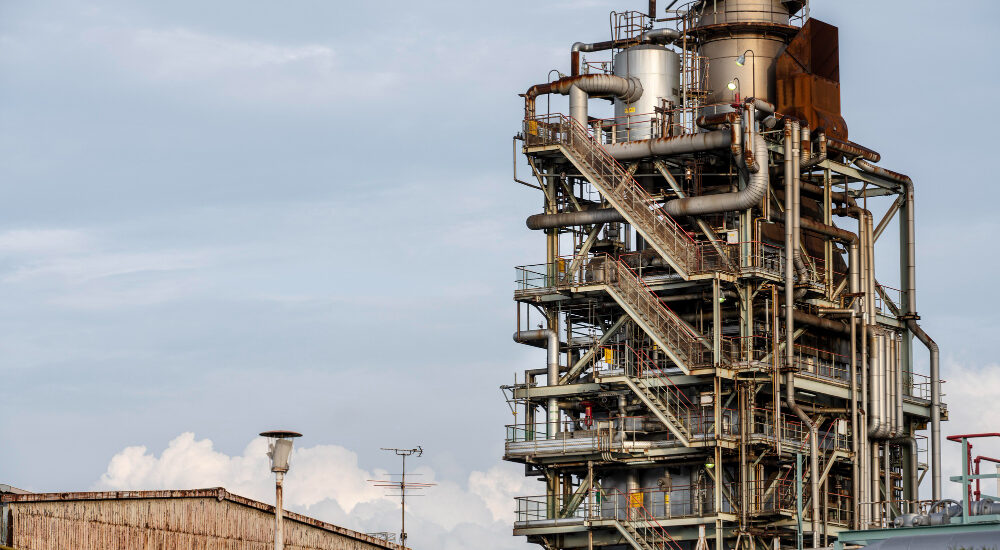
The global refinery process chemical market is entering a steady growth trajectory, driven by tightening fuel quality regulations, increasing crude oil complexity, and the need for operational efficiency across refining processes. According to recent market analysis, the industry is projected to expand from USD 6.0 billion in 2025 to USD 9.9 billion by 2035, registering a CAGR of 5.2% over the forecast period.
Refinery process chemicals play a vital role in enhancing fuel quality, improving refining efficiency, and ensuring compliance with stringent environmental standards. As refiners process heavier and more contaminated crude feedstocks, advanced chemical solutions are becoming critical to maintaining yield optimization, reducing emissions, and extending equipment life cycles.
With the global push toward ultra-low sulfur fuels, water conservation, and sustainable refining practices, refinery chemicals are evolving from traditional additives into high-performance, integrated solutions that support long-term operational resilience.
Discover Growth Opportunities in the Market – Get Your Sample Report Now
https://www.futuremarketinsights.com/reports/sample/rep-gb-988
Market Growth Drivers
Several structural and regulatory factors are accelerating demand in the refinery process chemical market, as refiners prioritize efficiency, compliance, and cost optimization.
Key growth drivers include:
- Increasing global demand for ultra-low sulfur fuels (ULSD <10 ppm)
- Rising processing of heavy and high-contaminant crude oil
- Expansion of refinery capacities in emerging economies
- Growing focus on water recycling and zero liquid discharge systems
- Stringent environmental regulations across fuel and wastewater treatment
- Need for higher yield optimization without large capital investments
Countries such as India and China are witnessing strong demand due to fuel standard upgrades (BS-VI and China VI), while mature markets continue to adopt advanced chemical programs to improve refinery margins and operational efficiency.
Emerging Technology and Material Trends
Technological innovation is transforming the refinery process chemical landscape, with a strong focus on performance, sustainability, and digital integration.
Advanced catalyst systems dominate innovation, enabling higher conversion efficiency, improved selectivity, and reduced hydrogen consumption in hydroprocessing and FCC units. These catalysts are increasingly designed to support renewable feedstock co-processing, including sustainable aviation fuel (SAF) and renewable diesel.
Water treatment technologies are also evolving rapidly, incorporating advanced corrosion inhibitors, biological control agents, and automated chemical dosing systems to enhance efficiency and compliance.
Sustainability is a central theme, with growing adoption of low-toxicity, eco-friendly formulations that align with global environmental standards.
Digital transformation is further shaping the market, with AI-driven monitoring systems enabling real-time optimization of chemical dosing, predictive maintenance, and improved process reliability.
Leading companies such as BASF SE, Dow, and Honeywell UOP are investing in R&D to develop next-generation refinery chemical solutions tailored to complex refining environments.
Regional Market Insights
Asia-Pacific Leads Global Growth
Asia-Pacific remains the fastest-growing region, driven by aggressive refinery capacity expansions and stricter fuel quality regulations. India (7.8% CAGR) and China (5.9% CAGR) are key growth engines, supported by infrastructure development and environmental mandates.
Middle East Strengthens Integration
The Middle East is witnessing increased adoption of advanced refinery chemicals due to crude-to-chemicals integration projects and high-salinity water treatment requirements in coastal refineries.
North America and Europe Focus on Optimization
Developed markets such as the United States and Europe emphasize refinery optimization, emissions reduction, and renewable fuel integration, driving steady demand for high-performance chemical solutions.
Competitive Landscape
The refinery process chemical market is moderately consolidated, with leading global players focusing on innovation, technical service, and integrated solutions.
Key companies operating in the market include:
BASF SE, Dow, Clariant, Evonik Industries, Honeywell UOP, W. R. Grace & Co., Albemarle Corporation, Johnson Matthey, Baker Hughes, and Ecolab (Nalco Water).
Market leaders such as BASF SE and Clariant maintain strong positions through advanced catalyst technologies, refinery optimization programs, and long-term service contracts. Meanwhile, companies like Honeywell UOP and W. R. Grace specialize in high-performance catalysts and process technologies.
Smaller players compete by offering niche solutions such as demulsifiers, corrosion inhibitors, and antifoulants tailored to specific refinery needs.
Analyst Insight and Strategic Outlook
Industry analysts highlight that the future of the refinery process chemical market will be shaped by regulatory compliance, sustainability initiatives, and increasing refinery complexity.
The growing adoption of advanced hydroprocessing catalysts, water treatment systems, and digital monitoring tools is expected to redefine refining operations globally.
Refineries are increasingly seeking integrated chemical solutions that improve operational efficiency, reduce downtime, and ensure compliance with environmental standards.
Over the next decade, the industry is expected to move toward:
- Advanced hydroprocessing and FCC catalyst systems
- Integration of renewable feedstock co-processing technologies
- Expansion of water recycling and zero liquid discharge systems
- AI-driven refinery optimization and predictive maintenance
- Development of eco-friendly and low-carbon chemical formulations
Future Opportunities
The refinery process chemical market presents significant opportunities driven by energy transition trends, refinery modernization, and environmental compliance requirements.
Large-scale investments in refinery upgrades, petrochemical integration, and renewable fuel production will continue to drive demand for advanced chemical solutions.
Emerging markets in Asia-Pacific and the Middle East offer strong growth potential, supported by capacity expansions and regulatory alignment with global fuel standards.
Companies that invest in advanced catalyst technologies, sustainable chemistry solutions, and digital optimization platforms are expected to gain a competitive advantage in this evolving market landscape.
Why FMI:
https://www.futuremarketinsights.com/why-fmi
About Future Market Insights (FMI)
Future Market Insights, Inc. (FMI) is an ESOMAR-certified, ISO 9001:2015 market research and consulting organization, trusted by Fortune 500 companies and global enterprises. With a strong global presence across the U.S., UK, India, and Dubai, FMI provides data-driven insights and strategic intelligence across more than 30 industries and 1200+ markets worldwide.
Contact Us
Future Market Insights Inc.
Christiana Corporate, 200 Continental Drive,
Suite 401, Newark, Delaware – 19713, USA
T: +1-347-918-3531
For Sales Enquiries: sales@futuremarketinsights.com
Website: https://www.futuremarketinsights.com