Introduction: Industrial Robotics Reshaping Global Manufacturing
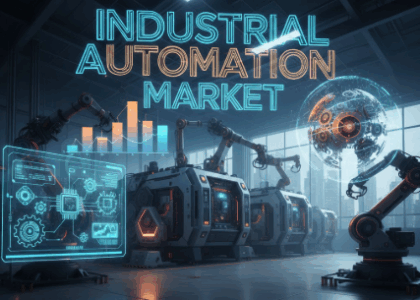
Industrial robotics is rapidly transforming the landscape of manufacturing and automation. Defined as programmable automated systems used for tasks such as welding, painting, assembling, packaging, and material handling, industrial robots have evolved from rigid mechanical arms into intelligent, adaptive machines. As industries seek higher efficiency, improved safety, and cost optimization, robotics has moved from optional automation to a strategic necessity. The roots of industrial robotics trace back to the mid-20th century, when early “Programmed Article Transfer” systems were designed to repeat precise motions in controlled environments. By the 1980s, robotics entered a new phase of modernization, introducing smarter systems capable of higher operational flexibility. Today, intelligent robots are redefining industrial automation across sectors.
Evolution of Industrial Robotics
Industrial robots have transitioned from single-task machines to multi-functional, AI-driven systems. Earlier generations were limited to repetitive and tightly programmed routines. Modern robots, however, can adapt, learn, and perform increasingly complex tasks with minimal human intervention. With rapid technological advancements, robotics has become integral to manufacturing sectors such as automotive, electronics, food processing, pharmaceuticals, and heavy engineering. As production volumes increase and customization demands grow, robotics offers scalable solutions that enhance both precision and productivity.
Key evolution milestones include:
- Shift from fixed automation to programmable systems
- Integration of sensors for real-time feedback
- Adoption of AI-driven learning capabilities
- Enhanced mobility and flexibility in industrial environments
Robotics in Logistics: Expanding the Automation Frontier
The logistics sector is witnessing accelerated robotics adoption as companies strive for faster order fulfillment and cost efficiency. Robots are increasingly deployed for packaging, sorting, pick-and-place operations, palletizing, and warehouse retrieval systems. One notable innovation was the introduction of the “Strobe” robot range by Singapore Technologies Engineering in 2018. Designed for factory and warehouse operations, such systems demonstrate how robotics is extending beyond assembly lines into end-to-end logistics management.
Benefits of robotics in logistics include:
- Faster order processing
- Reduced operational errors
- Lower labor-intensive costs
- Improved warehouse space utilization
As e-commerce and global supply chains expand, robotics will continue playing a critical role in optimizing logistics networks.
Artificial Intelligence in Factories
Artificial Intelligence (AI) has become a defining feature of next-generation industrial robots. AI integration allows robots to move beyond fixed programming into adaptive and cognitive functioning. In packaging operations, AI-driven robots enhance speed, reduce material waste, and improve accuracy. In complex assembly lines, AI systems can identify defects, adjust processes in real time, and optimize production flows. These capabilities significantly reduce downtime and improve manufacturing efficiency.
AI-enabled benefits include:
- Real-time quality inspection
- Predictive maintenance capabilities
- Error correction during assembly
- Adaptive learning for varied production tasks
By embedding intelligence into robotics, factories are evolving into smart manufacturing ecosystems.
Cloud Robotics and IIoT Integration
Cloud computing and the Industrial Internet of Things (IIoT) are further transforming industrial robotics. Connected robots can access shared data via cloud platforms, enabling collaborative learning and improved coordination. Through cloud robotics, machines can exchange operational data, software updates, and performance analytics in real time. This convergence enhances production efficiency and enables centralized monitoring of multiple facilities.
Advantages of cloud robotics include:
- Remote monitoring and diagnostics
- Faster deployment of updates
- Improved data-driven decision-making
- Seamless integration across factory networks
As IIoT infrastructure expands globally, cloud-connected robotics will become foundational to smart factories.
Customizable and Modular Robotics Solutions
Customization is emerging as a major growth driver in industrial robotics. Manufacturers increasingly demand modular robots that can integrate into existing workflows without major infrastructure overhauls. Although customized robotic systems may require significant initial investment, their long-term benefits—improved productivity, reduced downtime, and flexible deployment—often justify the costs. Modular robotics allows businesses to scale automation gradually, controlling capital expenditure while improving operational performance.
Customization trends include:
- Plug-and-play robotic modules
- Reprogrammable systems for multi-tasking
- Industry-specific robotic configurations
- Cost-optimized automation solutions
Such flexibility is particularly beneficial for small and medium enterprises transitioning toward automation.
Collaborative Robots (Cobots): The Human-Robot Partnership
One of the most transformative trends in industrial automation is the rise of collaborative robots, or cobots. Unlike traditional industrial robots that operate within fenced-off areas, cobots are designed to work safely alongside humans. Cobots assist in tasks that are repetitive, dangerous, or ergonomically challenging. Their deployment improves worker safety while boosting overall productivity. This trend is especially relevant in emerging economies where labor-intensive industries are gradually integrating automation.
Cobots offer:
- Built-in safety sensors
- Ease of programming and deployment
- Enhanced worker productivity
- Lower implementation costs compared to traditional robots
The collaborative approach is reshaping perceptions of robotics—from replacement tools to productivity partners.
Market Drivers and Industry Outlook
The industrial robotics market is expanding rapidly, supported by:
- Rising labor costs and workforce shortages
- Growing demand for precision manufacturing
- Increased adoption of smart factory technologies
- Government incentives promoting automation
Industries such as automotive, electronics, food & beverage, and pharmaceuticals are leading adoption. Meanwhile, developing economies are investing heavily in automation to remain competitive in global supply chains. Technological convergence combining AI, IIoT, cloud computing, and advanced sensors—is expected to sustain long-term growth in the robotics sector.
Conclusion: Robotics as the Backbone of Industrial Automation
Industrial robotics has evolved from basic programmable systems into intelligent, connected, and collaborative machines. From logistics optimization to AI-powered assembly and cloud-enabled coordination, robotics is redefining efficiency standards across industries. As cobots enhance human-machine collaboration and customization enables scalable deployment, industrial robots are becoming central to modern manufacturing strategies. With continuous innovation and technological integration, industrial robotics is not just the future of industrial automation it is rapidly becoming its present reality.