he global floral extracts market is experiencing unprecedented growth, propelled by the rising consumer demand for clean, natural, and organic cosmetics. Valued at USD 1.2 billion in 2025, the market is projected to reach USD 2.3 billion by 2035, reflecting a compound annual growth rate (CAGR) of 6.8%. This surge is largely attributed to the clean beauty movement, which mirrors the clean eating trend, emphasizing transparency, natural ingredients, and wellness-focused products.
The clean beauty movement advocates for cosmetics and personal care products free from toxic chemicals, focusing instead on organically grown and minimally processed ingredients. Consumers increasingly expect the same level of purity in personal care products as they do in their diets. This shift has significantly influenced product formulation and sourcing strategies across the cosmetics industry.
Organic and Natural Ingredients Drive Market Expansion
- Natural products: Ingredients sourced directly from nature, minimally processed, and promoted for their perceived health benefits.
- Organic products: Derived from non-GMO sources, grown without synthetic pesticides, and minimally processed to retain purity.
This focus on clean ingredients has also extended to the floral extracts market, which is seeing a surge in demand for flower-based compounds as safer, natural alternatives to synthetic chemicals.
Floral Extracts in Cosmetics and Personal Care
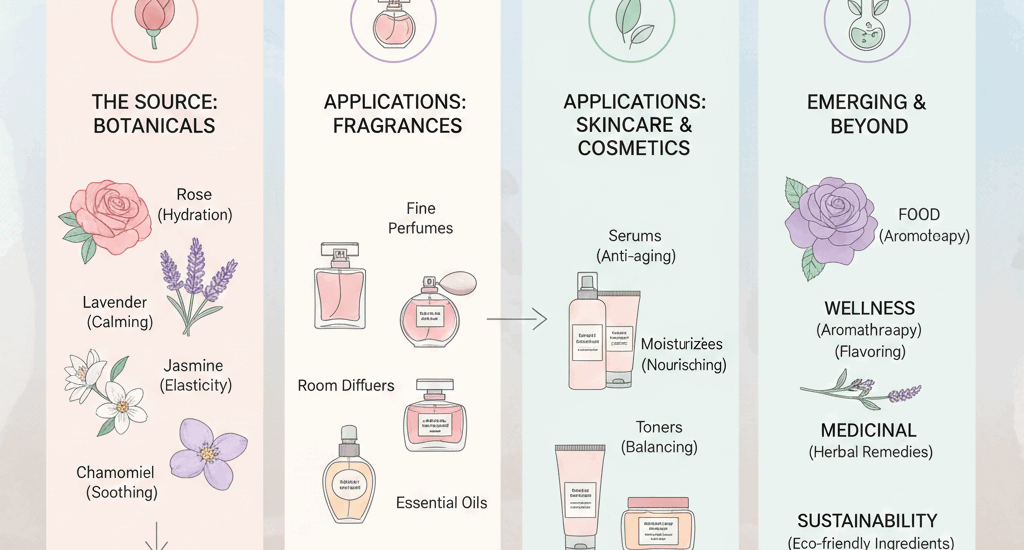
Floral extracts are increasingly used in fragrances, skincare, and other personal care products due to their aromatic, medicinal, and restorative properties. Rose and lotus extracts, in particular, are gaining popularity:
- Rose extracts: Commonly used as a skin conditioning agent and astringent; rose-scented products continue to dominate consumer preferences.
- Lotus extracts: Applied in lotions, soaps, and scrubs for their hydrating and soothing properties, emerging as a strong alternative to rose extracts.
Cosmetics manufacturers are increasingly sourcing extracts directly from producers, ensuring traceability and transparency in alignment with the clean beauty ethos.
Sustainability and Environmental Impact
Environmental consciousness is shaping the way consumers choose personal care products. The market is witnessing a shift toward sustainable, eco-friendly practices:
- Manufacturers are adopting recyclable packaging and glass containers to reduce environmental impact.
- “Green” processes, such as supercritical CO2 extraction, are being used to obtain essential oils and bioactive compounds, reducing reliance on traditional solvent-based methods.
These initiatives are helping companies align with consumer expectations while supporting long-term ecological sustainability.
Beyond Cosmetics: Expanding Applications
Floral extracts are no longer limited to cosmetics. The food and beverage industry is increasingly adopting these extracts for natural coloring, flavoring, and medicinal benefits. Similarly, certain flower compounds are regaining popularity in the pharmaceutical and nutraceutical sectors, creating cross-industry growth opportunities.
This diversification is driving market participants to expand their geographical reach and forge stronger collaborations with cosmetics and F&B producers. The emphasis on organic, sustainable, and non-toxic products is reshaping the floral extracts landscape, making clean and natural ingredients a cornerstone of future growth.
Market Outlook
The global floral extracts market is poised for steady growth over the next decade. Factors fueling this expansion include:
- Rising consumer preference for natural and organic ingredients.
- Growing awareness of environmental sustainability and ethical sourcing.
- Increasing applications across cosmetics, personal care, food, and pharmaceuticals.
The trend toward clean beauty and wellness is expected to continue, further influencing sourcing, processing, and distribution practices in the floral extracts sector. Manufacturers are responding with innovative extraction technologies and direct partnerships with producers, ensuring that the growing demand for safe, natural, and sustainable products is met efficiently.
Uncover all the data—grab the full report today. https://www.futuremarketinsights.com/articles/floral-extracts-from-fragrances-to-skincare-and-beyond