The global veneer sheets market is undergoing a significant transformation, driven by a blend of aesthetic demand, technological innovation, and a pivot toward environmental stewardship. As of 2026, the market is navigating a complex landscape of rising costs and stringent regulations, yet it remains a cornerstone of the modern interior design and construction industries.
Market Potential and Economic Drivers
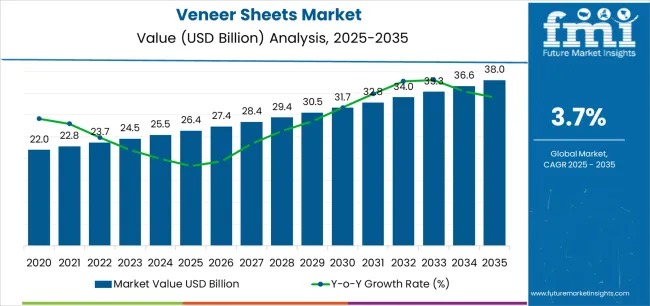
The current market potential of the global veneer sheets market is substantial. In 2026, the market size is estimated at approximately USD 17.14 billion, with some broader wood veneer estimates reaching as high as USD 20.8 billion. The market is projected to maintain a steady growth trajectory, with a CAGR ranging between 2.7% and 4.5% through 2034.
- Regional Dominance: The Asia-Pacific region leads the market with a roughly 38% share, propelled by rapid urbanization in India and China.
- Sector Leadership: The residential sector remains the primary driver, accounting for 65% of the market share as consumers prioritize modular furniture and high-end home renovations.
Exhaustive Market Report: A Complete Study
https://www.futuremarketinsights.com/reports/veneer-sheets-market
Sustainability: The Core Competitive Edge
Sustainability is no longer just a “factor”—it is a market requirement. Veneer sheets are inherently more sustainable than solid wood because one log can produce hundreds of veneer sheets, maximizing timber resources and reducing the felling of trees.
- Eco-Efficiency: Manufacturing veneers consumes less energy and generates fewer greenhouse gases than solid wood processing.
- Waste Management: Modern “engineered” or “reconstituted” veneers utilize leftover wood fibers and composite materials, effectively turning industrial waste into high-value products.
- Green Certifications: Adherence to FSC (Forest Stewardship Council) and LEED standards allows manufacturers to charge premiums and access high-end commercial projects that require eco-friendly materials.
Segment Analysis: Wood-Backed Veneers
The wood-backed veneer segment is the most resilient, consistently holding approximately 32% of the total market share.
| Feature | Wood-Backed Veneers | Engineered/Reconstituted Veneers |
| Market Share | ~32% | Fastest Growing Segment (~8% CAGR) |
| Core Appeal | Natural grain, authentic wood feel | Consistency, durability, cost-efficiency |
| Key Use | Luxury furniture, cabinetry | Large-format wall paneling, modular offices |
Regulatory and Operational Challenges
While demand is high, the industry faces significant hurdles that discourage new entrants and pressure profit margins.
- Emission Standards: Manufacturers must comply with the National Emission Standards for Hazardous Air Pollutants (NESHAP) and other guidelines like the EU Deforestation Regulation (EUDR). These require strict monitoring of formaldehyde emissions and proof of “deforestation-free” sourcing.
- Manufacturing Complexity: The process of slicing, drying, and pressing veneers requires specialized machinery and skilled labor. High operational costs make the product vulnerable to cheaper alternatives like laminates or synthetic surfaces.
- Raw Material Volatility: Fluctuations in timber and resin prices, often caused by supply chain disruptions, can suddenly tighten profit margins.
Future Outlook
The landscape is shifting toward innovation. Key players like Greenlam Industries, Century Ply, and FormWood Industries are investing heavily in R&D to create water-resistant and digital-printed veneers. These advancements allow for customized patterns and textures, catering to the burgeoning “boutique” and luxury interior markets.
By the end of the decade, the ability to balance aesthetic versatility with a low carbon footprint will define the winners in this competitive global market.
Why Choose FMI: Empowering Decisions that Drive Real-World Outcomes: https://www.futuremarketinsights.com/why-fmi
About Future Market Insights (FMI)
Future Market Insights, Inc. (FMI) is an ESOMAR-certified, ISO 9001:2015 market research and consulting organization, trusted by Fortune 500 clients and global enterprises. With operations in the U.S., UK, India, and Dubai, FMI provides data-backed insights and strategic intelligence across 30+ industries and 1200 markets worldwide.