Global movement toward sustainability intensifies, plant-based cutlery is carving out a significant niche in the eco-friendly products market. With governments banning single-use plastics and consumers increasingly choosing compostable alternatives, both established manufacturers and new entrants are eager to capitalize on this growing demand. However, navigating the complex landscape of pricing, production, and compliance is essential for companies aiming to expand their footprint in this promising sector.
Understanding Pricing Dynamics in Plant-Based Cutlery
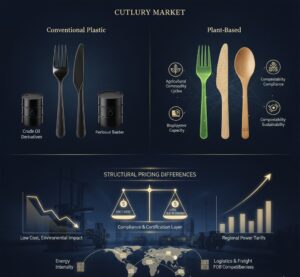
Unlike conventional plastic cutlery, plant-based alternatives such as PLA (polylactic acid), bagasse, and bamboo follow fundamentally different pricing models. While petroleum-based products are tied to volatile crude oil prices, plant-based cutlery pricing is influenced by agricultural commodity cycles, biopolymer production capacity, energy costs, and stringent compliance requirements.
For example, PLA pellet prices in Q2 2025 averaged USD 2,105 per metric ton FOB at Laem Chabang, Thailand—a 9% decrease from the previous quarter—reflecting increased production capacity from global leaders like NatureWorks and TotalEnergies Corbion. In contrast, PLA prices on the US Gulf Coast rose slightly by 3%, hovering around USD 2,890 per metric ton due to supply constraints.
Bagasse pulp, derived from sugarcane fibers in India, trades between INR 1,700 to 3,500 per tonne, depending on quality and moisture content. Meanwhile, bamboo cutlery from Vietnam ranges widely between USD 0.85 to USD 3.00 per set, showcasing its diversity from simple bulk options to premium designs with carrying cases and custom engraving.
Pioneering Manufacturers and Market Leaders
Several established manufacturers are spearheading the shift toward sustainable cutlery production:
- NatureWorks LLC operates a flagship PLA production facility in Blair, Nebraska, with an annual capacity of 150,000 tonnes. They are also expanding operations in Thailand to produce 75,000 tonnes annually, targeting growing Asian markets.
- TotalEnergies Corbion runs a 75,000-tonne PLA facility in Rayong, Thailand, combining lactic acid production with polymer manufacturing for enhanced efficiency.
- COFCO in China manufactures approximately 30,000 tonnes per year of PLA resin, contributing to regional supply and price stability.
On the bagasse front, India’s Ecoware and Growood have become significant exporters, especially to EU and Middle Eastern markets, by emphasizing certified, high-quality products that meet international compostability standards.
Vietnam stands out as a leading hub for bamboo cutlery manufacturing. Labor-intensive production combined with quality craftsmanship allows Vietnamese manufacturers to cater to premium retail markets in Europe and the US, capitalizing on the unique appeal of bamboo products.
The Role of Compliance and Certification
One of the biggest hurdles for manufacturers entering this market is meeting rigorous compostability certifications like the EU’s EN 13432 and the US’s ASTM D6400 standards. These certifications guarantee that cutlery will biodegrade within industrial composting facilities, offering consumers assurance of genuine environmental benefits.
Achieving certification is not cheap: EN 13432 testing can cost USD 5,000 to 15,000, while BPI certification adds another USD 2,000 to 5,000 annually. These expenses increase production costs by 5 to 10%, effectively setting a price floor that conventional plastic cutlery does not face.
The EU Single-Use Plastics Directive further complicates the market, banning conventional plastic cutlery but granting exemptions to certified compostable products in select member states such as Italy. This regulatory environment encourages manufacturers to invest in certification, positioning certified products as premium, compliant solutions for eco-conscious consumers.
Logistics and Freight: The Hidden Cost Factor
Shipping and freight costs heavily impact the final price competitiveness of plant-based cutlery, especially in export-driven markets. Container freight from China to Northern Europe averaged around USD 2,841 per FEU in late 2024, while rates from Asia to the US West Coast dropped to about USD 1,725 per FEU.
For high-value PLA cutlery retailing at USD 15 to 25 per carton FOB, freight accounts for approximately 10 to 15% of costs. For lower-priced bagasse cutlery, freight can represent up to 40% of FOB value, squeezing margins for producers.
These dynamics highlight the importance of efficient logistics strategies and regional production to mitigate freight impacts. Manufacturers with facilities closer to target markets or vertical integration can better control costs and offer competitive pricing.
Energy Costs and Production Efficiencies
Energy-intensive steps like fermentation, polymerization, and drying shape the operational cost structures of PLA, bagasse, and bamboo cutlery production. Energy accounts for 8 to 15% of total production costs for biopolymers, with drying operations particularly costly for bagasse pulp processing.
Regional disparities in electricity tariffs create competitive asymmetries. European processors face electricity prices two to three times higher than those in China or India, driving some production to Asia where lower energy costs enable tighter margins and more aggressive pricing.
Maximizing plant utilization also plays a crucial role in cost management. Plants running at 85 to 90% capacity can reduce per-unit costs by 15 to 25% compared to those operating at 60%, giving efficient manufacturers a significant edge in pricing flexibility.
Emerging Technologies and Opportunities for Expansion
Innovation continues to drive improvements in plant-based cutlery, particularly around heat resistance, material blends, and enhanced compostability. Crystallized PLA (CPLA) cutlery, for example, commands a 10 to 20% premium due to its ability to withstand temperatures up to 90°C, making it suitable for hot foodservice applications.
For new entrants and expanding manufacturers, investing in automation and process optimization is key to scaling efficiently and competing on cost without compromising quality. Emphasizing certifications and traceability helps unlock premium export markets and navigate regulatory complexities.
Conclusion: Navigating the Plant-Based Cutlery Market
For manufacturers, both established and new, the plant-based cutlery sector presents a promising yet challenging opportunity. Understanding the interplay of raw material pricing, certification costs, energy expenses, and logistics is vital for developing competitive products and sustainable growth strategies.
By leveraging advances in production technology, optimizing supply chains, and adhering to evolving regulatory standards, companies can position themselves at the forefront of this dynamic market—delivering products that not only meet consumer demand for sustainability but also achieve profitable margins in an increasingly eco-conscious world.
Access the Full Article – https://www.futuremarketinsights.com/articles/how-are-pricing-cost-structure-and-margin-pressure-shaped-across-the-global-plant-based-cutlery-value-chain