When it comes to synthetic quartz crystal growth and precision timing devices, Nihon Dempa Kogyo (NDK) stands as a paragon of innovation and reliability. Established in 1948, NDK carved out a pioneering niche early on, setting the stage for decades of technological leadership in a niche critical to telecommunications, industrial systems, automotive electronics, and aerospace applications. Today, as global electronics evolve rapidly—with 5G, electric vehicles (EVs), and industrial IoT reshaping the landscape—both established giants like NDK and emerging manufacturers are poised to expand their businesses, leveraging new technologies while drawing on valuable historical expertise.
How NDK Built Its Early Advantage in Synthetic Quartz Crystal Growth
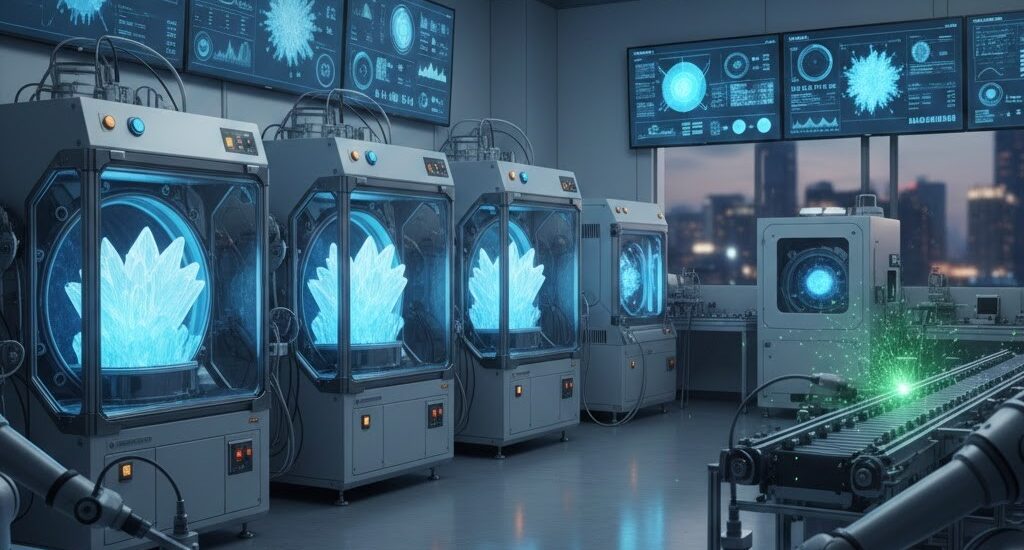
NDK’s competitive edge springs from deep roots in synthetic quartz crystal growth using hydrothermal autoclave methods. This intricate process, where silicon dioxide dissolves under high temperature and pressure before crystallizing on precisely oriented seed plates, originated from wartime developments in frequency control. Post-war Japan’s electronics boom fueled demand for stable frequency references in telecom infrastructure, radio broadcasting, and consumer electronics—areas where NDK’s early expertise created sustained growth.
Unlike many newer producers who source quartz blanks externally, NDK chose vertical integration, owning every stage from raw crystal growth to oscillator manufacturing. This decision fostered proprietary knowledge accumulation over thousands of production cycles. Each batch provided invaluable data on growth rates, defect types, lattice purity, and more. This long historical dataset enables NDK to optimize yield, purity, and performance in ways newcomers simply cannot replicate quickly.
Vertical Integration: The Key to Superior Performance and Yield
NDK’s vertical control over the entire production value chain—from synthetic quartz growth to wafer orientation, precision cutting, electrode deposition, hermetic packaging, and final oscillator assembly—provides significant performance differentiation. This end-to-end oversight allows them to tailor crystal growth parameters that directly influence frequency stability and aging characteristics critical for telecom, automotive, and industrial applications.
For instance, quartz crystal cut orientation profoundly impacts temperature-frequency response. NDK’s decades of refining AT-cut, SC-cut, and BT-cut crystals enable devices that meet stringent requirements for vibration resistance, thermal stability, and high-temperature operation. By managing these details internally, NDK sustains higher yields and lower failure rates compared to competitors relying on third-party material suppliers.
Decades of Proprietary Learning Curves Drive Technical Excellence
NDK’s long history translates into breakthroughs in lattice purity, thermal stability, radiation hardness, and alkali defect management—parameters vital for the most demanding use cases. Their evolving autoclave designs and solution chemistry minimize impurity incorporation, enhancing electrical performance and longevity.
Moreover, NDK’s expertise extends to radiation-tolerant quartz crystals, essential for satellites and aerospace missions, a niche where newer entrants face costly and time-intensive qualification hurdles. Their continuous refinement of drive circuits and electrode materials further reduces resonance frequency drift over device lifetimes—an incremental innovation made possible only by extensive field data and customer collaboration.
Long-Term Customer Relationships Foster Pricing Resilience
A critical, often overlooked factor behind NDK’s success is its long-term qualification partnerships with telecom, industrial, and automotive customers. Extensive, multi-year device testing protocols create significant barriers for alternative suppliers. Network operators, manufacturers, and OEMs prefer maintaining qualified suppliers like NDK to avoid costly requalification and compatibility risks, enabling NDK to maintain pricing power despite competitive pressures.
In automotive electronics, where safety-critical standards like AEC-Q200 prevail, NDK’s multi-decade supply commitments translate into premium pricing justified by reliability and qualification investments. Similarly, industrial automation systems and factory equipment benefit from NDK’s proven component longevity and availability, reinforcing stable demand and revenue visibility.
Emerging Market Trends Reinforce NDK’s Relevance—and Open Doors for New Entrants
As 5G rollout accelerates worldwide, the demand for ultra-stable oscillators with low phase noise and tight temperature tolerance soars. NDK’s proven telecom heritage positions it well for these opportunities, while electric vehicle production drives timing device growth needing wide temperature range operation and EMI resistance.
Simultaneously, global navigation satellite systems (GNSS) and industrial IoT require precision timing, opening avenues for new manufacturers investing in advanced crystal growth and oscillator technologies. Although they face significant challenges competing with NDK’s experience, innovations in materials science, manufacturing automation, and AI-driven process control offer promising pathways for market entry and differentiation.
The Future of Synthetic Quartz Manufacturing: Collaboration and Innovation
While NDK remains a gold standard in synthetic quartz timing devices, the evolving electronics landscape invites collaboration and technological evolution. New manufacturers can leverage emerging techniques such as improved autoclave materials, enhanced defect detection via machine learning, and novel crystal orientations to carve niches in specialized sectors.
Moreover, vertical integration remains a proven strategy for achieving performance leadership, suggesting that ambitious newcomers might consider investing in more comprehensive manufacturing capabilities rather than relying solely on third-party suppliers.
Final Thoughts: Why NDK’s Legacy Matters Today
NDK’s journey from post-war quartz crystal pioneer to global leader embodies the power of accumulated expertise, vertical control, and deep customer trust. For companies aiming to expand in the synthetic quartz market, understanding and building on this legacy—while embracing new technologies and market demands—will be essential.
Whether you’re an established manufacturer looking to sustain leadership or a new entrant poised to disrupt with innovation, the synthetic quartz crystal market offers rich opportunities shaped by history, technology, and evolving global needs.
Access the Full Article – https://www.futuremarketinsights.com/articles/how-has-long-cycle-technical-mastery-made-ndk-a-reference-leader-in-synthetic-quartz-for-timing-devices