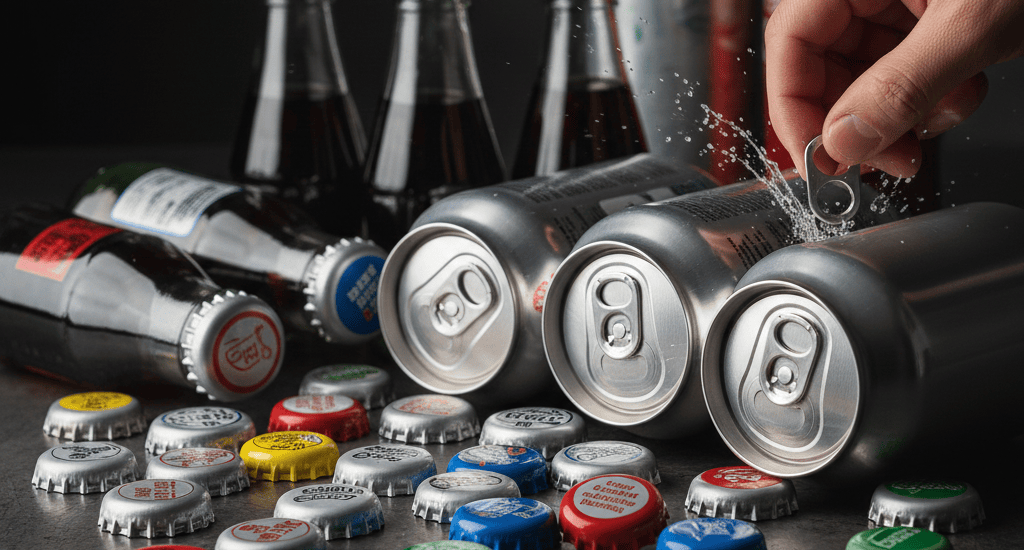
Ring pull caps may look like a minor packaging detail, but they sit at the intersection of metal conversion, food contact chemistry, bottling line performance, and shifting packaging formats. As beverage producers balance convenience, brand cues, compliance, and cost, the ring pull cap market is increasingly shaped not by basic metal forming, but by quality assurance, regulatory readiness, and system-level substitution risks.
From Metal Coil to Filling Line: How the Supply Chain Really Works
The ring pull cap supply chain begins with metal—most commonly tinplate steel, and in some regions aluminum—but the real value lies in consistency rather than raw material cost. Closure manufacturers are effectively buying predictability: uniform thickness, temper, surface cleanliness, and coating adhesion. Small deviations at the coil stage can cascade into split skirts, weak crimps, inconsistent opening force, or sealing failures later in the process. Because closures directly affect carbonation retention, product safety, and shelf life, quality failures carry high economic consequences, including bottling line stoppages.
Conversion processes are relatively standardized but tightly controlled. Metal sheets are coated, printed, and fed into high-speed presses that form the crown shell. The ring pull feature introduces an additional layer of precision. Scoring geometry, tab attachment strength, and tear-path control must balance two opposing requirements: the cap must open easily without tools, yet remain strong enough to maintain seal integrity and tamper resistance throughout distribution.
After forming, liners are inserted and cured. The liner is arguably the most critical functional component of the cap. It provides the actual seal against the bottle finish, must resist flavor scalping, tolerate pasteurization or hot-fill processes where applicable, and maintain performance under internal pressure. Finished caps are then packed and distributed as a critical bottling input, often managed with lot traceability and defect tolerances closer to pharmaceutical or medical-device standards than to commodity packaging.
The bottling line is where suppliers either justify their premium or lose approval. Ring pull caps must apply consistently at high speeds, working seamlessly with capping heads, bottle finish variation, and throughput targets. Minor dimensional or material differences can lead to application failures at scale, making dual sourcing more difficult than it appears. This is why operational reliability and process control often matter more than marginal cost advantages in this category.
Extensive Market Research: Complete Report and Findings
https://www.futuremarketinsights.com/reports/ring-pull-caps-market
Regulatory and Material Constraints Are Shifting Economics
Two external forces increasingly shape ring pull cap economics: food contact regulations and packaging waste policy. Although the closure itself is metal, its coatings and liners are chemistry-intensive. Coatings prevent corrosion and protect taste, while liners ensure seal performance and organoleptic neutrality. As regulators tighten restrictions on substances used in resins and coatings, closure suppliers face rising qualification costs, longer validation cycles, and reformulation risk.
The challenge is not simply meeting compliance thresholds, but doing so without degrading performance. Any change that alters opening force, seal integrity, or flavor interaction can trigger customer rejection. As a result, coating and liner chemistry has become the main redesign frontier in the supply chain. Metal forming technology is mature; chemistry and compliance are where competitive turbulence now occurs.
Packaging waste policy adds another layer of pressure. Rules that favor recyclability, reduced material use, or reuse models influence container choices, indirectly affecting closures. Markets that shift toward refillable glass with standardized finishes can support crown and ring pull formats—provided they remain compatible with washing and reuse systems. Conversely, growth in cans, cartons, or lightweight PET reduces bottle closure demand regardless of closure performance. Regulatory documentation and traceability requirements further favor suppliers with robust compliance systems and audit-ready processes.
Competitive Threats Come from Everywhere at Once
Ring pull caps face competition on two fronts: alternative closures on bottles and substitution across packaging formats. On bottles, aluminum screw caps win where resealability and lightweighting matter. Twist-off crowns reduce the novelty advantage of ring pull caps while retaining similar line infrastructure. Swing tops and cork-style systems can deliver premium cues but usually at higher cost and lower line speed.
The larger threat, however, is container substitution. Ready-to-drink beverages continue to migrate toward aluminum cans, driven by portability, fast chilling, and on-the-go consumption. Cans also integrate opening functionality without added components. Cartons and pouches gain share in non-carbonated segments by improving logistics efficiency and lowering distribution weight. In some regions, tethered-cap requirements push innovation focus toward plastic closures rather than metal crowns. When these shifts occur, ring pull caps lose volume not because they fail technically, but because the container format changes.
Where Ring Pull Caps Still Win
Despite these pressures, ring pull caps retain a clear advantage in a specific sweet spot: glass bottles that want traditional crown aesthetics, strong tamper evidence, and opener-free convenience. This combination resonates in beer, flavored malt beverages, and select premium soft drinks where brand equity is tied to glass but consumption occasions are casual. Ring pull caps also align with accessibility narratives by eliminating the need for tools.
The strategic reality is that ring pull caps are not competing against a single alternative, but against a portfolio of substitutes. Success depends on maintaining excellence in line performance and compliance while delivering a brand and user benefit that alternatives cannot replicate cheaply.
Looking Ahead
The future of ring pull caps will be defined less by metal prices and more by chemistry, regulation, and packaging system shifts. Suppliers that can adapt coatings and liners quickly, validate changes without performance tradeoffs, and integrate smoothly into high-speed bottling lines will continue to capture value. Those that compete only on conversion cost risk being squeezed as substitution accelerates across multiple packaging formats at once.