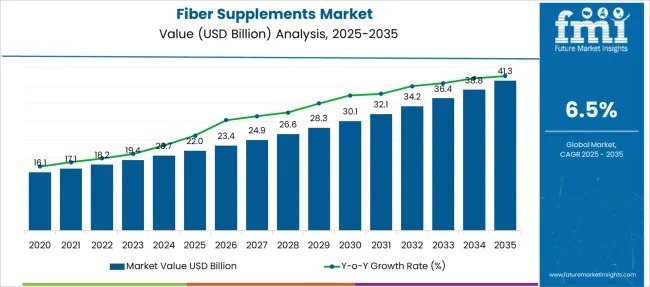
The global fiber supplements market is entering a phase of sustained expansion as consumers increasingly prioritize digestive health, heart wellness, and metabolic balance. According to recent industry analysis, the market is estimated at USD 22.0 billion in 2025 and is projected to reach USD 41.3 billion by 2035, growing at a compound annual growth rate (CAGR) of 6.5% over the forecast period. This growth trajectory reflects a structural shift toward preventive healthcare and nutrition-led wellness strategies across developed and emerging economies.
Fiber supplements are gaining relevance amid modern dietary patterns characterized by high intake of processed foods and insufficient natural fiber consumption. Clinical evidence linking adequate fiber intake to reduced cholesterol levels, improved glycemic control, and enhanced gastrointestinal function has reinforced their role in daily health regimens. As a result, fiber supplementation is transitioning from a corrective measure to a mainstream nutritional habit.
👉 Explore trends before investing – request a sample report today!
Market Snapshot Highlights
- Industry Value (2025): USD 22.0 billion
- Forecast Value (2035): USD 41.3 billion
- Forecast CAGR (2025–2035): 6.5%
- Leading Format (2025): Capsules (34.2% revenue share)
- Key Growth Regions: North America, Europe, Asia-Pacific
Momentum Behind Market Expansion
The market’s upward trajectory is being fueled by growing awareness of fiber deficiency and its long-term health implications. Healthcare practitioners and dietitians are increasingly recommending fiber supplements to bridge nutritional gaps, particularly among urban populations with fast-paced lifestyles. The availability of multiple delivery formats—capsules, powders, chewables, and tablets—has broadened consumer access and acceptance.
Technological advances in formulation have further strengthened demand. Improvements in taste masking, texture optimization, and formulation stability have addressed historical concerns related to palatability and gastrointestinal discomfort. The rapid growth of e-commerce platforms and organized pharmacy retail has also improved product visibility and convenience, accelerating adoption across age groups.
Capsule Segment Leads by Format
By type, the market is segmented into capsules, powders, chewables, and tablets. Among these, capsules are projected to account for 34.2% of total revenue in 2025, making them the dominant format. Their leadership is driven by ease of consumption, precise dosing, and longer shelf life. Capsules eliminate taste and odor issues commonly associated with fiber powders, enhancing compliance among first-time and long-term users.
Manufacturers are also innovating with plant-based and clean-label capsule shells, aligning with vegan and allergen-free preferences. The portability and convenience of capsules appeal strongly to working professionals and older adults, while multi-functional capsule formulations—combining fiber with heart or metabolic support nutrients—are strengthening value perception in this segment.
Blood Cholesterol Reduction Emerges as Top Application
From an application perspective, the market spans blood cholesterol reduction, gastrointestinal health, and weight management. The blood cholesterol reduction segment is expected to hold 39.7% of market revenue in 2025, positioning it as the leading application. Rising prevalence of cardiovascular disorders and heightened focus on preventive care are driving this trend.
Soluble fibers such as psyllium husk and beta-glucan have demonstrated clinical efficacy in lowering LDL cholesterol, prompting their inclusion in daily supplementation routines. Regulatory support for heart-health-related fiber claims and increased consumer education have further reinforced demand. As lifestyle-related diseases continue to rise globally, fiber supplements positioned for cardiovascular health are expected to see sustained traction.
Regional Outlook: Strong Demand Across Key Economies
Regionally, the fiber supplements market is well-established across North America, Europe, and Asia-Pacific, with emerging momentum in the Middle East, Africa, and parts of Latin America. North America remains a major contributor, supported by high health awareness, robust fitness culture, and widespread acceptance of nutraceuticals.
In Asia-Pacific, rising disposable incomes, urbanization, and growing interest in preventive nutrition are unlocking new growth avenues. European markets continue to benefit from strong regulatory frameworks and consumer preference for clean-label and gluten-free supplements. Across regions, increased per capita income is enabling consumers to invest in premium, high-quality fiber products.
Competitive Landscape and Recent Developments
The market features a mix of established nutraceutical brands and contract manufacturers. Key players include NOW Foods, Walgreens, Citrucel, BarnDad Innovative Nutrition, Robinson Pharma, Myogenix, Optimum Nutrition, Garden of Life, Benefiber, Twinlab, Renew Life Formulas, and Metamucil.
Recent developments highlight strategic acquisitions and product innovation:
- Fiber Choice® secured the top share of gastroenterologist recommendations in the U.S., strengthening clinical credibility.
- Caret Pharma’s acquisition of FiberChoice expanded its medical food portfolio.
- Brands such as Atkins have launched protein-and-fiber-enriched shakes to address dual nutritional needs.
Outlook
As consumers increasingly link digestive health with overall well-being, the fiber supplements market is poised for long-term growth. Innovation in plant-based soluble fibers, prebiotic blends, and targeted formulations for different age groups will remain central to competitive differentiation. With strong clinical backing and expanding consumer trust, fiber supplements are set to become a cornerstone of everyday nutrition worldwide.