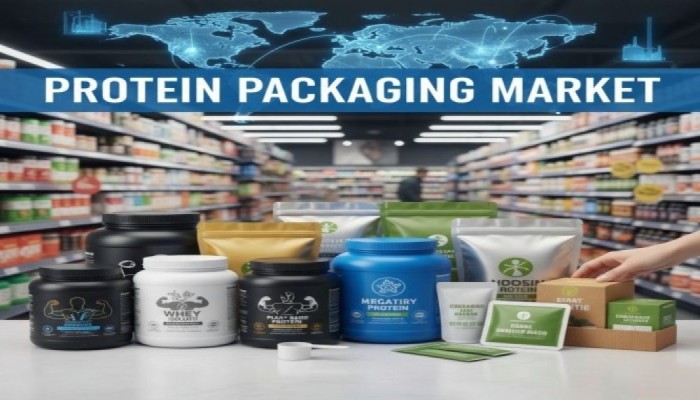
The global protein packaging market is set to enter a transformative decade from 2025 to 2035, propelled by surging demand for protein-rich foods and fitness-focused lifestyles across the world. With consumers increasingly integrating high-protein diets, shakes, powders, and fortified snacks into daily routines, packaging has evolved into a strategic cornerstone for brands competing in sports nutrition, dietary supplements, and performance beverages.
According to recent industry estimates, the protein packaging market will expand from USD 27,045.6 million in 2025 to USD 42,811.8 million by 2035, registering a 4.7% CAGR. Flexible packaging remains the preferred format, offering portability, reclosable designs, and reduced environmental impact—qualities that resonate strongly with health-conscious, mobile consumers.
Discover Growth Opportunities in the Market – Get Your Sample Report Now
Market Growth Drivers: Convenience, Nutrition, and Sustainability
The next decade will witness rapid adoption of sustainable, lightweight, and technologically enhanced packaging. Flexible pouches, mono-material laminates, compostable films, and high-barrier structures are becoming mainstream as brands prioritize eco-friendly performance.
Consumers increasingly prefer ready-to-eat protein portions, resealable pouches, and convenient unit-dose packs that preserve freshness. As protein powders remain the leading product category—supported by sports nutrition and meal-replacement demands—innovation is focused on advanced barrier films, spouted pouches, and moisture-resistant linings that elevate product protection and user experience.
Key Market Metrics (2025–2035)
- Industry Size (2025E): USD 27,045.6 million
- Industry Value (2035F): USD 42,811.8 million
- CAGR: 4.7%
Flexible packaging accounts for 58.4% of the market in 2025, while protein powder leads product type segmentation with 61.9% share.
Regional Trends: Global Momentum with Localized Strategies
North America
North America remains a leading hub due to its large fitness-driven consumer base. Resealable pouches, durable PET bottles, and compostable formats continue to rise. E-commerce’s explosive growth is further pushing demand for lightweight, damage-resistant packaging.
Europe
Europe’s push for plant-based proteins and stringent sustainability regulations is reshaping packaging strategies. Minimalist, recyclable, and low-plastic packaging formats dominate, especially in Germany, the UK, and the Netherlands.
Asia-Pacific
Urbanization, rising incomes, and rapid growth in fitness culture are transforming protein consumption across India, China, and Japan. Manufacturers here are focusing on thermal-barrier pouches, daily-dose sachets, and bio-based packaging.
Challenges and Opportunities
Key Challenges
- Maintaining shelf-life stability against moisture, oxygen, and light
- Ensuring material compatibility with active protein ingredients
- Meeting global food safety and allergen labeling standards
Major Opportunities
- Demand for convenient, portable nutrition
- Transition toward compostable films, recyclable PET bottles, and PCR materials
- Growing interest in digital packaging—QR codes, traceability, tamper evidence
- Expansion of plant-based and personalized nutrition kits
Market Evolution: 2020–2024 vs. 2025–2035
From 2020 to 2024, brands focused on lightweighting, plastic reduction, and traditional plastic tubs and stick packs.
From 2025 to 2035, the market enters the era of:
- Smart packaging (freshness indicators, digital interfaces)
- Circular materials and compostable formats
- High-speed filling compatible eco-packaging
- Personalized nutrition and sustainable snacking
Country-Wise Growth Outlook (CAGR 2025–2035)
- USA: 4.5%
- United Kingdom: 4.6%
- European Union: 4.7%
- Japan: 4.3%
- South Korea: 5.0%
Competitive Landscape: Established Leaders and Emerging Innovators
The protein packaging industry is highly competitive, attracting both global giants and agile new entrants focused on sustainable and smart packaging solutions.
Key Innovation Highlights
Amcor plc
- Introduced high-barrier, recyclable flex packs with laser-scored tear control
- Supporting premium sports nutrition branding
Berry Global
- Launched PCR-rich HDPE tubs with tamper-evident closures
- Expanded into next-gen rigid containers
Mondi Group
- Rolled out mono-material stand-up pouches for protein meal kits
- Strengthening European and North American presence
Sonoco Products Company
- Developed fiber-based rigid containers with barrier linings
- Ideal for powdered and plant-based formulations
Tetra Pak
- Released aseptic paper-based and PET bottles
- Enabled QR-based traceability for RTD protein beverages
Constantia Flexibles
- Expanded compostable bar wraps and cold-seal formats
- Increasing adoption among organic and plant-based brands
Emerging and Fast-Growing Manufacturers
- ProAmpac, Sealed Air Corporation, Gualapack Group, and FlexPak Services are rapidly scaling capabilities in high-barrier films, eco-laminates, and performance pouches.
- New technology-driven entrants are adopting smart labels, paper-plastic hybrids, automated filling systems, and ultra-thin barrier films to meet evolving global standards.
Why FMI: https://www.futuremarketinsights.com/why-fmi
About Future Market Insights (FMI)
Future Market Insights, Inc. (FMI) is an ESOMAR-certified, ISO 9001:2015 market research and consulting organization, trusted by Fortune 500 clients and global enterprises. With operations in the U.S., UK, India, and Dubai, FMI provides data-backed insights and strategic intelligence across 30+ industries and 1200 markets worldwide.
Contact Us:
Future Market Insights Inc.
Christiana Corporate, 200 Continental Drive,
Suite 401, Newark, Delaware – 19713, USA
T: +1-347-918-3531
For Sales Enquiries: sales@futuremarketinsights.com
Website: https://www.futuremarketinsights.com
LinkedIn| Twitter| Blogs | YouTube