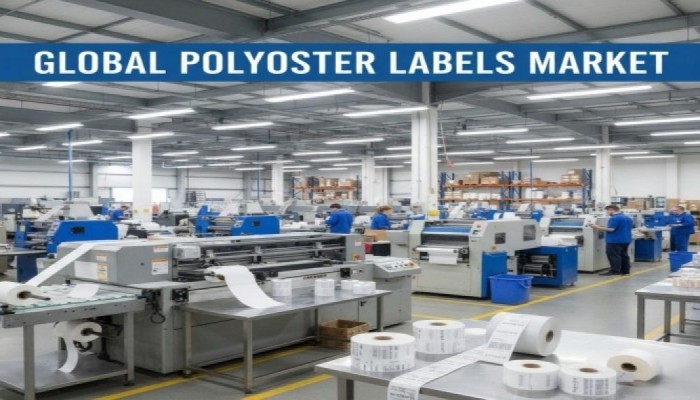
The global demand for durable and high-performance labeling continues to climb, and polyester labels are emerging as a cornerstone solution for industries prioritizing strength, heat resistance, chemical stability, and long-term readability. The polyester labels market is projected to grow from USD 2,800 million in 2025 to USD 4,300 million by 2035, registering a CAGR of 4.5%. This decade promises rapid transformation driven by sustainability goals, automation, digital printing, and the rise of smart labeling.
Introduction: Why Polyester Labels Matter Today
Modern industries—from logistics to consumer electronics require labels that deliver beyond basic identification. Polyester labels stand out because they withstand harsh temperatures, solvents, UV exposure, and mechanical abrasion. This makes them ideal for demanding environments such as aerospace, auto components, medical equipment, and warehouses with high-volume scanning systems.
As global supply chains expand and regulatory compliance tightens, polyester labels have transitioned from traditional packaging tools to critical assets that enhance safety, traceability, and brand integrity.
Unlock Growth Potential – Request Your Sample Now and Explore Market Opportunities!
Meaning and Market Definition
Polyester labels are pressure-sensitive labeling solutions made from PET (polyethylene terephthalate) film. Their value stems from their physical and chemical robustness, making them suitable for:
- Safety and UL/CUL-approved labels
- Barcode and asset tracking
- High-strength industrial adhesive labels
- Thermal transfer printable surfaces
- Chemical-resistant labeling in hazardous environments
- Tamper-evident and anti-counterfeit solutions
Their versatility has made them a preferred choice across industrial, logistics, and retail ecosystems.
Outlook 2025 to 2035
The polyester labels market will see strong global expansion, primarily driven by:
- Increasing industrial automation
- E-commerce retail boom
- Rising global safety regulations
- Growth of electronics and semiconductor manufacturing
- Shift towards sustainable PET-based label materials
- Adoption of RFID-enabled smart labels
The next decade will be defined by the integration of recyclable materials, digital tracking, and monomaterial packaging areas where polyester labels excel.
Market Overview
Polyester labels thrive in harsh conditions, making them essential for industries like:
- Electronics: UL-rated safety labels, certification stamps, component tracking
- Chemicals: Solvent-resistant labels for hazardous packaging
- Logistics: Long-lasting barcodes and shipping labels
- Food & Beverage: Freezer-safe labels for temperature-sensitive storage
- Automotive: Heat- and oil-resistant component labeling
Silver, white, and clear polyester films remain popular due to their aesthetic appeal and compliance-friendly finish.
- Growth DriversIndustrial and Manufacturing Expansion: Automation, robotics, and IoT-connected production environments require high-performance labels that remain readable under stress.
- E-commerce Logistics Boom: Retailers and carriers increasingly adopt polyester-based barcode labels for long-distance shipments.
- Regulatory Compliance: Strict global regulations, especially in electronics, chemicals, and pharmaceuticals, mandate durable, tamper-proof labeling.
- Shift Toward Sustainability: Low-VOC adhesives, recyclable PET substrates, and linerless label designs are transforming market dynamics.
Demand Trends
From 2020 to 2024, polyester label demand surged due to e-commerce growth and medical device traceability needs.
Going forward, 2025–2035 will bring:
- Rapid adoption of smart labeling (RFID/QR)
- Rise in recyclable polyester films
- Shift to water-based inks and solvent-free adhesives
- On-demand digital label printing
- Increased use in mono-material packaging
Retail remains the largest end-use sector with 35% market share in 2025, while metalized polyester labels dominate product type with 28% share.
Regional Market Insights
North America
A mature market driven by automotive, logistics, and electronics manufacturing. Sustainability initiatives and e-commerce automation continue to boost demand.
Europe
The largest polyester label market, driven by CLP regulations, automotive manufacturing, and the European Green Deal encouraging recyclable label solutions.
Asia-Pacific
The fastest-growing region, fueled by consumer electronics production, semiconductor manufacturing, and massive logistics expansion in China and India.
Challenges and Opportunities
Challenges
- Environmental concerns around PET recycling
- Cost pressure from lower-cost paper labels
- Limited recycling infrastructure in developing regions
Opportunities
- Smart labeling (RFID, QR, NFC)
- High-resolution digital printing
- Recyclable and linerless label technologies
- Demand for tamper-evident and anti-counterfeit packaging
Competitive Landscape
The market is consolidated, with leading players focusing on sustainability, customization, and material innovation.
Key Players & Estimated Market Share
- UPM Raflatac: 20–25%
- Avery Dennison: 18–22%
- 3M Company: 12–15%
- CCL Industries: 10–12%
- Herma GmbH: 6–8%
- Others: 25–30%
Each player is investing in recyclable polyester films, high-performance adhesives, and digital printing innovation.
Why FMI: https://www.futuremarketinsights.com/why-fmi
About Future Market Insights (FMI)
Future Market Insights, Inc. (FMI) is an ESOMAR-certified, ISO 9001:2015 market research and consulting organization, trusted by Fortune 500 clients and global enterprises. With operations in the U.S., UK, India, and Dubai, FMI provides data-backed insights and strategic intelligence across 30+ industries and 1200 markets worldwide.
Contact Us:
Future Market Insights Inc.
Christiana Corporate, 200 Continental Drive,
Suite 401, Newark, Delaware – 19713, USA
T: +1-347-918-3531
For Sales Enquiries: sales@futuremarketinsights.com
Website: https://www.futuremarketinsights.com
LinkedIn| Twitter| Blogs | YouTube