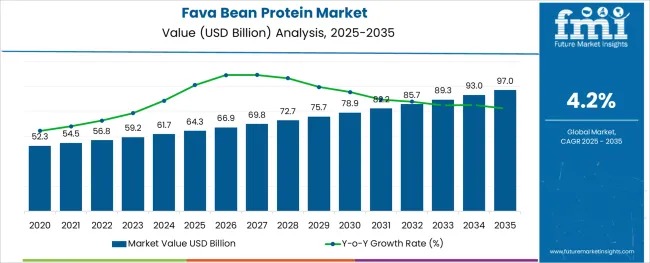
The global fava bean protein market is gaining strategic importance within the broader plant-based protein landscape, supported by rising demand for sustainable, allergen-friendly, and nutritionally dense protein sources. The market is estimated to be valued at USD 64.3 billion in 2025 and is projected to reach USD 97.0 billion by 2035, expanding at a CAGR of 4.2% over the forecast period. This steady growth reflects long-term shifts in consumer diets, food innovation, and protein diversification strategies across the food, nutrition, and ingredient industries.
Fava bean protein has emerged as a preferred alternative to soy, wheat, and pea proteins due to its high protein content, functional versatility, lower allergenicity, and cost efficiency. Increasing adoption in clean-label formulations, combined with strong performance in texture and taste optimization, has positioned fava bean protein as a scalable solution for manufacturers seeking next-generation plant proteins.
Get Exclusive Access To Data Tables, Market Sizing Dashboards, And Analyst Insights. Request Sample Report! https://www.futuremarketinsights.com/reports/sample/rep-gb-10677
Market Overview: Nutrition, Sustainability, and Functional Performance Drive Adoption
The growth of the fava bean protein market is underpinned by heightened consumer awareness of health, sustainability, and environmental impact. Nutritional research highlights fava bean protein as a high-quality plant protein suitable for muscle health, weight management, and overall wellness, while remaining naturally free from common allergens such as soy and dairy.
Food and beverage manufacturers are increasingly leveraging fava bean protein for its functional properties, including emulsification, water retention, and texturizing capabilities. These attributes make it suitable for applications ranging from bakery and snacks to dairy alternatives, beverages, and nutritional supplements. Innovation in extraction and processing technologies has further improved protein yield, purity, and sensory performance, supporting broader commercial adoption.
Key Market Highlights at a Glance
- Market value (2025): USD 64.3 billion
- Forecast value (2035): USD 97.0 billion
- Forecast CAGR (2025–2035): 4.2%
- Leading type segment: Isolates (61.3% share in 2025)
- Dominant application: Human nutrition (68.7% share in 2025)
- Leading end-use industry: Food & beverages (54.9% share in 2025)
- High-growth regions: Asia-Pacific, North America, Europe
Isolates Lead by Type as Demand for High-Purity Proteins Rises
By type, the market is segmented into isolates and concentrates, with isolates accounting for 61.3% of total revenue in 2025. Fava bean protein isolates are widely adopted due to their high protein concentration, neutral flavor profile, and formulation flexibility. These qualities make them particularly attractive for protein powders, meal replacements, and fortified foods.
Advancements in extraction technologies have enhanced protein quality while aligning with clean-label expectations. As consumers increasingly scrutinize ingredient lists, isolates are gaining preference in allergen-free and minimally processed product lines, reinforcing their leadership position throughout the forecast period.
Human Nutrition Emerges as the Core Application Area
In terms of application, human nutrition dominates the market with a 68.7% revenue share in 2025. Demand is driven by growing interest in protein-rich diets among health-conscious consumers, athletes, and aging populations. Fava bean protein is increasingly incorporated into nutritional bars, sports nutrition products, and plant-based supplements, offering a viable alternative to animal-derived proteins.
The rise of vegan and vegetarian lifestyles, coupled with increased awareness of food sensitivities and lactose intolerance, continues to support long-term demand growth. Ongoing product innovation is expected to further strengthen the role of fava bean protein in human nutrition applications.
Food and Beverages Industry Remains the Primary End-Use Segment
The food and beverages industry accounts for 54.9% of market revenue in 2025, making it the leading end-use sector. Manufacturers are integrating fava bean protein into bakery products, snacks, dairy alternatives, and ready-to-drink beverages to enhance nutritional value while maintaining desirable taste and texture.
Clean-label trends and rising consumer preference for plant-based foods are accelerating product launches and reformulations. Investments in R&D and expanded distribution networks across both developed and emerging markets are reinforcing the sector’s contribution to overall market growth.
Regional Insights: Asia-Pacific Leads, North America Accelerates
Regionally, Asia-Pacific accounted for over 40% of global market share in 2024, supported by strong consumption in countries such as India and China, where fava beans are widely used in traditional diets. The region also benefits from major fava bean production hubs, including China and Australia.
From 2025 to 2035, North America is expected to grow at over 2%, driven by rising adoption of plant-based proteins in the U.S. and Canada. Increasing concerns around lactose intolerance, glutamate sensitivity, and sustainable food systems are boosting demand for fava bean protein across the region.
Competitive Landscape and Strategic Developments
The market features a mix of global ingredient suppliers and regional producers, including Roquette Frères SA, Ingredion Incorporated, Australian Plant Proteins, Puris, Vestkorn, GrainCorp Limited, Dunns (Long Sutton) Limited, Sun Impex B.V., Martin Bauer Group, and Prairie Fava. Companies are focusing on innovative extraction methods, product differentiation, and portfolio expansion to meet evolving customer requirements.
Notable developments include Vestkorn’s launch of textured fava bean protein products and Roquette’s strategic exploration beyond pea protein into fava bean protein, signaling growing industry confidence in this segment.
Outlook
As manufacturers diversify plant protein portfolios and consumers prioritize sustainable nutrition, the fava bean protein market is positioned for consistent, data-backed growth. Ongoing innovation, regional expansion, and functional performance improvements are expected to keep fava bean protein at the forefront of the global plant-based protein transition.