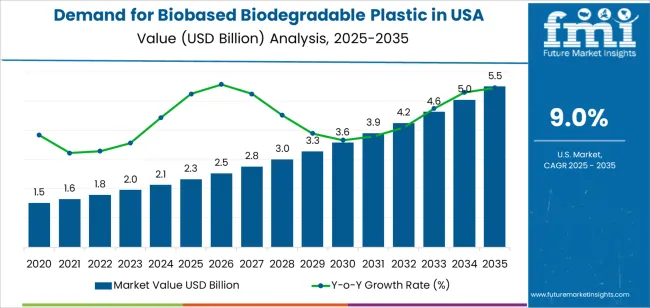
The United States Biobased Biodegradable Plastic Market is projected to grow from USD 2.3 billion in 2025 to USD 5.5 billion by 2035, demonstrating a strong shift toward sustainable materials and expanding opportunities for both established and emerging manufacturers. Market demand is being driven by rising environmental awareness, stringent regulatory pressure to reduce reliance on petroleum-based plastics, and a growing commitment from brands and industries to adopt renewable, compostable alternatives.
This anticipated growth represents a significant milestone for the biobased biodegradable plastics sector, which has evolved from niche applications into a mainstream alternative across packaging, consumer goods, healthcare, and agriculture. With consumers and governments prioritizing sustainable practices, companies are accelerating investments in research, production technologies, and strategic partnerships to capture market share and lead the next wave of material innovation.
Traditional Leaders Innovating for a Sustainable Future
Long-standing market leaders have been at the forefront of developing high-performance, eco-friendly polymers that meet both environmental and industrial requirements. NatureWorks LLC, a pioneer in polylactic acid (PLA) biopolymers, continues to drive demand with its versatile Ingeo range that caters to packaging, textiles, and agricultural applications. The company’s ongoing enhancements to material properties and expanded application portfolio underscore its commitment to pushing the boundaries of sustainable plastics.
BASF SE, another influential player, remains instrumental in advancing compostable and renewable plastics. Its portfolio of biobased materials addresses performance demands in flexible and rigid packaging while helping companies meet ambitious sustainability goals. In parallel, TotalEnergies Corbion has strengthened its market position through its Luminy PLA product line, which supports a wide variety of biodegradable applications from consumer goods to industrial use.
European innovators like Novamont S.p.A. also continue to shape the U.S. landscape with their Mater-Bi compostable solutions, especially in packaging and agricultural films. Likewise, Mitsubishi Chemical Corporation contributes with its BioPBS™ products designed for flexible packaging and other end uses that require both biodegradability and functional resilience.
These established manufacturers are not just expanding production—they are investing in technology improvements that enhance material performance, reduce costs, and increase scalability. Continuous development in feedstock diversification, production efficiency, and material blends is helping biobased plastics close the gap with traditional polymers in both functionality and price.
To access the complete data tables and in-depth insights, request a sample report here
Emerging Players Catalyzing Market Transformation
Alongside traditional heavyweights, a new generation of manufacturers and technology innovators is gaining traction. Companies such as Danimer Scientific and Green Dot Bioplastics are pushing the envelope with novel biopolymer compounds that cater to niche and mass-market requirements alike. These emerging firms leverage cutting-edge research and agile operations to introduce competitive solutions, often focusing on specialized applications such as medical disposables, agricultural films, or fully compostable packaging.
Smaller regional innovators and startups are also contributing to the vibrant competitive landscape. Their contributions include biodegradable bioplastics from alternative feedstocks, tailored solutions for specific industries, and collaborations that bridge production with downstream recyclers and waste management ecosystems. Through experimentation and rapid iteration, these new entrants are helping to diversify the product mix and introduce disruptive ideas that could reshape future market trajectories.
Industry Collaboration and Technology Convergence
Innovation in the biobased biodegradable plastics sector is not occurring in isolation. Cross-sector collaboration has become a cornerstone of strategic growth, with manufacturers partnering with academic institutions, material scientists, and brand owners to accelerate commercialization. Shared research initiatives aim to refine polymer blends, improve biodegradation performance, and explore hybrid materials that maintain durability while enhancing end-of-life sustainability.
Technological advancements are also extending into manufacturing infrastructure, where investments in automation, digital process controls, and scalable production lines are enabling companies to meet increased demand without compromising environmental integrity. As a result, the sector is witnessing a convergence of sustainability goals, industrial efficiency, and consumer expectations.
Outlook: Sustainable Growth Meets Market Demand
Looking forward, the United States biobased biodegradable plastic market is well-positioned to grow as both consumer preference and regulatory frameworks increasingly favor renewable alternatives. With major manufacturers expanding capacity, emerging players introducing innovative technologies, and collaborative ecosystems strengthening supply chains, the industry is on track to deliver transformative solutions that reduce reliance on fossil fuels and support a more circular economy.
As demand continues to rise across packaging, healthcare, agriculture, and beyond, manufacturers that combine sustainable innovation with scalable production will capture new opportunities and play a pivotal role in redefining the future of plastics in the United States.