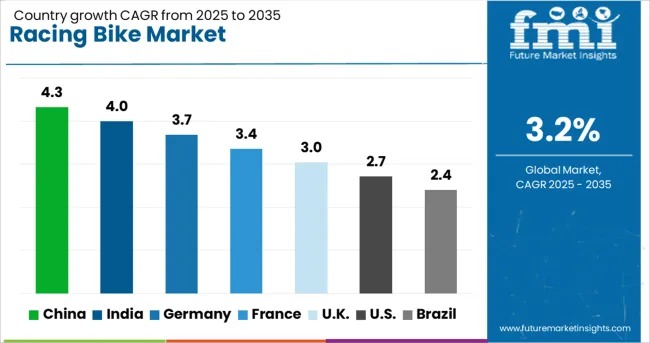
The global Racing Bike Market is entering a phase of steady, technology-led expansion, underpinned by rising participation in competitive cycling, increasing professional sponsorships, and accelerating innovation in lightweight bicycle engineering. The market is valued at USD 7.2 billion in 2025 and is forecast to reach USD 9.9 billion by 2035, expanding at a compound annual growth rate (CAGR) of 3.2% over the ten-year period.
Market fundamentals remain strong as manufacturers align product portfolios with evolving performance expectations across both professional and enthusiast cycling communities. The ten-year growth trajectory represents a 1.38x market expansion, supported by consistent demand for premium, technologically advanced racing platforms.
Subscribe for Year-Round Insights → Stay ahead with quarterly and annual data updates
https://www.futuremarketinsights.com/reports/sample/rep-gb-23453
Growth Phases Reflect Structural Demand Stability
Between 2025 and 2030, the market is expected to grow from USD 7.2 billion to approximately USD 8.4 billion, adding USD 1.2 billion in new value. This phase will contribute 44.4% of the total forecast growth, largely driven by rising global demand for lightweight frames, improved drivetrain efficiency, and aerodynamic optimization.
From 2030 to 2035, the market will add a further USD 1.5 billion, accounting for 55.6% of overall incremental expansion. Annual additions are projected to rise from USD 0.2 billion in the early years to USD 0.3 billion toward the end of the forecast period, reflecting the continuous evolution of bike technology and sustained participation in organized racing events.
Key demand drivers in the later phase include expanded smart sensor integration, real-time performance analytics, and growing direct-to-consumer online sales strategies by premium manufacturers.
Road Racing Bikes Maintain Category Leadership
By product type, road racing bikes are projected to command 37.0% of total market revenue in 2025, retaining their leadership position across global markets. Their dominance is reinforced by technical attributes engineered for speed optimization, reduced weight, and enhanced aerodynamic efficiency.
Design advancements such as integrated cockpits, advanced carbon composite layups, and high-performance disc braking systems are redefining standards in professional and semi-professional racing categories. The segment continues to benefit from extensive global race calendars, strong team sponsorship visibility, and wide availability of customized performance geometries.
Carbon Fiber Sets Performance Benchmark
In terms of material composition, carbon fiber is expected to account for 45.0% of total market revenue in 2025, emerging as the structural backbone of high-performance racing bicycles. Its unmatched strength-to-weight ratio, vibration dampening characteristics, and advanced moldability enable manufacturers to deliver frames that are lighter, stiffer, and more aerodynamically refined.
Carbon fiber has become a standard across premium models, extending beyond frames into forks, seat posts, and wheelsets. Continuous improvements in resin systems and layup engineering are allowing brands to expand the application of carbon fiber technologies into mid-range performance categories, widening addressable market potential.
Professional Racers Drive Technology Adoption
By end-user segment, professional racers are expected to generate 40.0% of market revenue in 2025, reflecting their role as early adopters of advanced racing bike technologies. Bikes built for this segment prioritize precision-engineered aerodynamics, component compatibility, and ultra-lightweight construction to meet stringent competition demands.
Professional racing environments often function as innovation testbeds, accelerating the commercialization of next-generation features before they reach broader consumer markets. High-visibility international events, performance benchmarking, and data-driven training ecosystems continue to influence product development cycles and brand positioning strategies across the industry.
Regional Growth Balanced Between Emerging and Mature Markets
Regional performance data highlights differentiated growth patterns across global markets:
China leads expansion with a projected 4.3% CAGR, supported by rising urbanization, infrastructure investments, and increasing health awareness.
India follows with 4.0% CAGR, driven by youth participation in cycling and rapid growth in e-commerce distribution.
Germany is forecast to grow at 3.7% CAGR, benefitting from strong competitive cycling culture and sustainability-driven mobility initiatives.
France is projected to expand at 3.4% CAGR, reflecting consistent adoption of performance and leisure cycling products.
The United Kingdom is expected to grow at 3.0% CAGR, underpinned by increasing participation in cycling events and growing demand for eco-friendly mobility.
The United States is forecast to grow at 2.7% CAGR, representing stable demand in a mature, premium-oriented market.
Asia-Pacific is emerging as the most dynamic regional engine of growth, while Europe and North America increasingly focus on advanced materials, sustainability, and digital integration.
Smart Technology and Electric Variants Redefine Product Roadmaps
The industry is undergoing a shift toward smart bike ecosystems. Integration of sensors, telemetry systems, and real-time performance analytics is enabling riders to optimize cadence, speed, cadence efficiency, and endurance metrics. This data-driven cycling experience is rapidly becoming a standard feature expectation across premium product tiers.
At the same time, electric racing bike variants with pedal-assist capabilities are redefining access to competitive cycling by lowering physical barriers and expanding participation demographics. These hybrid performance platforms are opening new avenues for product differentiation and long-term market expansion.
Personalize Your Experience: Ask for Customization to Meet Your Requirements
https://www.futuremarketinsights.com/customization-available/rep-gb-23453
Competitive Landscape Anchored by Technology and Brand Equity
The global racing bike market remains highly competitive, with key players including Trek Bicycle, Specialized Bicycle Components, Giant Bicycles, Cannondale, Bianchi, and BMC Switzerland maintaining strong market positioning through continuous innovation and global sponsorship strategies.
Emerging manufacturers such as Canyon Bicycles, Colnago, Merida Industry, and Focus Bikes are gaining share through specialized designs tailored to time trials, gravel racing, and endurance formats. Across the industry, investments in electronic shifting systems, aerodynamic frame shaping, and lightweight wheelsets are redefining performance thresholds and reshaping competitive dynamics.
About Future Market Insights (FMI)
Future Market Insights, Inc. (FMI) is an ESOMAR-certified, ISO 9001:2015 market research and consulting organization, trusted by Fortune 500 clients and global enterprises. With operations in the U.S., UK, India, and Dubai, FMI provides data-backed insights and strategic intelligence across 30+ industries and 1200 markets worldwide.