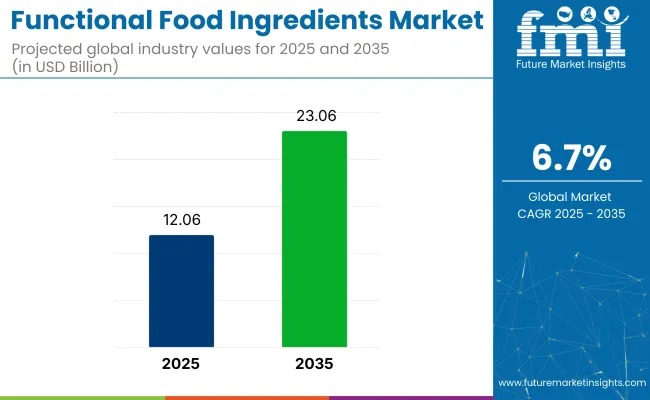
The global functional food ingredients market is projected to grow from USD 12.06 billion in 2025 to USD 23.06 billion by 2035, registering a compound annual growth rate (CAGR) of 6.7% during the forecast period.
Market progression is being reinforced by nutrition-forward reformulations that combine natural antioxidants, micronutrient fortifiers, and gut-health modifiers within finished foods. Probiotics are forecast to dominate, contributing nearly 37% of market share in 2025 due to documented benefits in digestive balance and immune modulation. Formulators are increasingly sourcing from natural ingredients, including botanical extracts, algal concentrates, and bio-fermented cultures, aligning with consumer demand for clean-label products.
Explore trends before investing – request a sample report today!
Probiotics Lead Functional Ingredient Adoption
Probiotics are projected to account for 36.7% of the functional ingredient market in 2025. Encapsulated spores are being leveraged to maintain viability through heat-based processing, such as extrusion and pasteurization. Clinical validation supports health claims, and cold-chain infrastructure upgrades enable wider distribution of live-culture beverages. Synbiotic combinations with inulin are helping premium SKUs command higher price points, while shelf-stable probiotic tablets are expanding category access beyond refrigerated channels.
Bakery and Confectionery Applications Drive Everyday Functional Integration
Bakery and confectionery applications are expected to account for 25.8% of market volume in 2025, fueled by heat-tolerant functional systems. Seed flours rich in omega fatty acids enhance nutritional value without affecting dough performance. Reformulations incorporating isomaltulose and soluble-fiber syrups are lowering glycemic impact and improving moisture retention in sugar-reduced muffins. Allergen-free protein bars made with fava concentrates are enabled by advanced depositor systems and segregated production lines.
Natural Ingredients Propel Clean-Label Expansion
Natural ingredients are set to hold 60% of the market in 2025, reflecting consumer preference for transparency. Standardized turmeric oleoresin, acerola juice, and pea peptides are replacing synthetic inputs across categories. High-pressure homogenization and blockchain-linked sourcing are supporting ingredient integrity, taste, and traceability in beverages, bakery items, and snacks.
Multipurpose Fortification Expands Across Food Categories
Functional proteins, resistant starches, and microencapsulated omega-3 concentrates are increasingly adopted across food and beverage lines. Retort-stable prebiotic inulin blends support label-friendly viscosity in functional beverages, while heat-treated chickpea flour enriches dairy alternatives without emulsifiers. Mineral-chelated iron systems and high-purity MCT oils are integrated into bakery and infant nutrition products, meeting fiber, immune, and weight-gain requirements.
Personalized Nutrition Drives Niche Innovation
Direct-to-consumer nutrition brands are collaborating with contract supplement manufacturers to deliver personalized capsules and sachets based on digital biomarker feedback. Liposomal curcumin, fermented mushroom beta-glucans, and postbiotic concentrates offer measurable bioavailability improvements. Subscription models and DNA-guided supplement packs are enabling precise, patient-coded nutrition delivery.
Country-Wise Functional Ingredient Insights
- India leads with a projected CAGR of 7.1%, driven by millet fortification, chickpea proteins, and ayurvedic extracts in packaged snacks.
- United Kingdom follows at 6.9% CAGR, with fiber-enriched bakery chains and functional beverages gaining mainstream acceptance.
- Germany records 5.4% CAGR, supported by probiotic and omega-3 innovation in sports nutrition and dairy products.
- United States grows at 4.2% CAGR, with emphasis on digestive wellness, plant-based isolates, and fiber-omega fortification across meal kits.
- China lags at 2.8% CAGR due to stringent regulatory approvals and cautious retail adoption.
Leading Industry Players and Recent Developments
Key market players include Kerry Group, Cargill, ADM, DuPont Nutrition & Biosciences, Ingredion, Tate & Lyle, BASF SE, Royal DSM, Glanbia, Arla Foods Ingredients, Chr. Hansen, FrieslandCampina, Roquette, Naturex (Givaudan), Kemin Industries, Bioriginal, Sabinsa, Nutraceutical International, AIDP, and Brenntag Group.
Recent innovations include hemp-based protein and fiber ingredients, AI-designed taste peptides for functional protein portfolios, and precision fermentation techniques for enhanced probiotic viability.