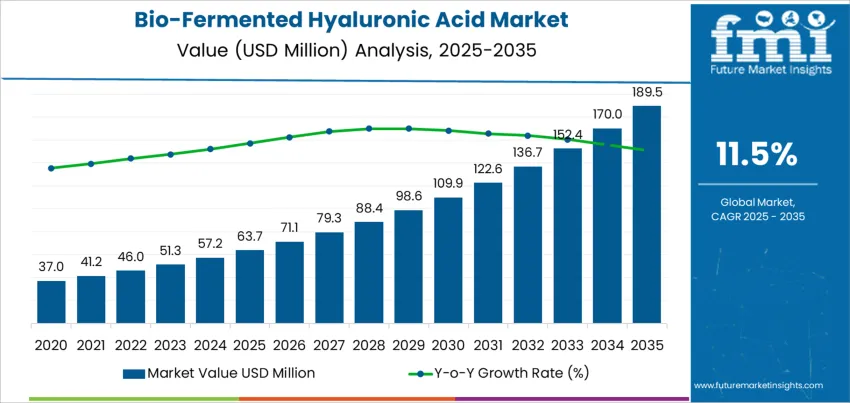
The global bio-fermented hyaluronic acid market is on the cusp of remarkable expansion, with market demand projected to increase from USD 63.7 million in 2025 to an estimated USD 189.5 million by 2035. This anticipated growth underscores a robust compound annual growth rate (CAGR) over the next decade, fueled by rising consumer preference for sustainable, high-performance skincare ingredients and the proliferation of microbial fermentation technologies.
Bio-fermented hyaluronic acid, derived through advanced fermentation processes rather than traditional animal extraction, is rapidly emerging as a cornerstone ingredient in next-generation beauty, wellness, and therapeutic product formulations. Its superior hydration properties, combined with an eco-conscious profile, have made it particularly sought after in the face of growing global demand for cleaner and cruelty-free cosmetic actives.
This market evolution is creating fertile ground for both established chemical and ingredient manufacturers and newer biotech innovators seeking to expand their product portfolios, enhance market share, and leverage cutting-edge technologies to meet the needs of a dynamic global customer base.
Established Players Drive Market Momentum
Key industry incumbents, many with long histories in specialty chemicals, cosmetic actives, and fermentation science, are doubling down on bio-fermented hyaluronic acid as part of broader growth strategies. These companies are applying decades of expertise to refine production methods, expand capacity, and deliver product variants with differentiated performance features.
Leading manufacturers are integrating next-generation fermentation technologies to improve yield efficiency, consistency, and molecular weight control. These advancements empower formulators with more predictable quality and performance characteristics, making it easier for cosmetic and pharmaceutical clients to innovate with confidence.
For these well-established firms, the focus has shifted from simple volume supply to value-added solutions tailored for premium segments like high-end skincare, professional dermatology, and medical aesthetics. By enhancing supply chain resilience and aligning product offerings with evolving regulatory standards across key markets, legacy players continue to secure strategic positions in a competitive landscape.
Emerging Manufacturers Bring Agility and Innovation
At the same time, a wave of new manufacturers — including biotech startups and fermentation-first enterprises — are entering the fray and helping to reshape industry dynamics. These innovators are embracing novel microbial strains, precision fermentation platforms, and scalable bioprocessing models that enable them to compete alongside traditional chemical giants.
The agility of these emerging firms allows them to pivot quickly in response to market feedback, develop niche applications such as customized molecular weights for specific cosmetic benefits, and collaborate with beauty brands on co-development projects. Their participation is widening the market ecosystem and helping to meet the growing demand for personalized, clean-label ingredients that resonate with today’s empowered consumers.
Many of these new entrants are forming strategic partnerships with contract manufacturers, academic research institutions, and regulatory specialists to accelerate go-to-market timelines and ensure compliance in complex global jurisdictions. This collaborative approach enhances innovation potential and supports faster commercialization of breakthrough hyaluronic acid variants optimized for performance and sustainability.
To access the complete data tables and in-depth insights, request a sample report here
New Technologies Powering Growth
A wave of technological advancements is also taking shape across the market. Manufacturers are investing in high-throughput fermentation systems, real-time quality monitoring, and bioinformatics-driven strain optimization to push the boundaries of what bio-fermented hyaluronic acid can achieve.
These technologies not only enhance the efficiency and environmental footprint of production, but they also drive differentiation in product offerings. For example, fractional-molecular-weight hyaluronic acids are being engineered to deliver targeted performance benefits such as deeper skin penetration, improved viscoelasticity, and extended hydration retention — features that resonate strongly with premium skincare formulators and medical aesthetic professionals alike.
Additionally, some innovators are exploring the integration of AI-assisted process control and machine learning models to predict fermentation outcomes with greater precision, reduce batch variability, and improve overall production economics. These digital tools are transforming traditional fermentation facilities into smart biomanufacturing hubs capable of rapid adaptation to market trends.
Expanding Global Opportunities
The outlook for bio-fermented hyaluronic acid extends across regions as well, with product demand widely dispersed across Asia-Pacific, North America, Europe, and emerging markets. Urbanization, rising disposable incomes, and increased awareness of the benefits of clean beauty are all contributing to stronger adoption in consumer categories ranging from anti-aging serums to professional aesthetic boosters.
This geographically broad demand profile motivates manufacturers to extend their footprints through local partnerships, regional production hubs, and targeted marketing initiatives designed to meet diverse consumer preferences while managing supply chain efficiencies.
Conclusion
The bio-fermented hyaluronic acid market is stepping into a transformational era marked by rapid growth, technological sophistication, and expanding participation from both legacy manufacturers and innovative newcomers. With rising global demand and continual advancements in fermentation technology, the market presents compelling opportunities for brands and ingredient suppliers alike to innovate, expand, and lead in a rapidly evolving landscape.
As stakeholders navigate shifting consumer expectations and competitive pressures, the ability to blend technical excellence with strategic agility will define success in this thriving segment of the beauty and wellness industry.