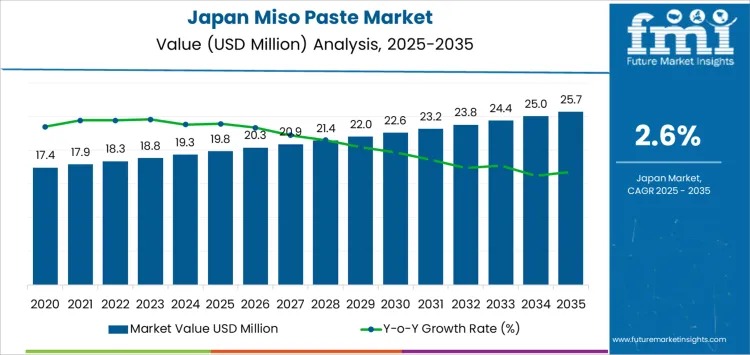
The demand for miso paste in Japan is projected to rise from USD 19.8 million in 2025 to USD 25.7 million by 2035, reflecting a steady 2.6% CAGR over the forecast period. Starting from USD 17.4 million in 2021, the market has experienced gradual growth, underpinned by the consistent popularity of miso in traditional Japanese cuisine.
Miso paste remains a cornerstone ingredient in soups, sauces, and marinades, maintaining stable demand across households, restaurants, and the broader foodservice industry. Its cultural significance, combined with growing awareness of fermented foods’ health benefits, supports the market’s resilience against competition from emerging seasoning alternatives and international cuisines.
To Explore Detailed Market Data, Segment-Wise Forecasts, and Competitive Insights, Request Sample Report!
Japan’s miso paste market benefits from both tradition and innovation. While red miso dominates the market due to its bold flavor, new product variants such as low-sodium, organic, and premium options are catering to health-conscious consumers. These innovations, along with strategic packaging and distribution improvements, are widening accessibility to urban and younger consumers.
Market Snapshot: Japan Miso Paste
- Market Value (2025): USD 19.8 million
- Forecast Value (2035): USD 25.7 million
- CAGR (2025-2035): 2.6%
- Leading Product Type: Red miso
- Key Growth Regions: Kyushu & Okinawa, Kanto, Kansai, Chubu, Tohoku, Rest of Japan
- Top Players: Marukome, Hikari Miso Co. Ltd., Saikyo-Miso Co., Yamato Soysauce & Miso Co., Source Foods
The enduring popularity of miso is fueled by both its flavor and nutritional profile. Rich in protein, fiber, and probiotics, miso supports digestive health and immunity, making it increasingly appealing to health-conscious consumers. Alongside this, the global rise of Japanese cuisine and plant-based diets is boosting demand for authentic ingredients like miso paste.
Segment-Wise Insights
- By Product Type: Red miso leads with 41% of total demand, followed by white and mixed miso. Its strong umami profile and versatility in traditional dishes drive consumer preference.
- By End-User: Food services dominate with 55% of total consumption, reflecting high-volume usage in restaurants, hotels, and catering services.
- By Region: Kyushu & Okinawa grow at a 3.3% CAGR, Kanto at 3.0%, Kansai at 2.7%, Chubu at 2.3%, Tohoku at 2.0%, and the rest of Japan at 1.9%. Regional culinary traditions and urban population densities largely influence these growth rates.
Regional Highlights
- Kyushu & Okinawa: High demand stems from local culinary traditions and tourism-driven interest in authentic Japanese flavors. Miso’s health benefits further reinforce its use in both households and foodservice establishments.
- Kanto: Tokyo’s dense population and fast-paced lifestyle have elevated the demand for ready-to-use miso products. Fermented foods’ growing popularity among health-conscious urban consumers supports the market here.
- Kansai: Rich culinary heritage in Osaka and Kyoto maintains steady demand. Miso’s role in traditional dishes and modern health-focused recipes ensures continued growth.
- Chubu: With dishes like miso katsu gaining traction, Chubu reflects a 2.3% CAGR, supported by both residential and commercial consumption.
- Tohoku & Rest of Japan: While growth is moderate, miso remains an essential staple in regional cuisines, contributing to steady demand.
Drivers and Trends
The market is supported by:
- Rising interest in fermented foods for gut health
- Increasing consumer focus on plant-based, protein-rich ingredients
- Innovations in product offerings (low-sodium, organic, premium variants)
- Expansion of distribution channels, including online retail
Challenges
Despite growth, the market faces challenges:
- Shifts toward Western-style diets and convenience foods
- Health concerns regarding salt content
- Competition from imported and alternative seasonings
Leading Players
Top suppliers in Japan include Marukome, Hikari Miso Co. Ltd., Saikyo-Miso Co., Yamato Soysauce & Miso Co., and Source Foods. Marukome holds the largest market share at 32%, offering a broad range of miso products to satisfy both traditional and modern culinary demands.
As the Japanese market continues to embrace traditional culinary practices while adapting to modern health trends, miso paste is expected to sustain steady growth through 2035, underlining its significance in both domestic and global food cultures.