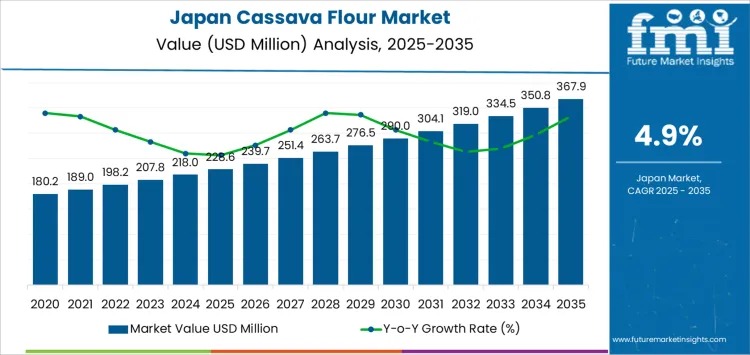
The demand for cassava flour in Japan is witnessing steady growth, fueled by increasing consumer preference for gluten-free and plant-based diets. Valued at USD 228.6 million in 2025, the market is projected to reach USD 367.9 million by 2035, growing at a CAGR of 4.9%. Health-conscious consumers are increasingly seeking alternatives to traditional wheat flour, with cassava flour emerging as a versatile, nutrient-rich solution suitable for a range of dietary needs.
Cassava flour, derived from the root of the cassava plant, is naturally gluten-free, high in fiber, and low in glycemic index. Its neutral flavor, functional properties, and adaptability across food formulations make it a preferred ingredient for baked goods, snacks, meat substitutes, and plant-based recipes. Beyond its culinary uses, cassava flour is also gaining traction in animal feed, pharmaceuticals, and personal care applications, reflecting its growing industrial relevance.
To Explore Detailed Market Data, Segment-Wise Forecasts, and Competitive Insights, Request Sample Report!
The food & beverage sector remains the primary driver of cassava flour demand in Japan, accounting for 38% of total consumption. Gluten-free and vegan product innovations are major contributors, as manufacturers respond to rising consumer demand for allergen-friendly, clean-label ingredients. Meanwhile, organic cassava flour is gaining popularity among sustainability-conscious buyers, highlighting a broader trend toward eco-friendly sourcing and natural product offerings.
Quick Stats: Cassava Flour Demand in Japan
- Market Value (2025): USD 228.6 million
- Forecast Value (2035): USD 367.9 million
- CAGR (2025-2035): 4.9%
- Leading Application: Food & Beverages
- Key Growth Regions: Kyushu & Okinawa, Kanto, Kansai, Chubu, Tohoku, Rest of Japan
- Top Players: DADTCO Rivers Cassava Processing Company, Green Hills Natural Foods, MHOGO Foods, Mocaf Factory, Psaltry International
Market Drivers and Consumer Trends
Rising awareness of gluten intolerance and healthier eating habits is fueling demand for cassava flour. Its high resistant starch content supports gut health and digestion, while the low glycemic index appeals to individuals monitoring blood sugar levels. Plant-based and vegan diets further support adoption, as cassava flour seamlessly substitutes for wheat in various recipes.
Moreover, Japan’s focus on sustainability and resource-efficient crops enhances the appeal of cassava. The flour’s versatility enables food manufacturers to develop gluten-free breads, pastries, pasta, and snack items, catering to both domestic consumers and the growing health-focused tourism market.
Segment-Wise Analysis
- Nature: Conventional cassava flour leads with 79% market share, driven by affordability and broad availability. Organic variants are expanding gradually due to rising eco-conscious demand.
- Application: Food & beverages dominate at 38%, while animal feed, personal care, and pharmaceuticals contribute to overall growth.
- Distribution Channels: Includes both B2B direct supply and B2C retail and online platforms, meeting the needs of diverse consumers and manufacturers.
- Regional Demand: Kyushu & Okinawa (6.1% CAGR) lead, followed by Kanto (5.6%), Kansai (4.9%), Chubu (4.3%), Tohoku (3.8%), and the Rest of Japan (3.6%).
Regional Highlights
- Kyushu & Okinawa: Health-conscious eating habits and gluten-free culinary adoption drive fastest growth.
- Kanto: Large urban population and urban lifestyle trends boost alternative flour demand.
- Kansai: Culinary innovation and plant-based diets sustain steady adoption in Osaka and Kyoto.
- Chubu & Tohoku: Moderate growth with focus on wellness and sustainable dietary practices.
- Rest of Japan: Gradual adoption in smaller cities, reflecting rising awareness of gluten-free alternatives.
Key Challenges
Despite growth prospects, challenges remain. Cassava flour is less familiar to Japanese consumers compared to rice or wheat flour, and higher prices may limit adoption. Import reliance can lead to price volatility, while traditional dietary habits could slow widespread consumer uptake. Overcoming these barriers will require continued education and promotion of cassava flour’s benefits.
Leading Suppliers and Market Influence
Top players supplying cassava flour to Japan include DADTCO Rivers Cassava Processing Company, Green Hills Natural Foods, MHOGO Foods, Mocaf Factory, and Psaltry International. DADTCO Rivers leads with roughly 41% market share, supplying raw and processed flour for bakery, snack, and pasta applications. Innovations in production technology and improved distribution channels have enhanced product quality and availability, further supporting market expansion.
As Japanese consumers increasingly embrace gluten-free, plant-based, and allergen-friendly diets, cassava flour is poised to become a staple ingredient across home kitchens and industrial food production. Its functional versatility, combined with health and sustainability benefits, ensures that the market will continue its steady ascent, helping meet Japan’s evolving dietary preferences through 2035.