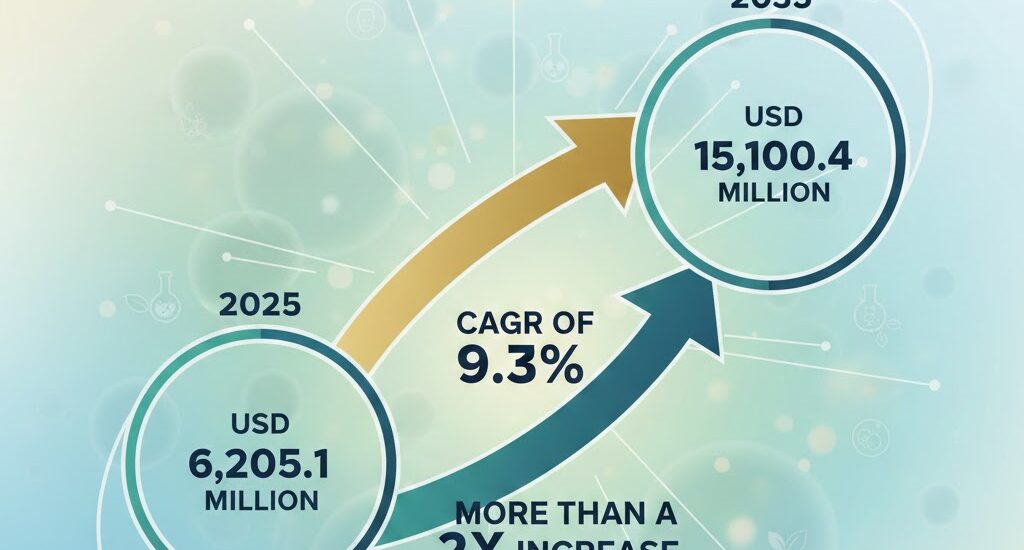
The global Uneven Skin Tone Solutions Market is entering a high-growth phase, projected to reach USD 6,205.1 million in 2025 and surge to USD 15,100.4 million by 2035. This reflects an impressive increase of USD 8,895.3 million, marking a 143% growth over the decade with a robust CAGR of 9.3%. Strong consumer demand for safe, dermatologist-tested, hydroquinone-free, and clean-label pigmentation treatments continues to reshape the global skincare industry.
The Uneven Skin Tone Solutions Market has evolved from traditional whitening products to advanced pigmentation-correction systems focused on radiance, clarity, and long-term skin health. The growing adoption of vitamin C, niacinamide, alpha-arbutin, tranexamic acid, and licorice extract is driving product innovation across serums, creams, spot correctors, and ampoules.
Subscribe for Year-Round Insights → Stay ahead with quarterly and annual data updates : https://www.futuremarketinsights.com/reports/sample/rep-gb-26265
Quick Stats:
- Market Value 2025: USD 6,205.1 million
- Market Forecast 2035: USD 15,100.4 million
- CAGR 2025–2035: 9.3%
- Leading Product Segment: Serums (48.5%)
- Top Growth Regions: Asia-Pacific, North America, Europe
- Key Market Leaders: La Roche-Posay, Paula’s Choice, The Ordinary, SkinCeuticals, Murad, Obagi, PCA Skin
Market Dynamics: What Is Powering the Growth?
- Rising Preference for Hydroquinone-Free Solutions
With 54.5% market share in 2025, hydroquinone-free products remain the leading claim segment. Regulatory scrutiny in Europe and the U.S. and growing awareness of long-term side effects have accelerated the shift toward safer alternatives such as niacinamide, licorice extract, alpha-arbutin, and tranexamic acid.
- E-commerce and Digital-First Beauty Are Transforming Access
E-commerce, holding 49.5% of the market, is redefining buyer behavior with:
- AI-powered product recommendations
- Virtual dermatology consultations
- Live-shopping and social commerce
- Subscription-based skincare models
Asia-Pacific leads digital beauty transformation, especially China and India, where cross-border platforms like Tmall and Nykaa are driving widespread adoption.
- Serums Remain the Powerhouse of the Market
Serums will contribute 48.5% of global revenue in 2025, supported by:
- High concentration of active ingredients
- Fast absorption
- Dermatologist approvals
- Rising popularity of multi-step routines
Innovations in textures—ampoule-like serums, micro-dose formats, and water-oil hybrids—continue to drive premium demand.
Market Growth Outlook Across 2025–2035
The decade is split into two distinct growth waves:
2025–2030: Foundation Phase
- Market grows from USD 6,205.1 million to USD 9,679.8 million
- Accounts for 39% of decade’s total growth
- Driven by women consumers, dermatology clinics, and specialty retail
- Serums dominate with over 48% share
- Hydroquinone-free claims drive product adoption
2030–2035: Acceleration Phase
- Market rises from USD 9,679.8 million to USD 15,100.4 million
- Represents 61% of decade’s growth
- Fuelled by:
- Clean-label and vegan-certified products
- AI-driven skin diagnostics
- Personalized digital skincare routines
- Strong demand in Asia-Pacific
E-commerce exceeds 55% share by decade-end.
Regional Outlook: Asia-Pacific Leads Global Expansion
Asia-Pacific (China, India, Japan)
The region records the fastest growth with double-digit CAGRs led by rising disposable incomes, influencer culture, and strong demand for anti-pigmentation solutions.
- India: CAGR 24.2% — booming middle class and demand for affordable niacinamide serums
- China: CAGR 21.1% — livestream shopping and cross-border e-commerce
- Japan: CAGR 17.5% — premium, dermatologist-tested, and clean-label demand
North America (USA)
Growing at 9.3% CAGR, the U.S. shows strong adoption of hydroquinone-free and clinically validated formulations. Dermatology clinics and premium brands dominate consumer spending.
Europe (UK, Germany)
A shift from whitening claims to radiance and skin health drives market evolution. UK CAGR stands at 13.7% driven by vegan, inclusive, and sustainable products.
Key Market Trends Reshaping the Industry
- Shift from Whitening to Radiance & Skin Health: Brands reframe positioning toward glow, brightening, and tone correction.
- Rise of AI-Driven Personalization: Mobile-based skin analysis tools tailor product routines.
- Clean Beauty & Vegan Labels: Over 60% of the market projected to adopt clean-label claims by 2035.
- Clinical Validation & Dermatologist-Backed Formulas: Premium segment thrives on evidence-based skincare.
Competitive Landscape
Leading brands such as La Roche-Posay, The Ordinary, Paula’s Choice, Murad, SkinCeuticals, Obagi, and PCA Skin continue to strengthen their portfolios with advanced serums, tranexamic acid-based solutions, and AI-powered personalization tools. Digital-first players are gaining ground with affordability and subscription-driven distribution.
Conclusion
The Uneven Skin Tone Solutions Market is on a strong growth trajectory through 2035, driven by clean-label innovations, digital transformation, and rising global demand for safe and effective pigmentation treatments. As consumer awareness expands, the industry is expected to surpass USD 15.1 billion, making it one of the most dynamic segments within the global skincare and beauty market.
Why FMI: https://www.futuremarketinsights.com/why-fmi
About Future Market Insights (FMI)
Future Market Insights, Inc. (FMI) is an ESOMAR-certified, ISO 9001:2015 market research and consulting organization, trusted by Fortune 500 clients and global enterprises. With operations in the U.S., UK, India, and Dubai, FMI provides data-backed insights and strategic intelligence across 30+ industries and 1200 markets worldwide.
Contact Us:
Future Market Insights Inc.
Christiana Corporate, 200 Continental Drive,
Suite 401, Newark, Delaware – 19713, USA
T: +1-347-918-3531
For Sales Enquiries: sales@futuremarketinsights.com
Website: https://www.futuremarketinsights.com
LinkedIn| Twitter| Blogs | YouTube