The Japan labelling machine market is entering a new era of growth as established global manufacturers and promising new players alike capitalize on rising demand for automated labelling solutions across key industries. Fueled by evolving packaging needs, advanced manufacturing trends, and a rising focus on digital integration, the industry is poised for steady expansion through the remainder of the decade.
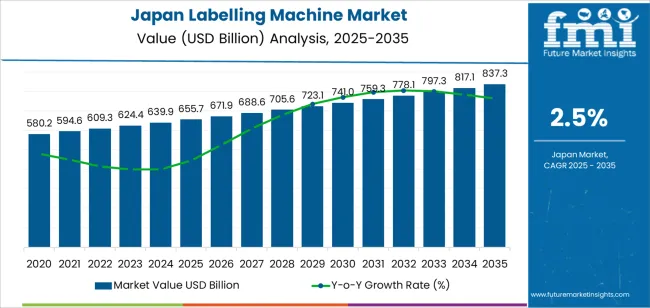
In 2025, the Japan labelling machine market is anticipated to reach a substantial valuation, signaling not only robust domestic activity but also renewed interest from international stakeholders. This steady expansion is propelled by multiple sectors — from food and beverage to pharmaceuticals and personal care — all of which rely heavily on accurate, high-speed labelling to meet both commercial and regulatory demands.
A Market Built on Precision and Demand for Efficiency
Manufacturers within Japan and abroad have responded to the market’s push for greater automation, versatility, and efficiency. As production lines evolve to handle more complex label requirements — including variable data, smart codes, and compliance tracking — demand for advanced labelling solutions continues to grow. Both long-standing industry leaders and innovative newcomers are stepping up with cutting-edge offerings designed to deliver on these shifting needs.
One of the strongest trends observed is the widespread adoption of pressure-sensitive labelling technologies. These systems are prized for their clean, reliable application across a variety of container types — from glass and plastic bottles to irregularly shaped products — making them a go-to solution on many modern packaging lines. Their inherent flexibility, coupled with quick changeover capabilities, has made them a favored choice for operations with frequent SKU updates or customized packaging runs.
Alongside pressure-sensitive systems, the market is seeing increased uptake of print-and-apply technologies, laser marking, heat-shrink solutions, and glue-based options. Each technology serves a specific niche, offering manufacturers the tools they need to meet both aesthetic and functional requirements.
Leading Players Shape the Landscape
The competitive landscape of the Japan labelling machine market reflects a blend of established multinational corporations and emerging manufacturers looking to scale their businesses within Japan’s sophisticated industrial ecosystem. Veteran players have long dominated the space with proven technology and deep integration expertise, offering a range of solutions from semi-automatic units to fully automated, high-throughput systems. These firms continue to innovate, enhancing machine precision, speed, and connectivity to align with smart factory initiatives and Industry 4.0 standards.
At the same time, a new wave of manufacturers is beginning to make its mark. These players often bring fresh perspectives, agile design innovation, and niche capabilities tailored to rapidly growing segments such as e-commerce fulfilment and premium product packaging. Many are introducing modular solutions that support seamless integration, improved user interfaces, and enhanced diagnostics — features increasingly valued by mid-sized manufacturers seeking to upgrade legacy systems without compromising on ease of use.
This blend of experience and innovation is reshaping how labelling machines are designed, sold, and serviced in Japan. By combining reliability with forward-looking functionality, both established vendors and newcomers are contributing to a richer, more competitive market.
Technology and Integration Take Center Stage
Across the industry, technological advancement remains a core focus. Fully automatic labelling machines now represent a substantial portion of the market, reflecting the ongoing shift toward high-speed, end-to-end automated production lines. These systems are engineered to deliver consistent label placement with minimal human intervention, supporting faster throughput and reduced labor costs — benefits that have become increasingly important as manufacturers strive to improve operational efficiency.
Alongside automation, there is a growing emphasis on connectivity and digital integration. Smart labelling machines equipped with IoT capabilities, advanced sensor technology, and real-time performance monitoring tools are gaining traction. These innovations not only enhance productivity but also enable manufacturers to capture valuable data insights, improve traceability, and support compliance with stringent packaging regulations.
In particular, demand for systems capable of handling variable data printing — including batch codes, QR codes, and serialized information — has surged. This reflects broader industry trends toward traceability and transparency, especially in regulated sectors like pharmaceuticals and food & beverage.
Regional Growth and Strategic Opportunity
While major industrial hubs such as Kanto and Kinki remain central to market activity, other regions are also witnessing notable growth. Kyushu & Okinawa, for instance, have emerged as strong areas of adoption due to expanding local manufacturing and processing operations. Meanwhile, mid-sized facilities across Chubu and Tohoku are gradually modernizing their production lines, creating new opportunities for suppliers offering flexible and scalable labelling solutions.
Smaller markets in the rest of Japan are likewise becoming more receptive to advanced equipment, particularly as digitalisation and efficiency become priorities even for regional operations.
Outlook: A Dynamic Market with Sustained Growth
Looking ahead, the Japan labelling machine market is expected to grow steadily as both established and emerging manufacturers continue to innovate and expand their technological portfolios. With demand driven by a combination of automation trends, regulatory requirements, and consumer expectations for quality packaging, the industry stands at the cusp of a dynamic phase of growth.
Manufacturers equipped to deliver versatile, reliable, and intelligent labelling solutions will be best positioned to capture value in this evolving market landscape — helping brands and producers across sectors achieve higher productivity, greater accuracy, and long-term competitive advantage.