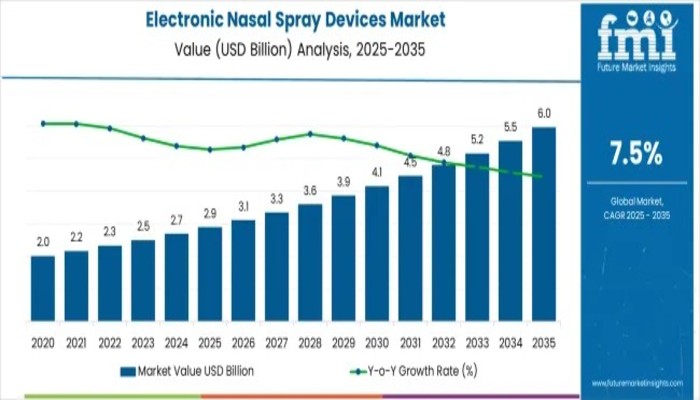
The global Electronic Nasal Spray Devices Market is entering a period of sustained, innovation-led growth as respiratory health takes center stage in preventive and therapeutic care worldwide. Estimated at USD 2.9 billion in 2025, the market is projected to nearly double to USD 6.0 billion by 2035, reflecting a robust CAGR of 7.5% over the forecast period. This growth is driven by rising prevalence of chronic nasal and sinus conditions, increased awareness of respiratory health, and a growing shift toward precision drug delivery solutions.
Market Growth Drivers
The surge in demand for electronic nasal spray devices is propelled by several key factors:
- Rising adoption of drug delivery innovations: Transitioning from manual sprays to electronic devices ensures precise dosing, improved patient compliance, and enhanced delivery efficiency.
- Technological advancements: Innovations in battery life, ergonomic design, and safety features make devices user-friendly for both adults and children.
- Regulatory standards: Increased emphasis on device quality and performance encourages manufacturers to develop reliable, patient-centric solutions.
- Home-based therapy adoption: Growing interest in self-administered therapies and pediatric care expands market opportunities.
These trends collectively contribute to a market environment where innovation meets patient-centric care, fostering growth across both developed and emerging regions.
Subscribe for Year-Round Insights → Stay ahead with quarterly and annual data updates – https://www.futuremarketinsights.com/reports/sample/rep-gb-5723
Segmental Insights
By Technology: Multi Dose Systems Lead the Market
- Market Share in 2025: 57.4%
- Growth Drivers: Multi dose systems allow precise, repeatable dosing across multiple uses, minimizing medication wastage while improving adherence.
- Technological Edge: Incorporation of sensors, programmable actuation, and automated delivery mechanisms ensures consistent administration.
- Patient Benefits: Enhanced usability, dosage tracking, and caregiver monitoring strengthen regulatory compliance and treatment outcomes.
As multi dose systems continue to evolve with compact designs and efficient battery solutions, they are increasingly favored in pediatric and adult populations alike. The demand for home-based treatments further consolidates their market dominance.
By End Use: Child Electronic Nasal Spray Devices Dominate
- Market Share in 2025: 62.1%
- Growth Factors: Rising pediatric respiratory health concerns, such as allergies and chronic sinus conditions, drive adoption.
- Device Advantages: Ergonomic designs, reduced actuation force, and automated dosing enhance safety, comfort, and caregiver confidence.
- Technological Integration: Smart features, including dose tracking and sensor feedback, enable monitoring and adherence, particularly vital in pediatric care.
Parents and healthcare providers increasingly prioritize safe, effective, and easy-to-use drug delivery solutions, cementing child-focused devices as a primary growth driver for the market.
Regional Market Overview
The Electronic Nasal Spray Devices Market is geographically diverse, with varying growth dynamics:
- North America: Holds a significant revenue share due to high healthcare expenditure, technology adoption, and regulatory support. The USA market is projected at USD 1.1 billion in 2025, maintaining steady growth.
- Asia-Pacific: Emerging markets such as China (CAGR 10.1%) and India (CAGR 9.4%) are driving high growth, fueled by increasing respiratory disease prevalence and rising disposable incomes.
- Europe: Countries like Germany (CAGR 8.6%) lead Western Europe with consistent market expansion. The UK and France maintain steady adoption rates, supported by advanced healthcare infrastructure.
- Other Regions: Japan and South Korea are smaller yet steady contributors, with market values of USD 133.9 million and USD 97.3 million, respectively, in 2025.
Competitive Landscape
The market features a blend of established pharmaceutical and medical device players innovating to capture market share:
Key Players:
- AptarGroup, Inc.
- GlaxoSmithKline plc
- Johnson & Johnson Services, Inc.
- Merck & Co., Inc.
- AstraZeneca plc
- Bayer AG
- Novartis AG
- Teva Pharmaceutical Industries Ltd.
- Cipla Limited
- Sun Pharmaceutical Industries Ltd.
- Becton, Dickinson and Company
- H&T Presspart Manufacturing Ltd.
Manufacturers are focusing on research and development, launching sensor-enabled, automated actuation systems, and improving patient-centric features. For example, Aptar Pharma introduced the Instanyl DoseGuard, an integrated electronic nasal spray lockout device approved by the European Medicines Agency (EMA) in collaboration with Takeda Pharmaceuticals.
Market Outlook
With multi dose systems and child-focused devices leading technology and end-use segments, the market is poised for sustained growth through 2035. Key trends shaping the future include:
- Integration of smart technologies for dose tracking and adherence monitoring.
- Expansion of pediatric and home-based treatments, driven by rising respiratory health awareness.
- Focus on patient-centric innovation, including ergonomic designs and automated delivery systems.
As global demand for effective nasal drug delivery rises, both established and emerging players are well-positioned to capitalize on technological innovation, regulatory support, and increased healthcare spending.
Why FMI: https://www.futuremarketinsights.com/why-fmi
About Future Market Insights (FMI)
Future Market Insights, Inc. (FMI) is an ESOMAR-certified, ISO 9001:2015 market research and consulting organization, trusted by Fortune 500 clients and global enterprises. With operations in the U.S., UK, India, and Dubai, FMI provides data-backed insights and strategic intelligence across 30+ industries and 1200 markets worldwide.
Contact Us:
Future Market Insights Inc.
Christiana Corporate, 200 Continental Drive,
Suite 401, Newark, Delaware – 19713, USA
T: +1-347-918-3531
For Sales Enquiries: sales@futuremarketinsights.com
Website: https://www.futuremarketinsights.com
LinkedIn| Twitter| Blogs | YouTube