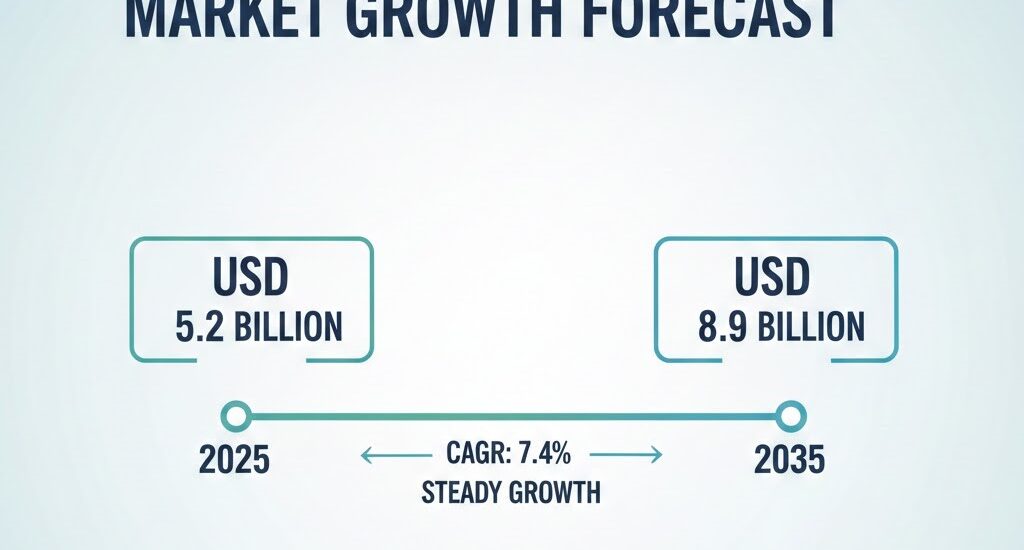
The global Disposable Bed Sheets Market is set for consistent and long-term growth between 2025 and 2035, fueled by rising hygiene awareness, stricter infection-control protocols, and rapid innovation in materials and manufacturing technologies. According to industry analysis, the market is projected to grow from USD 5.2 billion in 2025 to USD 8.9 billion by 2035, registering a CAGR of 7.4% during the forecast period.
This growth momentum reflects a fundamental shift across healthcare, hospitality, wellness, and travel sectors, where hygiene, convenience, and sustainability have become top operational priorities.
Subscribe for Year-Round Insights → Stay ahead with quarterly and annual data updates – https://www.futuremarketinsights.com/reports/sample/rep-gb-10929
Market Growth Drivers: Hygiene, Healthcare, and Hospitality Expansion
- Healthcare Sector Dominance: Hospitals, clinics, nursing homes, and long-term care facilities are the largest consumers of disposable bed sheets. The rising patient load, expansion of modern hospital infrastructure, and strict hygiene regulations are driving widespread adoption.
- Hospitality and Wellness Demand: Luxury hotels, budget accommodations, spas, and wellness centers increasingly prefer disposable bed sheets to reduce laundry costs while ensuring cleanliness and guest safety.
- Infectious Disease Awareness: The continued focus on preventing bacterial and viral transmission has made single-use bedding a preferred solution in operating rooms, ICUs, outpatient units, and quarantine facilities.
- Urbanization and Disposable Income Growth: Rapid urban development, improved access to healthcare, and rising disposable incomes—particularly in Asia-Pacific, Latin America, and Africa—are accelerating market penetration.
Sustainability Challenges and Emerging Opportunities
Despite strong growth prospects, environmental concerns surrounding plastic-based disposable sheets remain a major challenge. Governments worldwide are tightening regulations on single-use products, compelling manufacturers to rethink material choices.
However, this challenge is opening new doors for innovation:
- Biodegradable and Eco-Friendly Materials: Bamboo fiber, organic cotton, hemp, and bioengineered cellulose are gaining traction.
- Circular Economy Initiatives: Closed-loop recycling systems are being developed to convert used sheets into raw materials.
- R&D Investments: Both established players and new manufacturers are investing heavily in sustainable technologies to balance cost, durability, and environmental impact.
Technological Advancements Reshaping the Industry
From 2025 onward, the disposable bed sheets industry will enter an innovation-driven era, marked by:
- Nanotechnology-Based Sheets with antimicrobial, moisture-wicking, and self-cleaning properties.
- AI-Enabled Inventory Management in hospitals and hotels for real-time monitoring and optimized usage.
- Advanced Non-Woven Fabric Technologies enabling lightweight, breathable, and durable products.
- Localized Production via 3D Printing, reducing transportation emissions and improving supply resilience.
Industry leaders such as BASF and DuPont are expected to pioneer advanced material formulations, while emerging manufacturers focus on niche, high-performance, and sustainable solutions.
Key Market Segments
By Product Type
- Waterproof Disposable Bed Sheets (40% share in 2025)
- Non-Woven Disposable Bed Sheets
- Oilproof Disposable Bed Sheets
By Nature
- Regular Disposable Bed Sheets (54%)
- Eco-Friendly Disposable Bed Sheets (46%)
By Price
- High-Priced
- Economy/Mid-Range
By Application
- Hospitals
- Salon & Spa
- Home Care
- Others (Factories, Cleanrooms, Travel)
By Sales Channel
- Direct Sales
- Pharmacies & Drug Stores
- Supermarkets & Hypermarkets
- Specialty Stores
- E-Retailers
- Independent Small Stores
By Region
- North America
- Latin America
- Western & Eastern Europe
- South Asia & Pacific
- East Asia
- Middle East & Africa
Regional Insights: Expanding Global Footprint
- United States: Steady growth driven by hospitals, nursing homes, hospitality demand, and preference for antimicrobial and hypoallergenic sheets.
- United Kingdom & France: Growth supported by strong infection-control policies, rising home-care demand, and eco-friendly product adoption.
- Germany & Italy: Focus on dermatologically tested, high-quality, and sustainable disposable bed sheets.
- China: Fastest-growing market with a CAGR of 7.5%, supported by massive production capacity, rising incomes, and strong e-commerce penetration.
- Japan & South Korea: Aging populations, advanced material technology, and strong government hygiene mandates boost demand.
- Australia & New Zealand: Increasing awareness in hospitals, aged care, and tourism sectors, with a growing shift toward biodegradable solutions.
Competitive Landscape: Established Leaders and Emerging Innovators
The market features a mix of global healthcare suppliers, hygiene specialists, and fast-growing regional manufacturers.
Key Players
- Medline Industries
- TIDI Products
- Mölnlycke Health Care
- Cardinal Health
- Graham Medical
- Fazzini Group
- Priontex
- MedPRIDE
Market Share Snapshot
- Medline Industries: 18–22%
- TIDI Products: 14–18%
- Mölnlycke Health Care: 10–14%
- Cardinal Health: 8–12%
- Other Players (Combined): 35–45%
Strategic Focus of Leading Companies
- Medline Industries continues to lead with medical-grade, hypoallergenic sheets while expanding sustainable product lines.
- TIDI Products specializes in antimicrobial and fluid-resistant sheets for healthcare and spa environments.
- Mölnlycke Health Care emphasizes breathable, high-comfort disposable sheets for surgical and long-term care.
- Cardinal Health focuses on cost-effective, bulk-packaged solutions with enhanced supply chain efficiency.
- Emerging Manufacturers are leveraging private labeling, customization, and e-commerce to expand globally.
Future Outlook
Between 2025 and 2035, the Disposable Bed Sheets Market will be shaped by innovation, sustainability, and digital transformation. Companies that invest in eco-friendly materials, smart manufacturing, and strategic partnerships with healthcare and hospitality chains will gain a competitive edge.
As hygiene standards rise globally and technology reshapes product performance, disposable bed sheets will continue evolving from basic consumables into high-performance, sustainable hygiene solutions across industries.
Why FMI: https://www.futuremarketinsights.com/why-fmi
About Future Market Insights (FMI)
Future Market Insights, Inc. (FMI) is an ESOMAR-certified, ISO 9001:2015 market research and consulting organization, trusted by Fortune 500 clients and global enterprises. With operations in the U.S., UK, India, and Dubai, FMI provides data-backed insights and strategic intelligence across 30+ industries and 1200 markets worldwide.
Contact Us:
Future Market Insights Inc.
Christiana Corporate, 200 Continental Drive,
Suite 401, Newark, Delaware – 19713, USA
T: +1-347-918-3531
For Sales Enquiries: sales@futuremarketinsights.com
Website: https://www.futuremarketinsights.com
LinkedIn| Twitter| Blogs | YouTube